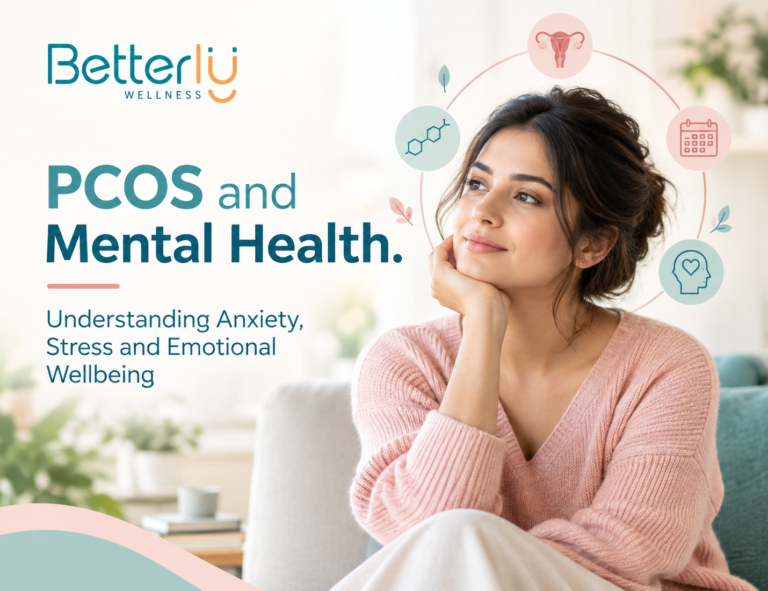
PCOS and Mental Health in the UAE: How to Manage Anxiety, Stress and Low Mood
You have been told PCOS is about periods, acne and hormones. Nobody mentioned the 3 a.m. overthinking, the sudden low mood, or the feeling that your body is working against you.
If that sounds familiar, you are not imagining it. PCOS and mental health are closely linked, and the emotional side is still the least discussed part of the condition. In the UAE, long work hours, family expectations and living far from home add more weight.
This guide is written for PCOS Awareness Month and for the women searching for answers quietly. You will learn why PCOS affects anxiety, depression and stress, how to tell normal worry from something that needs care, and what support works. You will also see how to find help in Sharjah, Dubai, Abu Dhabi or online.
What Is the Link Between PCOS and Mental Health?
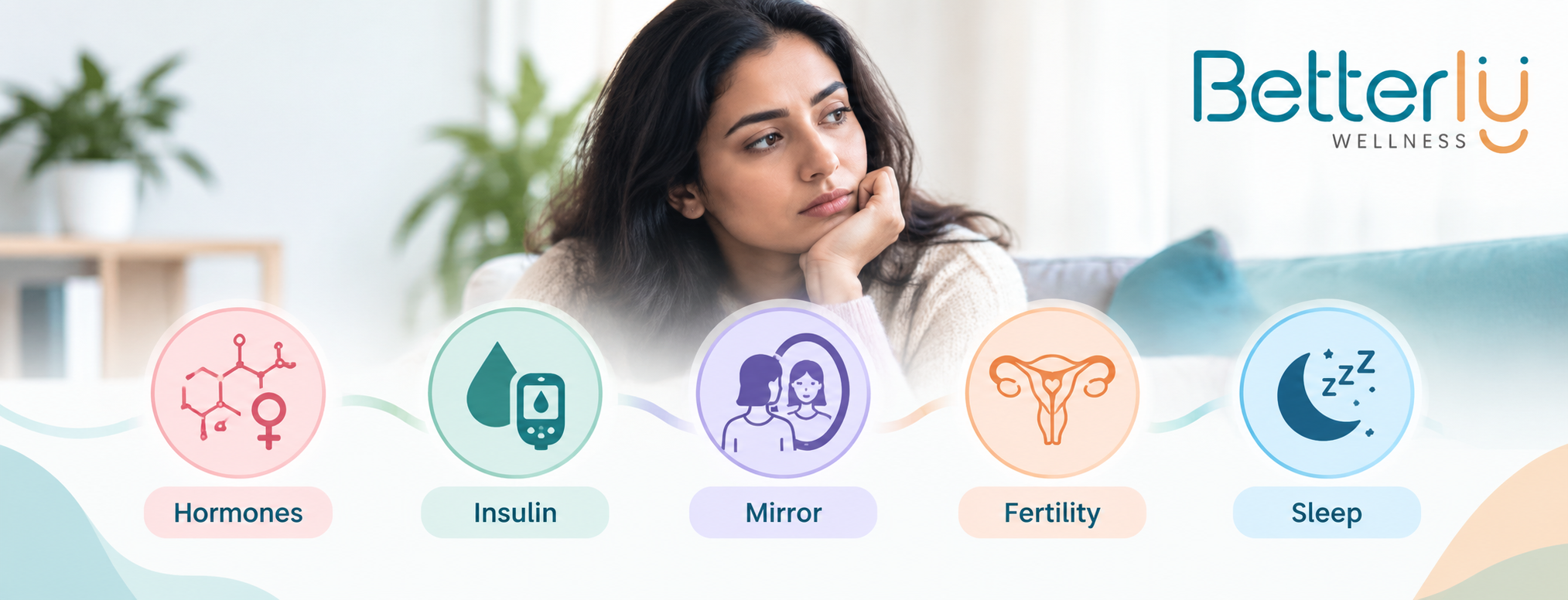
PCOS and mental health are connected because polycystic ovary syndrome affects hormones, insulin, sleep, body image and fertility, all of which influence mood. Women with PCOS have a higher risk of anxiety, depression and chronic stress than women without it. Treating both the physical and emotional sides gives the best results.
The numbers back this up. Women with PCOS (also called PMOS) had roughly 2.8 times the odds of a clinical depression diagnosis in a large meta-analysis of 57 studies. A 2025 study found that about 47.7% of PCOS patients showed depression symptoms and 39.9% showed anxiety symptoms, compared with 37.7% and 31.1% in the control group.
Read those figures carefully. Rates were also high in the comparison group, so low mood is common everywhere. PCOS raises the risk further. It does not make a mood disorder inevitable.
For background on the condition itself, see the WHO fact sheet on polycystic ovary syndrome and the Wikipedia overview of PCOS.
Key Takeaways
- PCOS raises the risk of anxiety, depression and stress. It does not guarantee them.
- Hormones, insulin resistance, body image and fertility worry all play a part.
- Emotional symptoms are often missed because appointments focus on cycles and weight.
- Therapy, lifestyle changes and medical care work best together.
- Persistent low mood or anxiety lasting more than two weeks deserves a professional opinion.
- Support is available in person and online across the UAE.
Why Does PCOS Affect Your Mood?
There is no single cause. Researchers point to several overlapping factors.
Hormones and Brain Chemistry
PCOS often involves raised androgens, and hormone swings can affect brain chemistry. A review in Neuroscience journals notes that women with PCOS may face higher depression risk partly because of disruption in endocrine and immune systems and the gut microbiome. The science is still developing, but the biology is real. This is not weakness.
Insulin Resistance
Insulin resistance is common in PCOS. According to a Clue overview of the research, insulin resistance is also linked to depression. Blood sugar swings can make anxiety feel sharper and energy feel unreliable.
Body Image
Studies report that anxiety and depression in PCOS often stem from body changes such as excess hair growth, irregular periods, weight gain, acne and hair thinning. Looking in the mirror and feeling like a stranger is exhausting.
Fertility Pressure
Many women in the UAE feel pressure, spoken or unspoken, to start a family. Fertility worries can turn every cycle into a source of dread.
Poor Sleep
PCOS is associated with poorer sleep. Bad sleep worsens anxiety, and anxiety worsens sleep. If this loop is part of your day, our sleep and insomnia support may help.
PCOS Anxiety: Signs to Watch For
PCOS anxiety is persistent worry, restlessness or physical tension that goes beyond normal stress and interferes with daily life. It often shows up alongside irregular cycles, poor sleep and body image concerns.
Common signs include:
- Constant “what if” thinking that is hard to switch off
- A racing heart, tight chest or shaky hands without a clear trigger
- Trouble falling asleep or waking at 3 or 4 a.m.
- Avoiding social events because of how you look
- Irritability that feels out of proportion
One meta-analysis reported anxiety symptoms in about 48% of women with PCOS compared with a lower rate in controls. If several of these signs describe your week, a conversation with a clinical psychologist is a sensible next step.
PCOS Depression: More Than a Bad Week
PCOS depression is a lasting low mood, loss of interest or hopelessness, often connected to hormonal changes, body image distress and chronic fatigue.
It can look quiet. Many women keep functioning, going to work and smiling in meetings, while feeling flat inside.
Watch for:
- Low mood most days for two weeks or longer
- Losing interest in things you used to enjoy
- Heavy fatigue that sleep does not fix
- Changes in appetite or weight that feel out of your control
- Feeling like a burden, or having thoughts of self-harm
Emotional numbness is easy to dismiss as “just PCOS tiredness.” Please don’t. Our team offers structured depression and anxiety care both in the clinic and online.
If you have thoughts of harming yourself, contact emergency services on 998 (ambulance) or 999 (police) in the UAE, or call the national mental health support line 800-HOPE (800 4673), right away.
PCOS Stress and EmotionalWellbeing
Stress is different from anxiety and depression, but it feeds both. With PCOS, stress raises cortisol, which can disturb sleep, appetite and blood sugar.
The table below helps you see the differences.
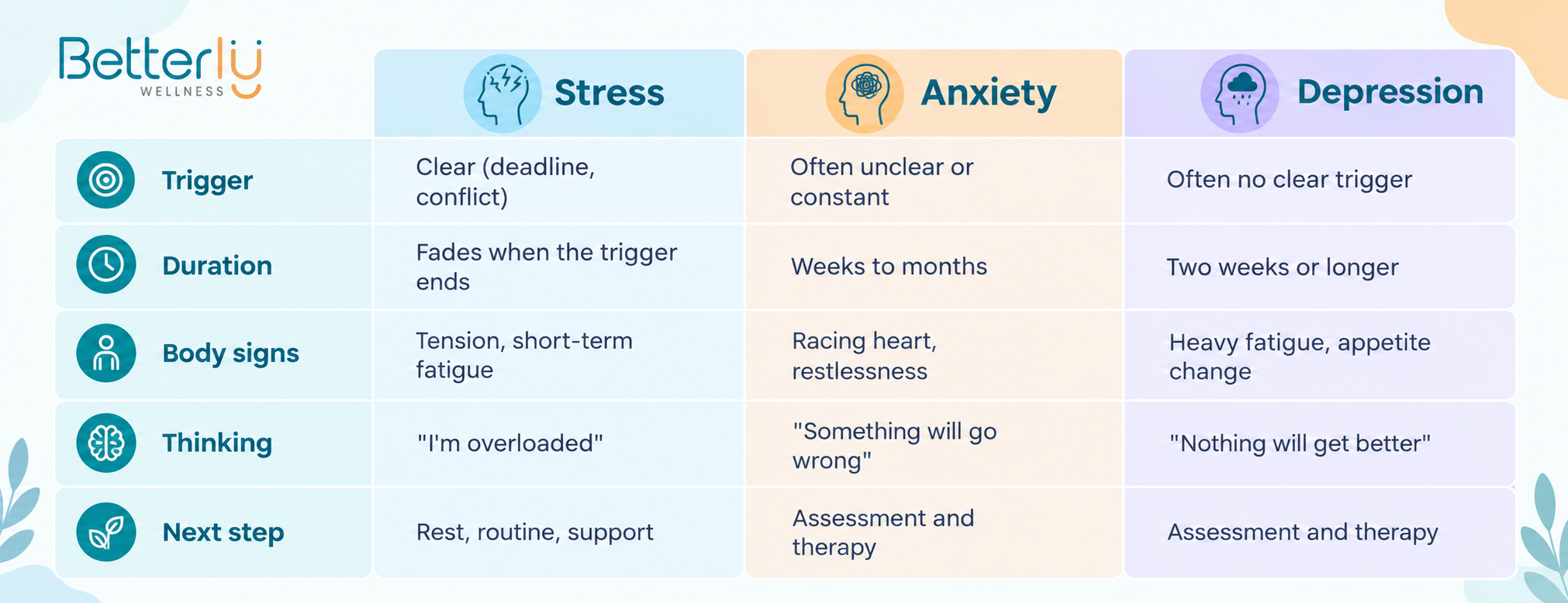
Emotional wellbeing is not the absence of hard feelings. It is having enough support and skills to get through them. If work pressure is part of your picture, our guide on stress and burnout in the UAE may help.
Women's Mental Health in the UAE: Why Location Matters
Women’s mental health in the UAE is shaped by long work hours, distance from extended family, cultural expectations around marriage and children, and stigma about seeking help. These pressures can make PCOS symptoms feel heavier and delay support.
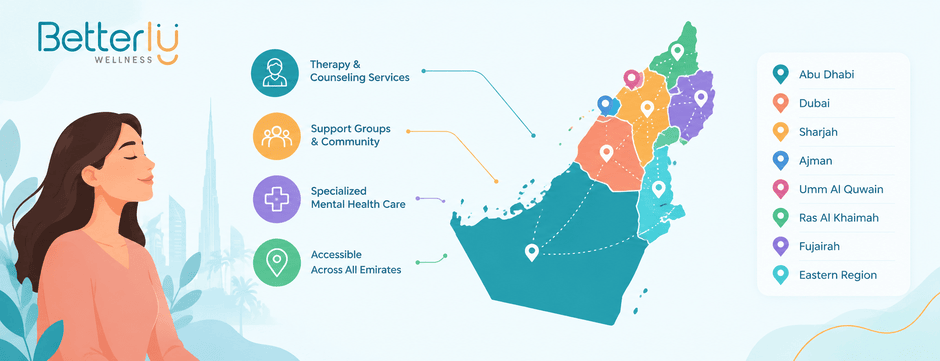
Consider what many women here deal with:
- Living away from mothers, sisters and childhood friends
- Demanding jobs in Dubai, Abu Dhabi and Sharjah
- Family questions about marriage and pregnancy
- Worry that seeing a psychologist will “become a story”
Research from the wider region shows the scale. A Saudi Arabian study found nearly two-thirds of women with PCOS had depression, anxiety and stress, and younger age was linked with more depression and stress.
A UAE cross-sectional study, currently a preprint that has not been peer reviewed, reported a PCOS prevalence of 30.3% among women seeking healthcare in the UAE and argued that mental health screening should be built into PCOS care rather than focusing only on metabolic control. Treat that figure as early evidence, not settled fact.
The takeaway is simple. If you are in Dubai, Abu Dhabi, Sharjah, Ajman, Ras Al Khaimah, Fujairah, Umm Al Quwain or Al Ain, you are not alone, and the numbers say you are not unusual.
Expert Insight: In clinical practice, the most common pattern is women who have been managing PCOS for years and only mention their mood when asked directly. Many assume anxiety or low mood is “part of the package” and that nothing can be done. Something can.
The most useful first step is often simply naming what is happening. A short assessment separates temporary stress from anxiety or depression that needs treatment. From there, therapy, lifestyle support and coordination with a gynaecologist or endocrinologist usually work better than any single approach on its own.
What Helps? PCOS and Mental Health Support That Works
There is no single fix. The strongest plans combine several layers.
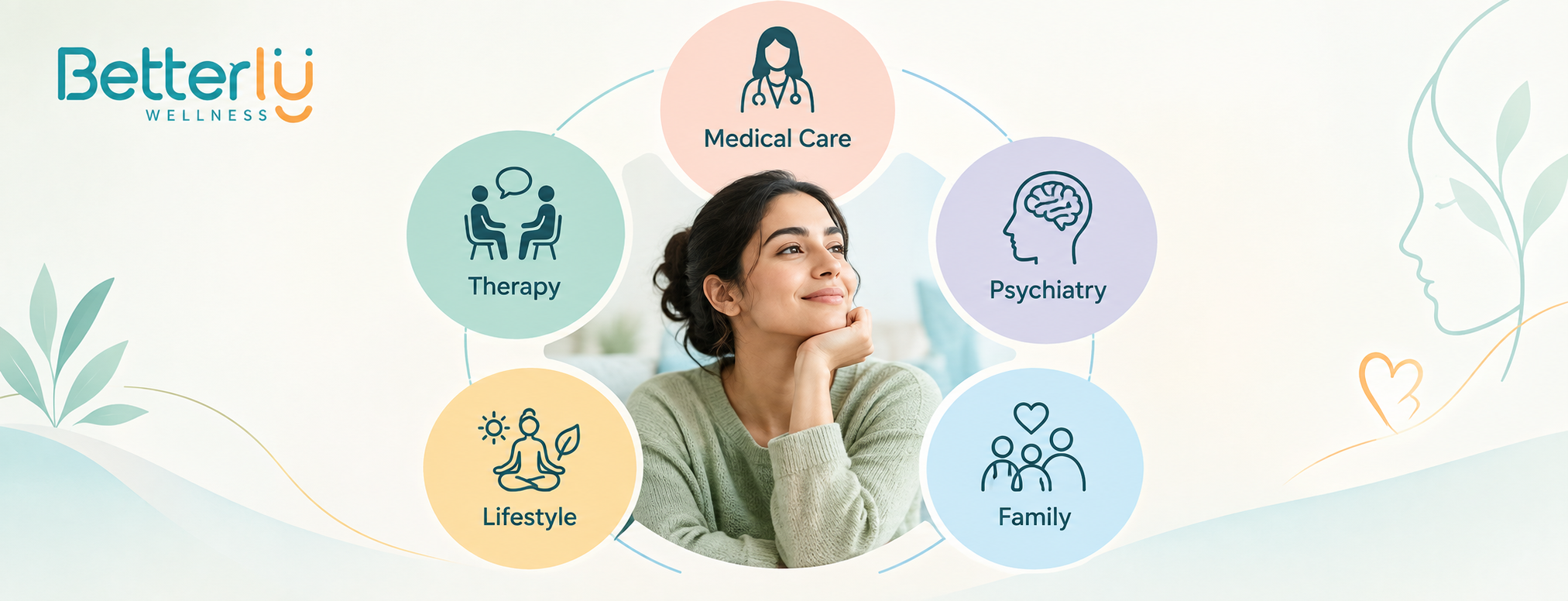
1. Medical Care for PCOS Itself
A gynaecologist or endocrinologist guides treatment for cycles, insulin resistance and androgens. Researchers note that these interventions may also carry mental health benefits. Betterly Wellness is a mental health clinic and works alongside your medical team rather than replacing it.
2. Talk Therapy
Cognitive behavioural therapy (CBT) helps with anxious thinking, body image distress and low mood. Sessions teach practical skills for overthinking, sleep and self-criticism.
3. Psychiatric Care When Needed
For moderate or severe symptoms, a psychiatrist can assess whether medication should be part of the plan. Dr. Zoheb Raj, Chief Psychiatrist and Medical Director at Betterly Wellness, is a Fellow of the European Board of Psychiatry with an MD in Neuropsychiatry, licensed by both the UAE Ministry of Health and the Dubai Health Authority. You can read more on his psychiatrist profile.
4. Lifestyle Support
Steady meals, regular movement, consistent sleep and less alcohol all help mood and insulin sensitivity. Small changes count more than dramatic ones. Our wellness and preventive programs are designed around this.
5. Relationship Support
PCOS affects partners and families too. Couple and family therapy can help loved ones understand what you are going through.
DIY vs. professional support
Self-help | Professional care | |
Best for | Mild, short-lived stress | Symptoms lasting 2+ weeks |
Examples | Journaling, walking, sleep routine | CBT, assessment, medication review |
Limits | Can miss underlying anxiety or depression | Needs time and a first appointment |
Outcome | Helpful maintenance | Structured, tailored treatment |
Common Mistakes People Make When Managing PCOS and Mental Health
Mistake | Why it happens | Better approach |
Treating only the physical symptoms | Appointments focus on cycles and weight | Ask your doctor to include mood in your care plan |
Assuming “it’s just hormones” | Emotional symptoms get normalised | Get a proper assessment |
Crash dieting to “fix” PCOS | Pressure around body image | Aim for steady habits, ideally with medical guidance |
Waiting for a crisis | Fear of stigma | Book a first conversation early, before things escalate |
Isolating from family and friends | Shame or exhaustion | Share with one trusted person and add professional support |
Relying on internet forums alone | Easy and anonymous | Use them for company, not diagnosis |
When Should You See a Professional?
Book an appointment if you notice any of these:
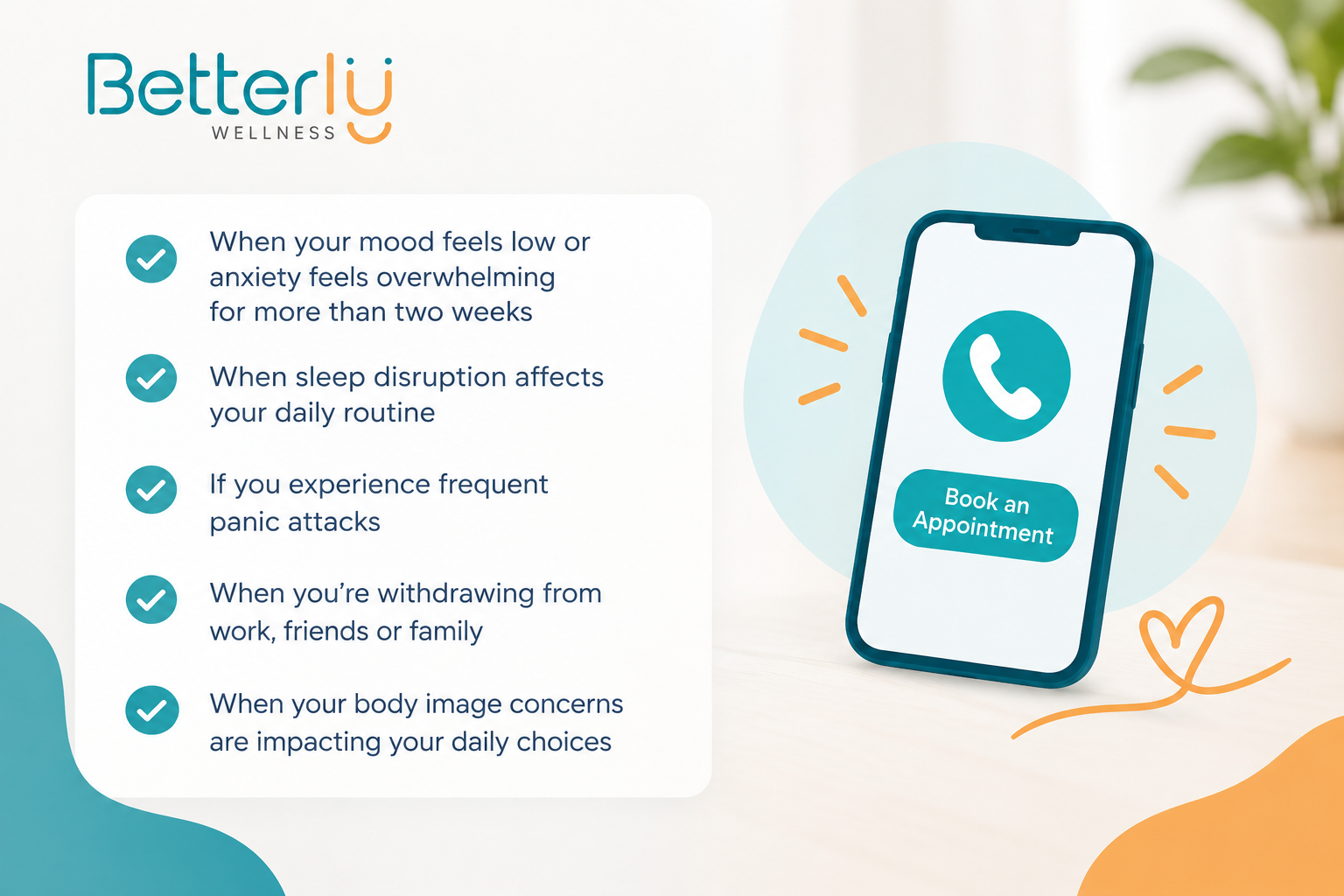
You do not need to be “bad enough.” Getting support earlier is easier than getting it late.
Why Choose Betterly Wellness for Emotional Support with PCOS?
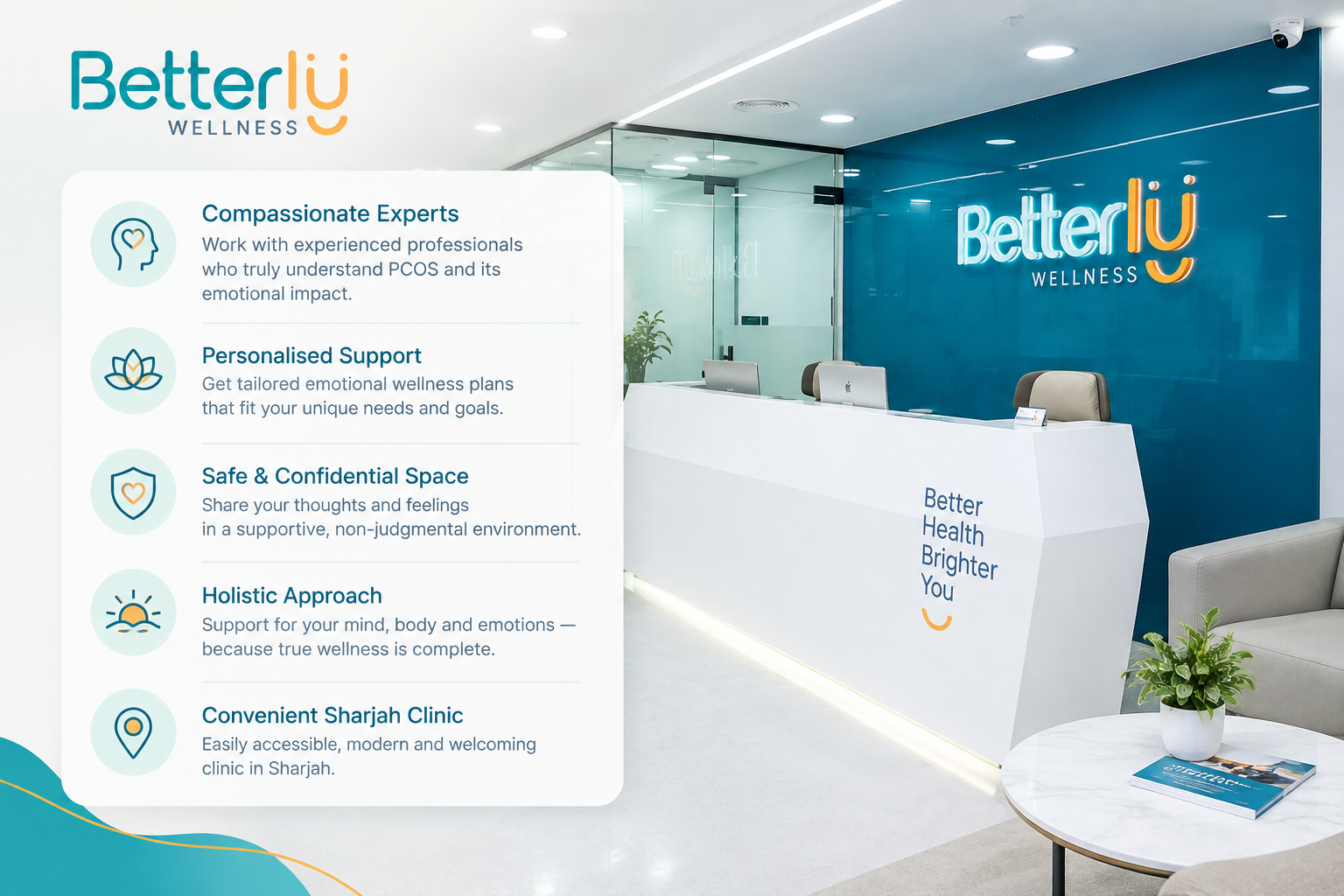
Who we are and where we are?
Betterly Wellness is a mental health and wellness clinic in Muweilah Commercial, Sharjah, at Office 101, Al Maha Building (Old DIB Building). We serve individuals, couples, families, adolescents and children, in person and online. Our approach is person-centred and evidence-based.
Who you will see?
Dr. Zoheb Raj leads psychiatric care with more than 15 years of clinical and academic experience. Our psychologists include Nimisha Sureshbabu, a Ministry of Health-licensed clinical psychologist with training across child, adolescent and adult care. You can read her profile and approach.
What we offer?
Structured therapy for anxiety, depression, stress, sleep problems and relationship strain. Our team also supports child and adolescent mental health, which matters because PCOS often begins in the teenage years. Adolescents may also benefit from a formal psychological assessment.
How it works?
You book a first consultation, share your history and concerns, and your clinician suggests a plan. That may include therapy, psychiatric review or coordination with your gynaecologist or endocrinologist. Our guide to what a mental health clinic in the UAE offers explains what to expect.
Why women choose us?
We do not rush sessions, we protect confidentiality, and we treat emotional symptoms as real medical concerns. Our team speaks English, Arabic, Hindi, Urdu, Malayalam and Tamil across clinicians.
How Much Does It Cost?
We have not published fixed prices here because cost depends on the type of service and the clinician you see. Typical factors include:
- Psychiatric consultation vs. psychology session
- Length and frequency of sessions
- Whether you need an assessment
- In-person vs. online format
- Your insurance coverage
Please ask our team about current fees and insurance when you book.
What to Look for Before You Choose a Provider
- Verified licences (UAE Ministry of Health, DHA or your emirate’s authority)
- Experience with hormone-related conditions or women’s mental health
- Clear confidentiality practices
- Willingness to coordinate with your medical doctor
- Language and cultural fit
- Online options if travel is difficult
Take the Month First Step This PCOS Awareness
You do not have to work out the emotional side of PCOS by yourself.
Ready to talk to someone? Contact Betterly Wellness to book a confidential consultation in Sharjah or online.
Reach our team on +97156 6667398 or hello@betterlywellness.com.
Not ready yet? Explore our mental health clinic in Sharjah, read our online therapy guides, or visit the Betterly Wellness to see how we work.
Frequently Asked Questions
Yes. PCOS can contribute to anxiety through hormone changes, insulin resistance, poor sleep and body image stress. Studies show women with PCOS report anxiety symptoms more often than women without it. Anxiety in PCOS is treatable with therapy, lifestyle support and, when needed, psychiatric care.
PCOS does not directly guarantee depression, but it raises the risk. Hormonal factors, insulin resistance, fertility worries and body image distress all play a part. Research suggests women with PCOS have roughly two to three times the odds of a depression diagnosis. Early support improves outcomes.
Common mental symptoms include persistent worry, low mood, irritability, mood swings, poor sleep, low self-esteem and social withdrawal. Some women also feel constantly overwhelmed or emotionally flat. If symptoms last more than two weeks or affect daily life, see a psychologist or psychiatrist.
Regular sleep, balanced meals, gentle exercise and slow breathing can ease PCOS anxiety day to day. Cognitive behavioural therapy helps with anxious thinking patterns. If anxiety is frequent, intense or affects work and relationships, seek professional assessment rather than managing it alone.
Yes. Hormone fluctuations, blood sugar changes and poor sleep can all trigger mood swings in PCOS. They may feel like sudden irritability, tearfulness or anger. Tracking your cycle and mood for a few weeks helps your doctor and therapist spot patterns.
Yes. Mental health clinics across the UAE, including Betterly Wellness in Sharjah, support women with anxiety, depression and stress linked to PCOS. Betterly offers psychiatry and psychology in person and online. Your gynaecologist or endocrinologist continues to manage the hormonal side.
See a professional if low mood, anxiety or sleep problems last more than two weeks, or if they affect work, relationships or daily routines. Seek urgent help immediately for thoughts of self-harm. In the UAE, call 998 or 999, or 800-HOPE (800 4673).
Note: This guide reflects the clinical focus of Betterly Wellness, a Sharjah-based mental health clinic. It is educational and does not replace a personal medical assessment.
Connect with Us