
Early Signs of Memory Problems: When Should You Consider a Psychological Assessment?
You walk into a room and forget why you went there. You struggle to remember a colleague’s name or misplace your phone for the third time this week. Most people experience moments like these. But what happens when forgetfulness becomes frequent, starts affecting your responsibilities, or is noticed by family members?
Memory problems can be unsettling, especially when there is no obvious explanation. Some changes are associated with stress, sleep deprivation, or emotional distress. Others may require further investigation to identify an underlying medical or cognitive condition.
A psychological assessment Sharjah can help examine memory, attention, and related thinking abilities when a qualified professional determines that such testing is appropriate.
However, not every memory complaint requires psychological testing, and not every cognitive difficulty indicates dementia.
Understanding the difference between occasional forgetfulness and concerning cognitive changes can help you decide when to seek professional guidance.
This article explains early memory warning signs, possible causes, the role of cognitive assessment, and what individuals and families in the UAE should know before arranging an evaluation.
What Are Early Signs of Memory Problems?
Early memory problems involve changes in a person’s ability to remember information, learn something new, recall recent events, or complete familiar activities. Occasional forgetfulness is common, but persistent, worsening, or disruptive changes deserve medical attention.
Some memory difficulties develop gradually, while others appear alongside changes in concentration, language, decision-making, or behaviour.
1. Frequently Forgetting Recent Conversations
Forgetting a minor detail occasionally is normal.
However, repeatedly asking the same question, forgetting an entire recent conversation, or struggling to retain newly explained information may suggest a need for evaluation.
Family members sometimes notice these changes before the individual does.
2. Difficulty Remembering Appointments and Responsibilities
Missing one appointment does not necessarily indicate a cognitive problem.
Concern becomes more appropriate when someone repeatedly forgets important commitments, medication schedules, bills, or familiar responsibilities despite previously managing them independently.
The impact on daily functioning matters more than an isolated mistake.
3. Losing Track of Familiar Tasks
Someone experiencing cognitive difficulties may struggle to follow a familiar recipe, manage routine paperwork, or complete a task involving several steps.
These changes can reflect difficulties with attention, planning, working memory, or executive functioning rather than memory alone.
4. Difficulty Finding Words
Occasional word-finding difficulties happen to many healthy adults.
More concerning patterns may include frequently losing the thread of conversations, substituting incorrect words, or having increasing difficulty explaining familiar ideas.
5. Noticeable Changes in Concentration
A person might read the same paragraph repeatedly, lose track of instructions, or struggle to concentrate during meetings.
Poor concentration can also be associated with anxiety, depression, exhaustion, and other health conditions.
A professional evaluation helps distinguish between possible explanations.
Normal Forgetfulness vs Concerning Memory Changes
Not all memory changes have the same clinical significance.
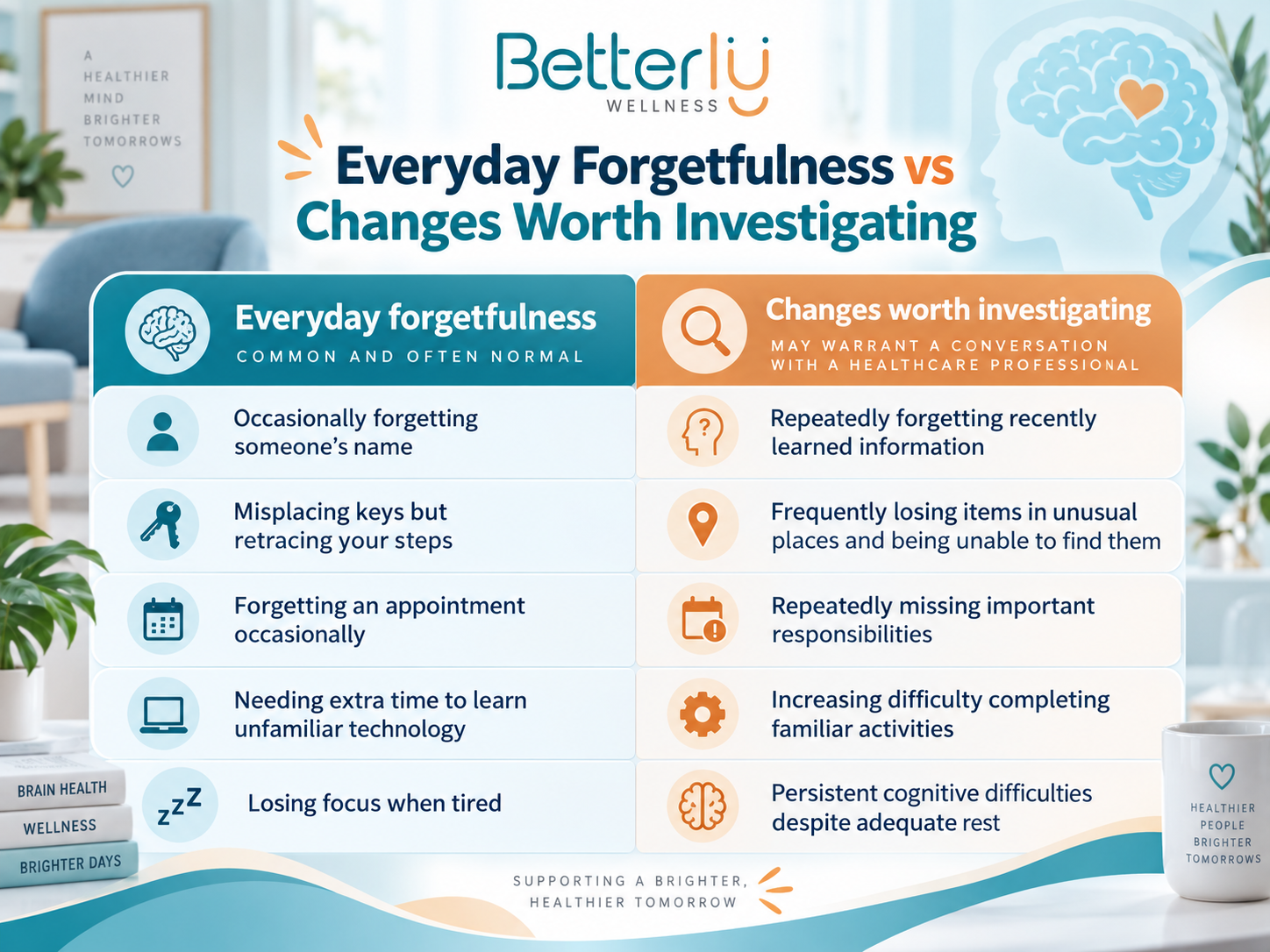
These examples are general indicators, not diagnostic criteria.
Mild cognitive impairment, dementia, depression, medication effects, and several medical conditions can produce overlapping symptoms. A healthcare professional must consider the wider clinical picture.
What Causes Memory Problems Besides Dementia?
Memory difficulties do not automatically indicate Alzheimer’s disease or another neurodegenerative condition.
The National Institute on Aging identifies several possible causes of cognitive changes, including medical conditions, medication effects, depression, and dementia.

Stress and Anxiety
Persistent stress can interfere with concentration and the brain’s ability to effectively encode new information.
Someone managing demanding work responsibilities, financial uncertainty, or family pressures may feel unusually forgetful.
Depression and Emotional Distress
Depression can affect attention, processing speed, motivation, and memory performance.
People experiencing persistent low mood may find it difficult to organise thoughts or remember information.
A broader mental health assessment may be relevant when cognitive symptoms occur alongside emotional difficulties.
Poor Sleep
Sleep plays an important role in attention, learning, and memory consolidation.
Insufficient sleep, insomnia, and sleep-related disorders can contribute to daytime cognitive difficulties.
Medication and Medical Conditions
Certain medications, vitamin deficiencies, thyroid disorders, infections, and other medical conditions may affect cognition.
This is one reason medical evaluation should not be skipped when memory concerns arise.
Hormonal and emotional health can also influence concentration. For example, our article on PCOS and mental health in the UAE explores the relationship between physical health concerns and psychological wellbeing.
When Should You Consider a Psychological Assessment in Sharjah?
A psychological assessment Sharjah may be appropriate when memory or attention problems persist, interfere with daily functioning, or remain unexplained after an initial medical review.
Psychological evaluation is particularly useful when a clinician needs a clearer understanding of the person’s cognitive strengths and difficulties.
Consider seeking professional advice if:
- Memory difficulties are becoming more frequent.
- Family members notice meaningful behavioural or cognitive changes.
- Concentration problems affect work, education, or relationships.
- You struggle with familiar tasks that previously felt manageable.
- Emotional symptoms occur alongside persistent forgetfulness.
- A healthcare professional recommends structured cognitive or neuropsychological testing.
A useful starting point is a medical appointment to review symptoms, health history, sleep, and medications.
Depending on the findings, the clinician may recommend a psychologist, neuropsychologist, neurologist, psychiatrist, or another appropriate specialist.
For information about professional care pathways, explore our clinical mental health services guide for the UAE.
When Is Urgent Medical Attention Necessary?
Sudden confusion or abrupt memory loss should not be treated as a routine psychological assessment issue.
Seek emergency medical care when cognitive changes begin suddenly, particularly if accompanied by weakness, facial drooping, speech difficulties, severe headache, seizures, fever, or altered consciousness.
These symptoms may indicate an acute medical condition requiring immediate evaluation.
In the UAE, call 998 for an ambulance when immediate medical assistance is needed.
What Happens During a Cognitive Assessment?
A cognitive assessment examines mental abilities such as memory, attention, language, reasoning, processing speed, and executive functioning.
The specific process depends on the person’s symptoms, age, medical history, and reason for referral.

Step 1: Clinical Interview
The clinician asks when memory problems started, how frequently they occur, and whether they affect everyday activities.
Questions may cover:
- Medical and medication history
- Sleep quality
- Stress and emotional wellbeing
- Educational and occupational background
- Family observations
- Previous psychological or neurological concerns
Step 2: Cognitive Screening
Brief screening tools may assess orientation, recall, attention, language, and problem-solving.
Screening results identify whether further evaluation may be appropriate. They do not independently establish a diagnosis of dementia.
Step 3: Detailed Psychological Testing
When necessary, a psychologist or neuropsychologist may administer standardised tests to examine specific cognitive abilities.
A memory assessment may investigate immediate recall, delayed recall, verbal learning, visual memory, and working memory.
Step 4: Interpretation and Recommendations
The clinician interprets findings in the context of the individual’s history and everyday functioning.
Results may lead to further medical investigation, psychological support, additional testing, or practical strategies for managing difficulties.
What Is a Psychometric Assessment in Sharjah?
A psychometric assessment Sharjah involves structured, standardised measures used to evaluate psychological characteristics or cognitive abilities.
Depending on the referral question, psychometric testing may examine memory, attention, intellectual functioning, emotional symptoms, or behavioural patterns.
Unlike informal online memory quizzes, professionally administered tests follow established administration and interpretation procedures.
Importantly, psychometric assessment and dementia diagnosis are not interchangeable.
Testing can help identify patterns of cognitive functioning, but diagnosing a neurological disorder may require medical examination, laboratory investigations, brain imaging, or specialist assessment.
At Betterly Wellness, our psychological assessment services include standardised testing and evaluation of cognitive, emotional, and behavioural concerns.
Psychological Assessment vs Neurological Evaluation
People experiencing memory changes sometimes wonder whether they should see a psychologist or neurologist.
Psychological or neuropsychological assessment | Neurological or medical evaluation |
Examines cognitive strengths and difficulties | Investigates medical and neurological causes |
May use standardised memory and attention tests | May include examination, blood tests, or imaging |
Can assess emotional influences on performance | Can investigate neurological disease or acute illness |
Helps inform support and rehabilitation planning | Helps determine medical diagnosis and treatment |
These approaches often complement each other.
When symptoms appear alongside significant mood or psychiatric concerns, a psychiatric consultation may also be recommended. Our guide on when to see a psychiatrist in Sharjah explains when this type of evaluation may be relevant.
Can Memory Problems Affect Children and Young Adults?

Memory concerns are not limited to older adults.
Children and young adults may experience difficulties remembering instructions, maintaining attention, processing information, or retaining newly learned material.
These difficulties can be associated with sleep problems, emotional distress, attention disorders, learning differences, developmental conditions, or medical factors.
For children, a comprehensive evaluation may consider school performance, developmental history, hearing, language development, and emotional wellbeing.
Families navigating serious childhood illness may also find our guide to child counselling in Sharjah during cancer treatment useful for understanding emotional and educational support needs.
Similarly, hearing and communication concerns sometimes affect how children respond to verbal instructions. Our article on speech delay treatment and hearing awareness discusses the importance of appropriate developmental evaluation.
A child who struggles to remember spoken instructions does not necessarily have a memory disorder.
Expert Insight: The Pattern Matters More Than One Forgotten Detail
One of the most important principles of memory assessment is that isolated symptoms rarely tell the complete story.
A person who forgets information because of poor sleep may need a different approach from someone showing progressive changes in memory, language, and daily functioning.
The timing of symptoms, their progression, the individual’s medical history, and observations from trusted family members all contribute to clinical understanding.
A useful question is:
“Is this an occasional difficulty, or has there been a meaningful change in how the person functions?”
Early evaluation can identify potentially treatable causes and establish a baseline for future comparison.
However, no single psychological test should be interpreted without clinical context.
What Happens After a Memory Assessment?
The next step depends on what the assessment reveals.
If cognitive functioning appears within expected limits, the clinician may recommend monitoring symptoms and addressing sleep, stress, or other relevant factors.
If emotional distress contributes to cognitive difficulties, counselling or psychotherapy may be considered.
Our guide to counselling versus psychotherapy explains how these approaches differ, while our article on psychotherapy in Sharjah explores therapeutic support.
When specialised assessment or coordinated care is needed, individuals can learn more about specialised mental health services in the UAE.
If the evaluation suggests possible neurological impairment, referral for additional medical investigation may be necessary.
Mental health safety concerns should also be assessed independently. Persistent hopelessness or thoughts of self-harm require appropriate professional attention, regardless of memory symptoms. Our resources on suicide warning signs and support and suicide prevention in the UAE explain how to recognise urgent concerns and seek suitable help.
How Can You Prepare for a Psychological Assessment?
Preparation does not require studying or practising memory tests.
Instead, bring information that may help the clinician understand the situation:
- Write down specific examples of memory difficulties.
- Record when symptoms started and whether they are changing.
- List medications and relevant medical conditions.
- Describe changes in sleep, mood, and concentration.
- Bring previous medical reports when available.
- Ask whether a trusted family member should provide observations.
Avoid repeatedly testing a family member at home or comparing their performance with online quizzes.
The purpose of professional evaluation is to understand the difficulty, not to judge someone’s intelligence or personal worth.
Key Takeaways:
- Occasional forgetfulness does not automatically indicate cognitive impairment.
- Persistent or worsening memory problems deserve professional assessment.
- Stress, depression, sleep difficulties, medication effects, and medical conditions may affect memory.
- Cognitive and psychometric testing can clarify strengths and difficulties but do not replace medical diagnosis.
- Sudden confusion requires urgent medical attention.
- Early evaluation helps individuals and families understand appropriate next steps.
Understanding Your Memory Concerns Is the First Step
Memory problems can raise difficult questions, particularly when symptoms begin affecting work, relationships, or everyday independence.
At Betterly Wellness, our psychological assessment services in Sharjah can help individuals explore concerns involving attention, memory, emotional health, and cognitive functioning.
If you are considering an evaluation, our team can provide information about available assessment services and whether further specialist referral may be appropriate.
Learn more about psychological assessment in Sharjah and the types of evaluations available.
This article provides general educational information and does not replace personalised medical advice, diagnosis, or emergency care.
Frequently Asked Questions
Early signs may include repeated forgetfulness, difficulty retaining recent information, misplaced belongings, missed appointments, and trouble completing familiar tasks. Occasional lapses are common, but worsening symptoms or changes affecting everyday responsibilities should be assessed by a healthcare professional.
Consider seeking advice when memory or concentration difficulties persist, worsen, or interfere with daily life. A medical review is often the first step. Psychological or neuropsychological testing may then be recommended to examine cognitive functioning more closely.
Psychological and neuropsychological tests can identify cognitive patterns associated with impairment, but they cannot independently confirm every dementia diagnosis. Clinical history, functional assessment, medical investigations, and sometimes specialist neurological evaluation are also important.
No. Memory difficulties can occur at different ages and may be associated with stress, sleep problems, depression, medication effects, medical conditions, or neurological disorders. Persistent changes deserve assessment rather than being automatically attributed to ageing.
Assessment duration depends on the clinical question and the tests required. A brief cognitive screening may take only a few minutes, while comprehensive neuropsychological testing can involve several hours or multiple appointments. Ask the provider about the expected process beforehand.
Memory assessment focuses specifically on remembering and learning information. Psychometric assessment is broader and may measure memory, intelligence, attention, personality, emotional symptoms, or other psychological characteristics using standardised tools selected for the individual's needs.
Yes. Anxiety and depression can interfere with concentration, information processing, and memory performance. However, emotional symptoms should not automatically be assumed to explain persistent cognitive changes. Medical assessment and appropriate psychological evaluation help identify contributing factors.
Connect with Us