Psychotherapy in Sharjah: How Therapy Supports Lasting Mental Health Recovery
You’ve decided something has to change. But a search for psychotherapy in Sharjah gives you clinic lists, service pages without prices and generic definitions. What most of them skip is what you actually want to know: how does therapy help you get better and stay better?
The most common reason recovery stalls is stopping too early. People book a few sessions, feel some relief, and drift away. The old patterns return within months. Lasting mental health recovery is less about one breakthrough and more about building skills, understanding your triggers and having a plan for hard weeks.
This guide explains how psychotherapy supports long-term wellbeing in the UAE, which approaches suit which problems, what to expect from your first sessions, what affects cost, and how to choose a clinician you can trust. It also explains how Betterly Wellness, a clinic in Muweilah, Sharjah, approaches care, so you can decide with real information.
Key Takeaways
- Recovery is a process, not a single event. Skills learned in therapy are what prevent relapse.
- CBT, ACT and psychodynamic therapy each suit different problems.
- Psychotherapy, counselling and psychiatry are different services that often work best together.
- Cost depends on the clinician’s qualifications, session length and format.
- Verify a therapist’s licence and ask about approach before you commit.
What Is Psychotherapy in Sharjah?
Psychotherapy in Sharjah is a structured, confidential treatment in which a qualified clinician helps you understand and change thoughts, emotions and behaviours that keep you stuck. Approaches such as CBT, ACT and psychodynamic therapy support mental health recovery by building skills, reducing symptoms and lowering the risk of relapse over time.
Psychotherapy is often called “talk therapy.” That undersells it. A good therapist doesn’t just listen. They help you notice patterns, test new responses and practise them between sessions.
Psychotherapy vs Counselling vs Psychiatry
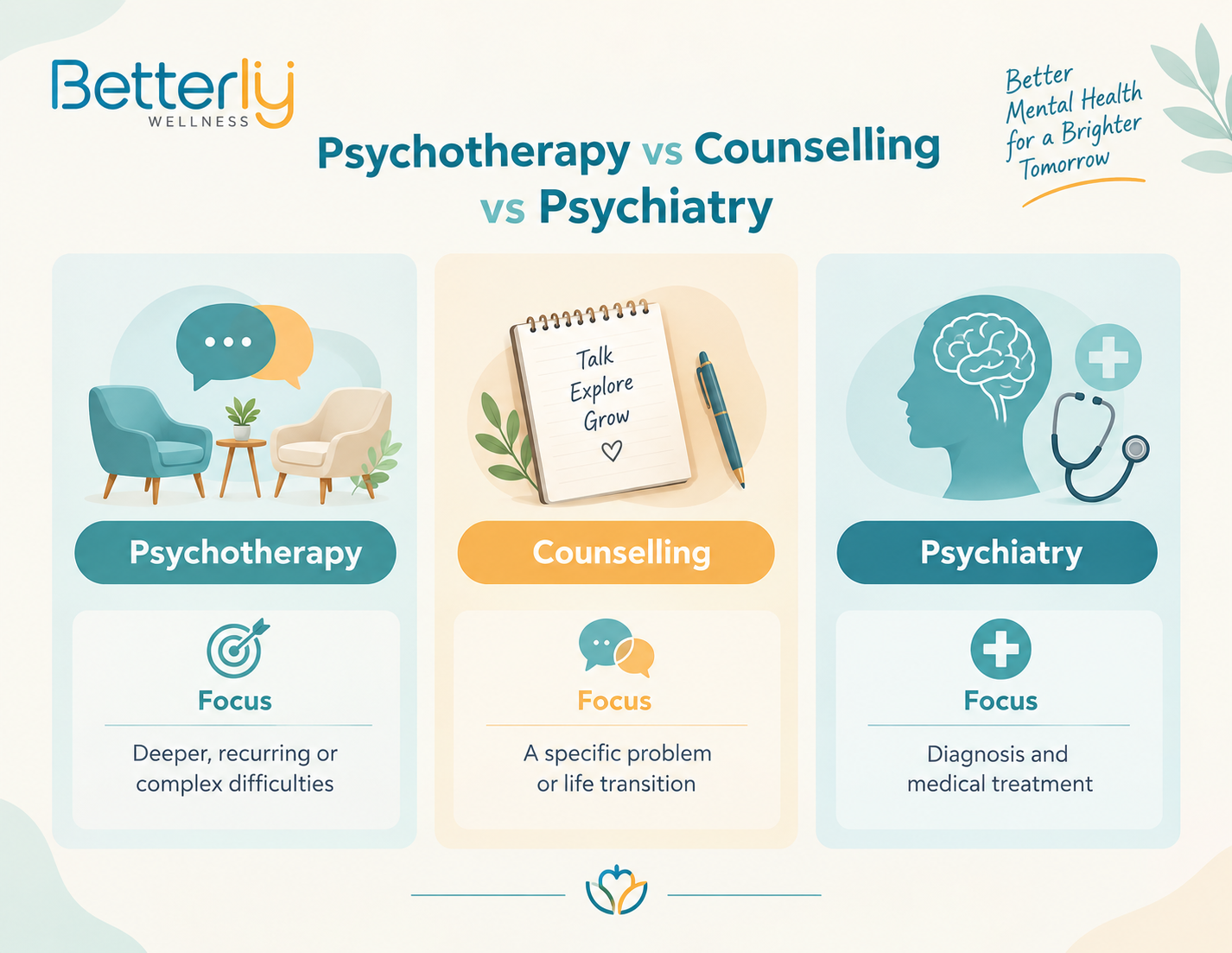
Psychotherapy | Counselling | Psychiatry | |
Focus | Deeper, recurring or complex difficulties | A specific problem or life transition | Diagnosis and medical treatment |
Typical length | Several weeks to months | Shorter-term | Varies; review-based |
Delivered by | Clinical or counselling psychologist, psychotherapist | Counsellor, psychologist | Medical doctor (psychiatrist) |
Medication | No | No | Yes, when appropriate |
Best when | Patterns keep repeating | You need focused support now | Symptoms are severe or medication may help |
In practice these overlap. Many people benefit from combining therapy with medical review. This is why integrated clinics matter.
Why Mental Health Recovery Needs More Than a Few Sessions
Nearly 1 in 7 people worldwide, about 1.1 billion, were living with a mental disorder in 2021, with anxiety and depressive disorders the most common. The same WHO fact sheet notes that effective treatments exist, yet most people do not have access to effective care.
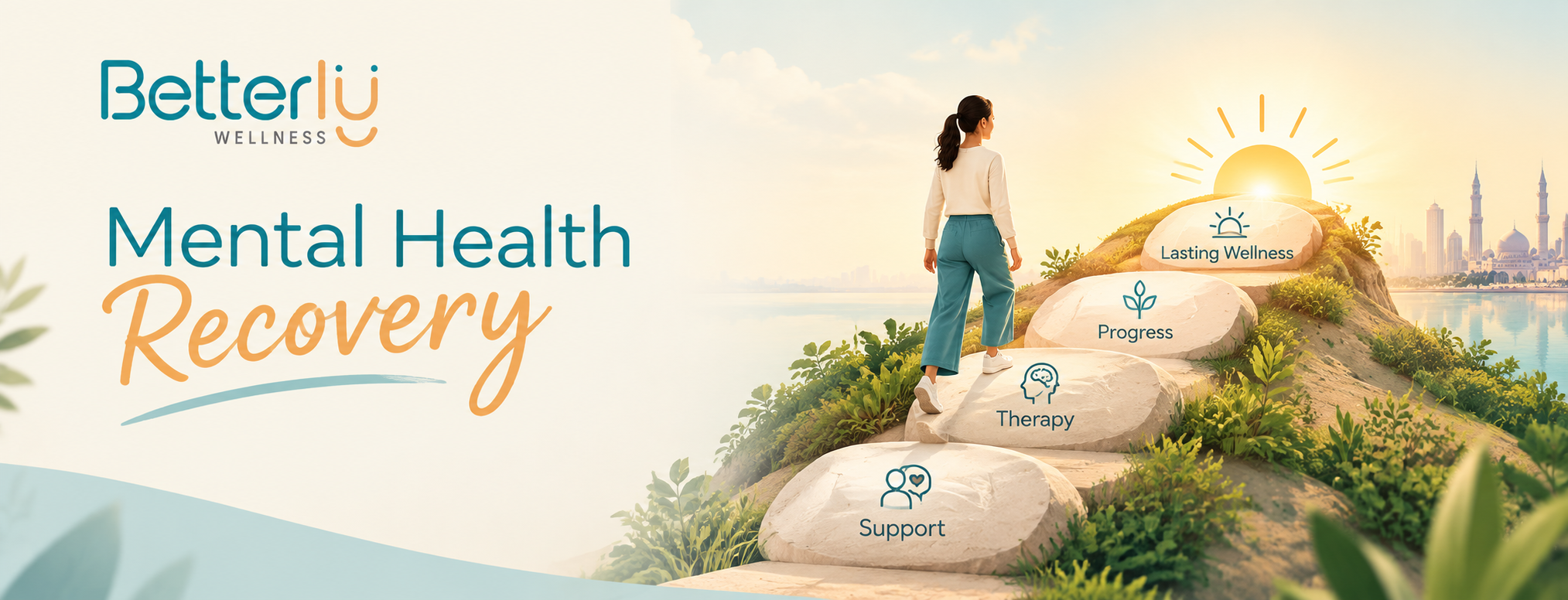
Access is one problem. Follow-through is another. Recovery tends to move through recognisable stages:
- Stabilisation: Symptoms ease and you understand what you’re dealing with.
- Skill-building: You learn tools such as thought records, grounding and behavioural activation.
- Pattern change: You work on deeper habits, beliefs or relationships driving distress.
- Maintenance: You practise independently and plan for setbacks.
Most people who stop early stop after stage one. That is when they feel better but haven’t yet built anything durable.
Expert Insight: Feeling better and being well are not the same. Early relief often comes from being heard for the first time. Lasting change comes from practising new responses when you are stressed, not just when you are calm. A good therapist plans for relapse from the start.
How Therapy Supports Long-Term Wellbeing

Therapy supports long-term wellbeing by teaching skills you keep using after sessions end. These include recognising unhelpful thought patterns, regulating emotions, changing avoidance behaviours and communicating needs. The goal is not just symptom relief but independence: knowing what to do when difficulty returns.
Here is what that looks like in practice:
- Awareness. You learn to spot early warning signs, such as disrupted sleep, withdrawal or irritability, before a low period deepens.
- Skills. You practise techniques until they become habits.
- Perspective. You understand why certain situations hit you harder than others.
- Support planning. You know who and what helps, and when to return for a booster session.
Emotional Wellbeing in the UAE Context
Life in the UAE brings its own pressures: long working hours, distance from extended family, expatriate isolation, visa and financial stress, and cross-cultural family expectations. Therapy that ignores this context can feel generic. Ask any clinician how they work with your situation, including language and cultural background.
Types of Therapy Used for Recovery in Sharjah
CBT in Sharjah
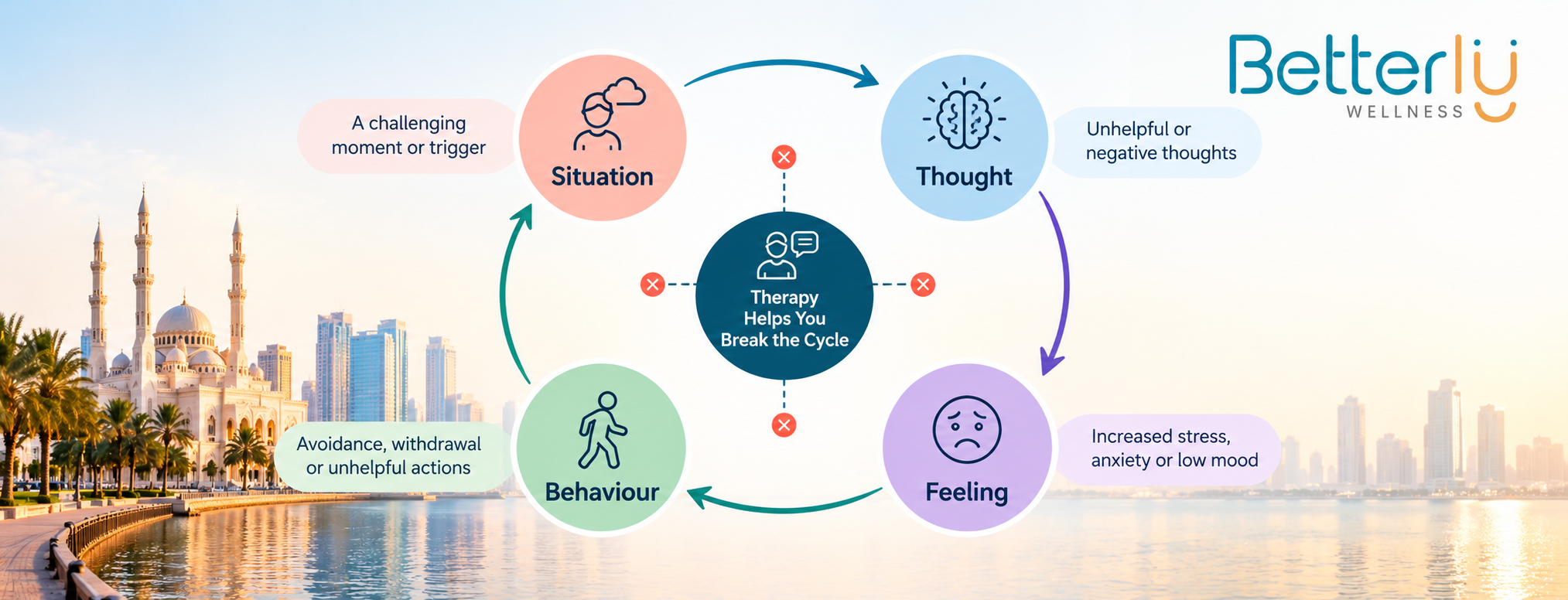
Cognitive Behavioural Therapy (CBT) helps you identify unhelpful thought patterns and change the behaviours that keep them going. It is structured, goal-focused and usually skills-based. WHO lists CBT among its recommended psychological interventions for depression, alongside behavioural activation and interpersonal psychotherapy.
CBT suits anxiety, low mood, panic and stress. Sessions often include short between-session exercises, which is where much of the benefit comes from.
Acceptance and Commitment Therapy (ACT)

ACT teaches you to notice difficult thoughts without being ruled by them, and to act on your values. It suits people who feel stuck in worry, perfectionism or avoidance. Betterly’s Clinical Lead Psychologist, Dr. Afsal Moosa, lists ACT among his areas of expertise.
Psychodynamic Psychotherapy

This approach explores how earlier experiences and relationship patterns shape present difficulties. It tends to be longer-term and suits recurring relationship problems or long-standing emotional patterns. Research reviews also support its effectiveness for depressive and anxiety disorders.
Couple and Family Therapy

Recovery rarely happens in isolation. When a relationship or family system is part of the problem, involving partners or family members can make changes stick. Betterly Wellness lists work with children, adolescents, adults and couples.
Which Approach Is Right for You?
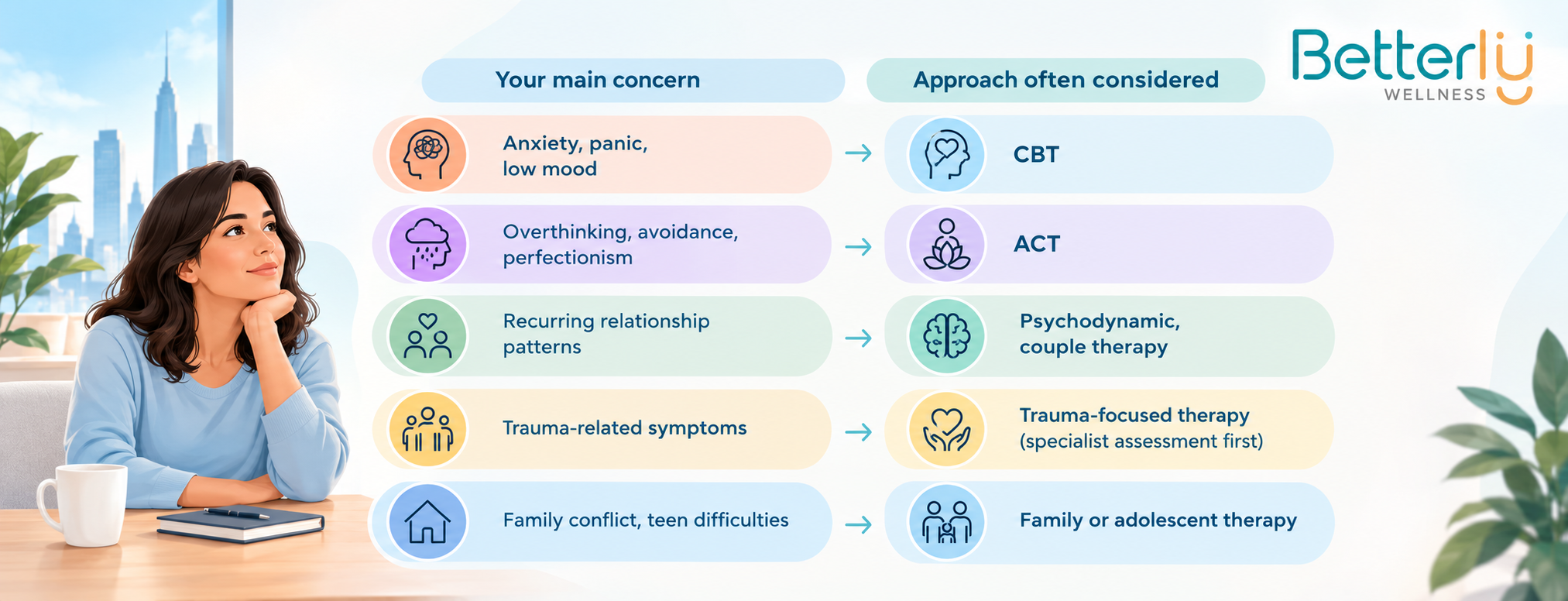
This is a starting guide. A clinician should recommend an approach after assessment.
What to Expect in Your First Sessions
Your first session is usually an assessment. Your therapist asks about your symptoms, history, daily life and goals, explains how they work and agrees a plan with you. You should leave knowing the approach, the likely number of sessions and how progress will be reviewed.
A typical path:
- Intake: You describe what brings you in.
- Assessment: The clinician clarifies symptoms, risks and history.
- Goal-setting: You agree what “better” means for you.
- Active sessions: Regular sessions, usually weekly to start, with exercises between visits.
- Review: Progress is checked, and sessions are spaced out as you improve.
How Long Does It Take?
There is no fixed timeline. Many people notice early relief within the first several sessions. Deeper patterns, trauma or long-standing depression often take several months. Your therapist should review progress with you regularly rather than leave it open-ended.
Who Is Psychotherapy For?
Psychotherapy is for anyone whose distress is affecting sleep, work, relationships or enjoyment of life. That includes:
- Persistent anxiety, stress or burnout
- Low mood or depression
- Relationship or family difficulties
- Grief and major life transitions
- Difficulty coping after trauma
- Teens and children struggling emotionally or behaviourally
You do not need a diagnosis to start. You need only a sense that things could be better.
When to seek urgent help: If you are thinking about harming yourself, call 999 or go to your nearest emergency department. Crisis lines listed for the UAE include Itma’en on 800506 for Dubai and 800 SAKINA (800 725462) for Abu Dhabi. Verify current numbers before publishing.
Cost of Psychotherapy in Sharjah: What Affects the Price
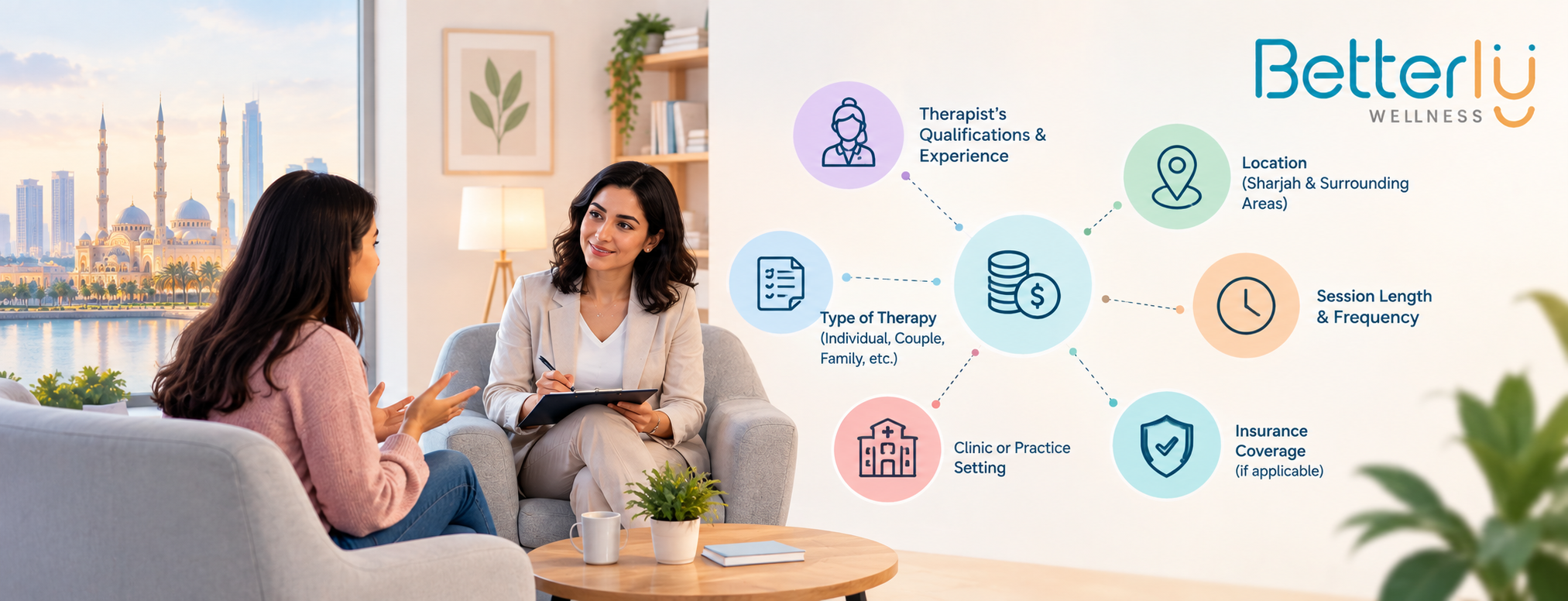
Fees vary widely and few clinics publish them. Here are the factors that drive the price:
- Clinician qualification. Psychiatrists, clinical psychologists and counsellors are priced differently.
- Session length. 45 to 60 minutes is common.
- Format. In-person and online may be priced differently.
- Package or single session. Bundles can reduce the per-session cost.
- Insurance. Coverage for outpatient mental health care varies by plan.
For reference, Doctify lists Dr. Zoheb Raj’s psychiatric consultation at AED 400 for a new appointment and AED 350 for follow-ups, noting fees may vary by location. These are psychiatric consultation fees, not psychotherapy session fees.
Ask three questions before you start:
- What is the per-session fee?
- What is your cancellation policy?
- Are package rates available?
Common Mistakes People Make When Choosing Therapy
Mistake | Why it happens | Better approach |
Stopping after the first improvement | Relief feels like recovery | Agree a maintenance plan up front |
Choosing only on price | Fees are visible, quality is not | Compare qualifications and approach as well |
Not checking licensing | Assuming all clinics are equivalent | Verify registration with the relevant UAE health authority |
Expecting therapy to work without practice | Therapy feels passive | Do the between-session exercises |
Staying with a poor fit | Feeling awkward about switching | Give it a few sessions, then say so or change |
Skipping medical review | Assuming therapy alone always suffices | Ask whether a psychiatric assessment could help |
How to Choose a Psychotherapist in Sharjah

About Betterly Wellness: Who You Would Be Working With
Betterly Wellness is a mental health and wellness clinic in Muweilah, Sharjah. The clinic is at the Al Maha Building (old DIB Building), Office 101, Muweilah Commercial. It offers in-person and online sessions. Doctify shows a 5.0 rating from 19 reviews.
Clinical team (verifiable profiles):
- Dr. Zoheb Raj, Chief Psychiatrist and Medical Director: MBBS from the University of Calicut and MD in Neuropsychiatry from KUHS University, with 17 years of experience. He has served as Associate Professor of Psychiatry and led a child mental health clinic at KMCT Medical College. He works with integrative treatment plans.
- Dr. Afsal Moosa, Clinical Lead Psychologist and Director: PhD in Psychology (2025), MPhil in Clinical Psychology, 12 years of experience, and registered with the Ministry of Health (No. T100964). His work spans psychotherapy, couple and family therapy and neuropsychological rehabilitation.
Why an integrated setup matters: Having a psychiatrist and psychologists under one roof means therapy and medical review can be coordinated when needed, without you repeating your history.
Take the Next Step
If you’re comparing options for psychotherapy in Sharjah, book an initial consultation and ask the questions in this guide: approach, expected duration, fees, and how progress will be reviewed. A good clinic will welcome those questions.
Frequently Asked Questions
Psychotherapy is a longer, deeper treatment for persistent or complex difficulties such as anxiety, depression, trauma or relationship patterns. Counselling is usually shorter and focused on a specific problem or life transition. In practice the two overlap, and a good clinician will recommend the depth of support that fits your situation.
There is no fixed timeline. Many people notice early relief within the first several sessions, while deeper patterns, trauma or long-standing depression often need several months. Length depends on your goals, how severe symptoms are and how consistently you practise skills between sessions. Your therapist should review progress with you regularly.
Yes. CBT is offered by psychologists and therapists across Sharjah, including in-person and online sessions. The World Health Organization lists cognitive behavioural therapy among its recommended psychological treatments for depression, and it is widely used for anxiety too. It works best when you actively practise the techniques between appointments.
Fees vary by clinician qualifications, session length and whether you attend in person or online. Psychiatrist consultations in Sharjah are often priced differently from psychotherapy sessions. Ask about the per-session fee, cancellation policy and any package rates before you begin, and check whether your insurance plan covers outpatient mental health care.
Often, yes. Betterly Wellness lists both in-person and online sessions, which suits busy schedules and those who prefer privacy. Because health licensing in the UAE is managed by emirate, confirm with the clinic that online sessions are available where you live. For severe symptoms or crisis, in-person assessment is usually safer.
See a psychiatrist when symptoms are severe, include thoughts of self-harm, involve mania or psychosis, or when medication may be needed. A psychologist or psychotherapist focuses on talk-based treatment. Many people benefit from both, and clinics offering integrated care can coordinate the two.
Check their licence and qualifications, ask which approaches they use for your concern, and confirm languages spoken. Look at experience with your specific issue, session format, fees and cancellation terms. Most importantly, notice whether you feel heard in the first session, because the therapeutic relationship strongly predicts progress.
Connect with Us