
Top Signs Your Child May Need a Child Psychologist in Sharjah and How Early Support Can Help
Every child has difficult days. Some children cry more than usual, some become quiet, some have tantrums, and others struggle to explain what they are feeling. For many parents, the hardest part is knowing whether a behaviour is simply a phase or a sign that their child could benefit from professional support.
In a busy family environment, it is natural to wait and hope things settle on their own. Sometimes they do. However, when emotional, social, or behavioural changes continue for several weeks and begin affecting school, friendships, sleep, confidence, or home life, it may be worth speaking with a child psychologist in Sharjah.
At Betterly Wellness, parents often come with the same worry: “Am I overreacting?” The answer is often simple. Seeking guidance early does not necessarily mean something is seriously wrong with your child. It means you are taking their concerns seriously and giving them appropriate support before smaller difficulties become harder to manage.
This guide explains the signs parents can look for, why early intervention for children can matter, and how professional child therapy in Sharjah may support a child’s emotional wellbeing, confidence, and ability to cope.
Why Children May Struggle Emotionally and Behaviorally
Children do not always know how to express feelings such as anxiety, overwhelm, or anger. Instead, they may communicate these feelings through their behaviour.
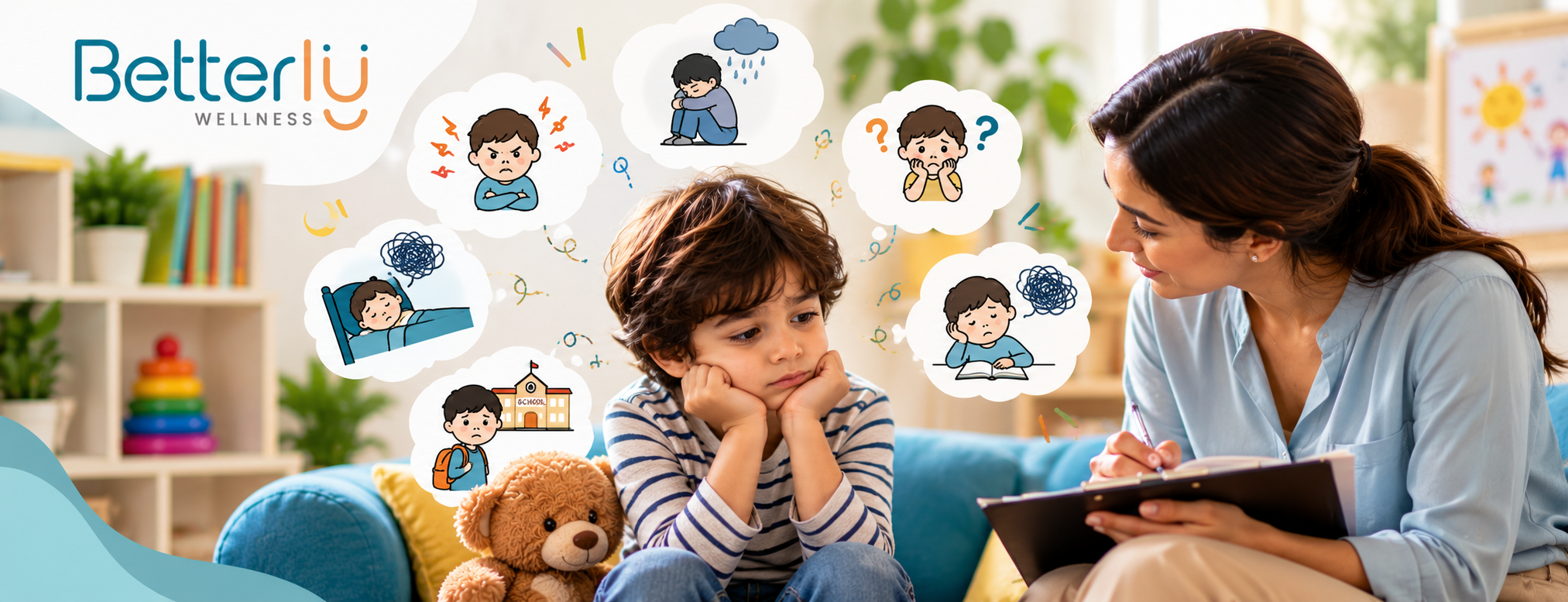
A child may shout, refuse to go to school, become clingy, stop eating well, complain of stomach pain, or suddenly lose interest in activities they once enjoyed. These reactions are not always simply “bad behaviour.” Sometimes, they can be signs that the child is trying to cope with feelings or situations they do not yet know how to explain.
Common reasons children may benefit from emotional support include:
- Family changes such as separation, relocation, or the arrival of a new sibling
- Academic pressure or fear of failure
- Bullying or friendship difficulties
- Low self-esteem
- Anxiety or excessive worry
- Grief or loss
- Difficulty adjusting to a new school or country
- Attention and concentration challenges
- Trauma or frightening experiences
- Ongoing behavioural difficulties that affect everyday routines
Children growing up in Sharjah and elsewhere in the UAE may experience a combination of school expectations, cultural transitions, social pressures, screen exposure, and changing family routines. These factors can influence a child’s emotional wellbeing in different ways.
With appropriate psychological support for children, families can better understand what may be contributing to these difficulties and help children build healthier coping skills.
1. Your Child Has Frequent Emotional Outbursts
All children have emotional outbursts from time to time, particularly when they are tired, hungry, disappointed, or frustrated. However, when outbursts become unusually intense, frequent, long-lasting, or difficult to calm, your child may need additional support.
You may notice:
- Crying spells that are difficult to explain
- Anger over relatively small issues
- Screaming, hitting, or throwing things
- Difficulty calming down after becoming upset
- Strong reactions to routine changes
These behaviours do not necessarily mean your child is being difficult on purpose. They may be struggling to regulate emotions or communicate what is bothering them.
A child psychologist can help children recognise their emotions, put feelings into words, and develop safer ways of responding when they feel frustrated or overwhelmed.
Parents may also receive practical guidance on responding to emotional outbursts without unintentionally escalating the situation. Over time, this can help create a calmer and more predictable home environment.
2. Your Child Suddenly Becomes Withdrawn
Some children are naturally quiet or prefer smaller social settings. That alone is not necessarily a concern. However, a noticeable change in your child’s usual behaviour deserves attention.
Withdrawal may include:
- Avoiding eye contact
- Spending significantly more time alone
- Not wanting to play or interact with friends
- Losing interest in hobbies
- Becoming unusually quiet
- Refusing to discuss school or feelings
Children may withdraw because they feel anxious, sad, embarrassed, bullied, or emotionally overloaded. Some children also avoid talking because they do not want to worry their parents.
Professional child therapy in Sharjah can provide a safe and supportive environment where children can express feelings they may struggle to communicate at home.
Depending on the child’s age, therapy may involve conversation, drawing, play, stories, or other age-appropriate activities.
3. School Performance Starts Dropping
A sudden drop in grades, repeated concerns from teachers, or difficulty concentrating can sometimes be linked to more than academic performance.
Emotional stress may affect a child’s ability to focus, remember instructions, complete tasks, or feel confident about learning.
You may notice that your child:
- Frequently forgets homework
- Struggles to concentrate
- Avoids schoolwork
- Loses confidence in learning
- Complains of headaches or stomach aches before school
- Refuses to attend school
- Receives repeated concerns or complaints from teachers
Some children experiencing anxiety or emotional distress find it difficult to concentrate even when they want to.
Others may have attention-related concerns that require further assessment. If attention, impulsivity, or hyperactivity is significantly affecting your child’s learning and everyday life, professional assessment can help families understand whether emotional, developmental, behavioural, or attention-related factors may be contributing.
4. Your Child Shows Signs of Anxiety
Anxiety in children can sometimes be difficult to recognise because it does not always look like obvious worry.
A child may appear clingy, irritable, angry, physically unwell, or reluctant to participate in certain activities. Instead of saying, “I am anxious,” a child might say, “I do not want to go,” “My tummy hurts,” or “What if something bad happens?”
Possible signs include:
- Frequent worrying
- Fear of being away from parents
- Avoiding school, events, or social situations
- Difficulty sleeping alone
- Repeatedly asking for reassurance
- Perfectionism or fear of making mistakes
- Physical complaints without an identified medical explanation
Some anxiety is a normal part of childhood, particularly during periods of change. However, when worry begins interfering with everyday activities, school attendance, sleep, friendships, or family life, additional support may be helpful.
A child psychologist in Sharjah can use age-appropriate approaches to help children recognise anxious thoughts, understand their emotional reactions, and gradually develop confidence.
Parents can also learn how to reassure and support their child without accidentally strengthening patterns of avoidance or fear.
5. Behavioural Concerns Are Affecting Home Life
Parents often try many strategies before asking for professional help. They may introduce rules, reduce screen time, speak with teachers, offer rewards, give reminders, or adjust routines.
When difficulties continue despite these efforts, families can understandably become frustrated or exhausted.
Children’s behavioural concerns may include:
- Defiance
- Aggression
- Lying
- Frequent arguments
- Refusing instructions
- Persistent sibling conflict
- Repeatedly breaking rules
- Difficulty accepting boundaries
These behaviours may have different underlying causes. A child might be reacting to stress, struggling with impulse control, seeking connection, testing boundaries, copying behaviour they have observed, or finding it difficult to express emotions appropriately.
Effective psychological support for children does not focus simply on blaming the child or parent.
Instead, a psychologist may explore questions such as:
What tends to trigger the behaviour?
What happens immediately before and after it?
Is the child lacking a particular emotional or communication skill?
What changes could make routines easier for the family?
At Betterly Wellness, the focus is not simply on stopping difficult behaviour. The aim is to understand what may be driving it and help children and parents develop healthier ways of communicating and responding.
6. Your Child Has Changes in Sleep or Eating Habits
Emotional concerns can sometimes affect the body.
If your child’s sleep or eating patterns change suddenly and remain different for several weeks, stress, anxiety, sadness, or adjustment difficulties may be contributing.
Watch for changes such as:
- Difficulty falling asleep
- Frequent nightmares
- Waking repeatedly during the night
- Sleeping significantly more than usual
- Reduced appetite
- Eating in response to emotions
- Fear of sleeping alone
- Bedwetting after previously remaining dry at night
Children may not recognise that these changes are connected to how they are feeling.
A psychologist can help explore possible emotional factors and teach children calming techniques, coping strategies, and routines that may support a greater sense of safety.
Persistent physical symptoms or significant changes in sleep or appetite should also be discussed with an appropriate medical professional so that physical health concerns can be assessed.
7. Your Child Struggles Socially
Friendship difficulties can have a significant effect on a child’s confidence.
Some children are naturally shy and need more time to become comfortable with others. However, repeated social difficulties, isolation, or distress around friendships may indicate that additional support could help.
You may notice:
- Your child struggles to form close friendships
- They are frequently involved in conflicts
- They avoid group activities
- They experience bullying or teasing
- They find sharing or taking turns difficult
- They appear nervous in social situations
- They regularly become upset after interactions at school
Social skills develop gradually, and children progress at different rates.
Some children benefit from additional help understanding emotions, reading social cues, managing rejection, resolving disagreements, or communicating more confidently.
Child therapy in the UAE can support children in developing social confidence, problem-solving abilities, communication skills, and emotional resilience.
This may be particularly useful for children adapting to new schools, multicultural classrooms, relocation, or other major changes.
8. Your Child Has Low Self-Esteem
Low self-esteem does not always look like sadness.
Some children become perfectionists because they are afraid of failing. Others stop trying because they believe they will not succeed. Some may act overly confident or aggressive to hide insecurity.
Pay attention to repeated statements such as:
- “I am stupid.”
- “Nobody likes me.”
- “I cannot do anything right.”
- “I am bad.”
- “I do not want to try.”
- “Everyone is better than me.”
Occasional frustration is normal, but persistent negative self-talk deserves attention.
It can affect motivation, learning, friendships, willingness to try new activities, and emotional wellbeing.
A child psychologist can help children recognise negative thinking patterns, understand their strengths, develop a more balanced view of themselves, and learn that mistakes are a normal part of learning.
9. Your Child Has Experienced a Major Life Change
Children can be strongly affected by changes that adults may expect them to “get used to.”
Moving home, changing schools, parental separation, losing a loved one, illness within the family, relocation, or the arrival of a new sibling can all create emotional stress.
Some children adapt relatively quickly. Others need more time and support.
Signs that a child may be struggling after a major change include:
- Returning to behaviours associated with a younger age
- Increased clinginess
- Anger
- Fearfulness
- School refusal
- Crying more frequently
- Changes in appetite or sleep
- Repeated questions about separation or safety
Early intervention for children can provide space to process major changes before emotional difficulties become more disruptive.
Therapy can also help parents understand what their child may be experiencing and how to provide reassurance during the transition.
10. You Feel Something Is Not Right
Parents often notice subtle changes in their child before anyone else.
If your child seems noticeably different from their usual self, it is reasonable to seek professional advice.
You do not need to wait until there is a crisis.
You do not need to wait until school performance declines significantly.
You also do not need to wait until your child can explain exactly what they are feeling.
Speaking with a child psychologist in Sharjah can help provide clarity.
For some families, a small number of consultations may be enough to better understand what is happening and identify practical next steps. Other children may benefit from more ongoing support.
What matters is responding to concerns in a way that matches your child’s individual needs.
How a Child Psychologist Can Help
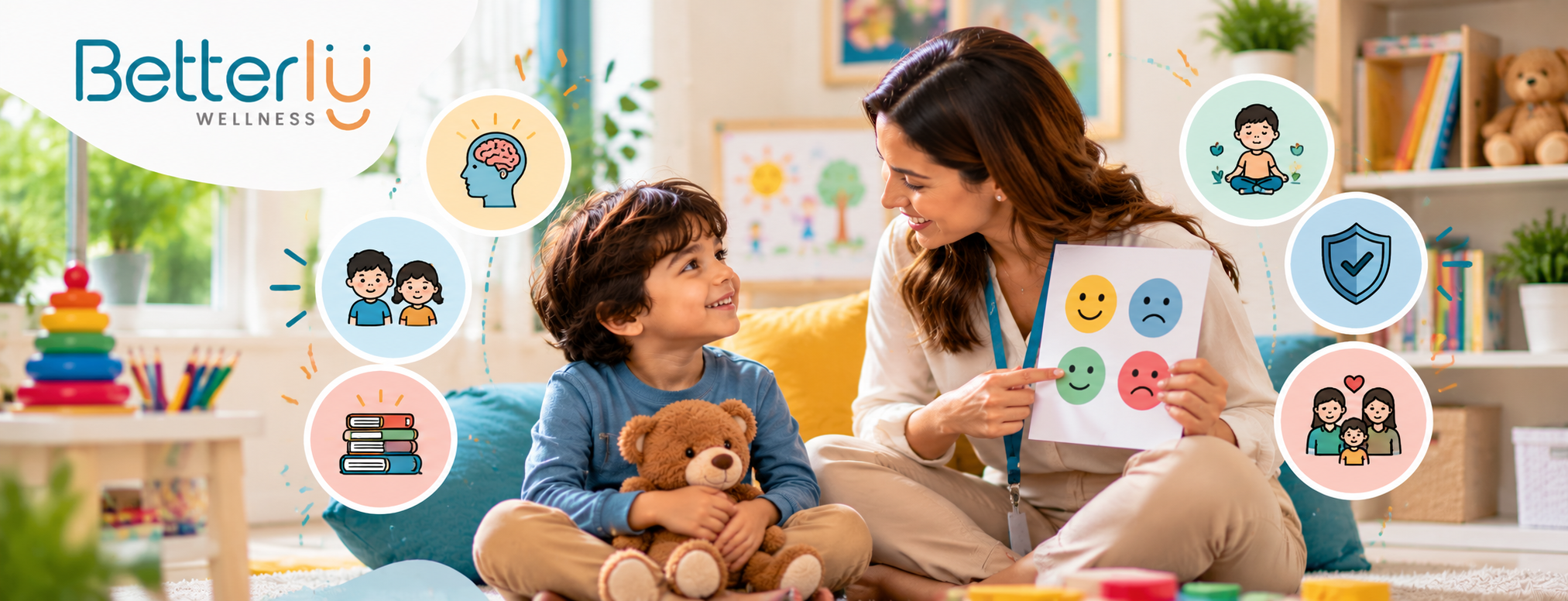
A child psychologist works with children using approaches suited to their age, personality, developmental stage, and emotional needs.
Younger children may communicate more comfortably through play, drawing, stories, games, or creative activities. Older children may benefit from conversation, practical coping strategies, emotional exercises, and structured problem-solving.
Support may include:
- Emotional regulation strategies
- Confidence building
- Anxiety management
- Behaviour planning
- Parent guidance
- School-related support
- Social skills development
- Attention and focus strategies
- Coping skills for stress and change
The psychologist may also work with parents to improve communication, routines, boundaries, emotional connection, and responses to challenging behaviour.
At Betterly Wellness, child therapy is focused on understanding each child as an individual rather than defining them by a difficulty or concern.
The goal is to provide children and families with practical strategies that can be used in everyday life.
Why Early Intervention for Children Matters
Many parents delay seeking help because they worry that therapy will make a concern seem more serious than it is.
In practice, early support can give families an opportunity to address difficulties while they are still manageable.
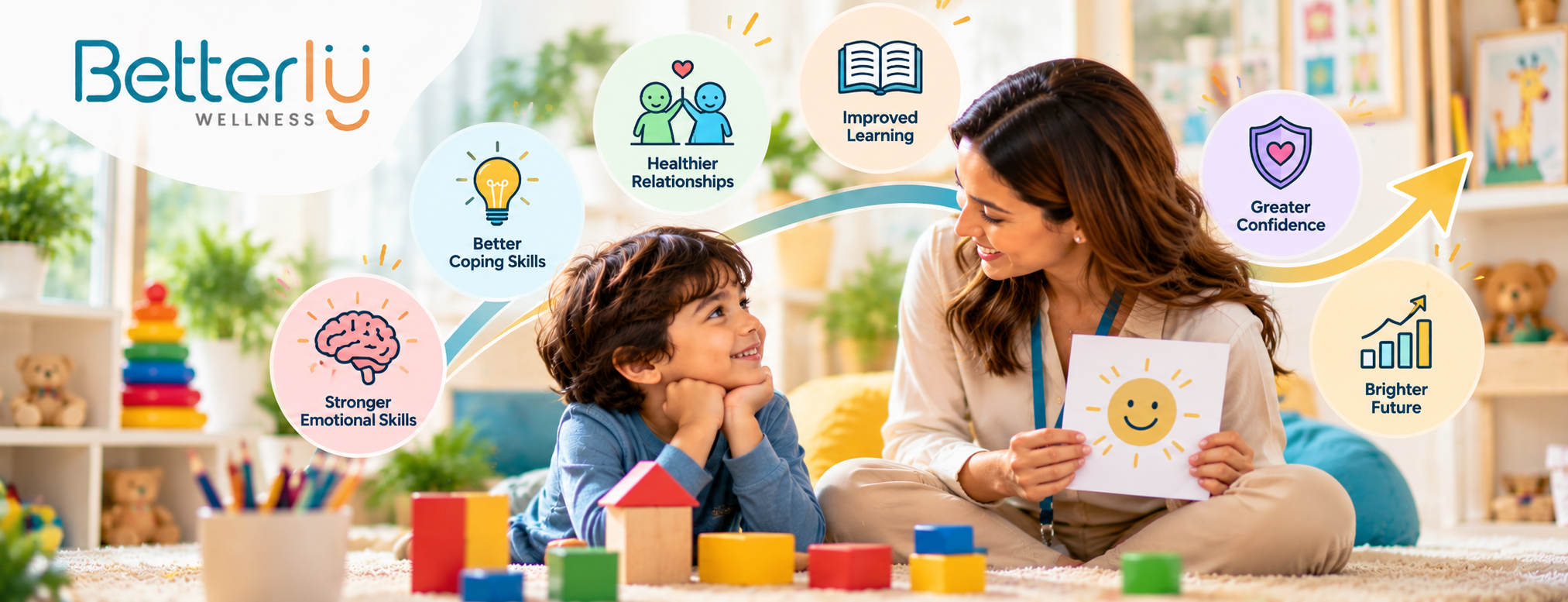
With appropriate support, children may learn to:
- Understand their emotions
- Develop healthier coping strategies
- Communicate more clearly
- Feel safer and more secure
- Manage frustration and anxiety
- Build self-confidence
- Strengthen relationships with parents, siblings, and peers
Early support can also help parents feel more confident.
Instead of repeatedly guessing how to respond to a child’s behaviour, parents can receive professional guidance based on the child’s individual situation.
Awareness of children’s emotional and behavioural concerns is growing across the UAE, with more families recognising that emotional wellbeing deserves attention alongside physical health, relationships, and academic development.
When Should You Book an Appointment?

You may want to consider professional support if your child’s emotional or behavioural changes:
- Continue for more than a few weeks
- Affect school, sleep, eating, or friendships
- Create frequent stress at home
- Seem unusually intense for your child’s age
- Do not improve with your usual parenting strategies
- Cause noticeable distress
- Leave you feeling concerned or unsure about what to do
You do not need to know exactly what is causing the problem before reaching out.
An initial consultation can help identify the concerns, understand how they are affecting your child, and determine what type of support may be appropriate.
A child psychologist in Sharjah can listen to your concerns, assess your child’s needs, and discuss possible next steps with you.
How Parents Can Help at Home
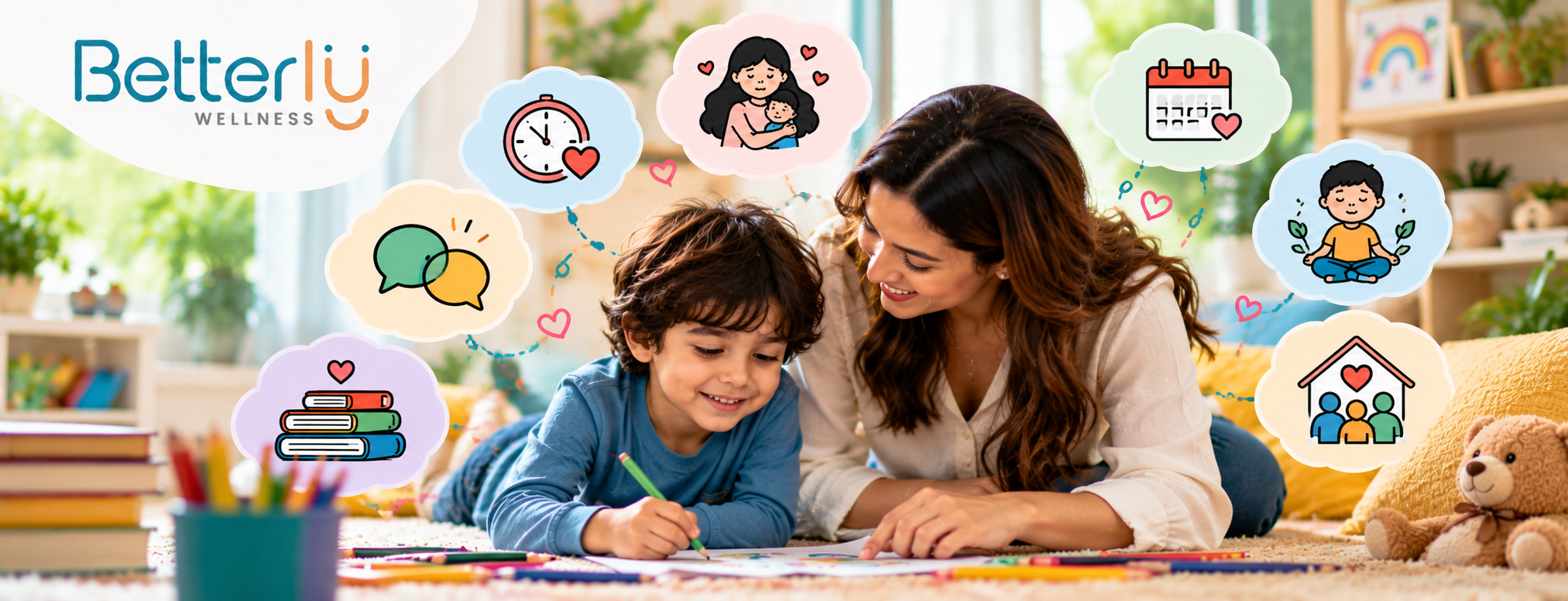
Professional child therapy in Sharjah can be valuable, but the support children receive at home is also important.
Small changes in everyday communication can help children feel heard, secure, and better able to express themselves.
Try the following:
- Listen before correcting. Children sometimes need to feel understood before they are ready for advice.
- Name feelings gently. Try saying, “It looks like you felt really upset,” instead of immediately asking them to stop crying.
- Keep routines predictable. Knowing what to expect can help children feel safer.
- Praise effort rather than only results. This can support confidence and resilience.
- Avoid overly harsh reactions. Strong reactions may make children less willing to share their feelings.
- Spend individual time together. Even short periods of focused attention can strengthen connection.
- Avoid comparisons. Comparing children with siblings or classmates can affect self-esteem.
- Ask simple questions. “What was difficult today?” may feel easier to answer than “What is wrong with you?”
These strategies do not replace professional treatment when it is needed, but they can complement therapy and support the skills children are developing.
Why Choose Betterly Wellness?

Choosing the right therapist for your child is a personal decision.
Parents commonly look for someone who is appropriately qualified, compassionate, patient, and able to communicate with children in a way that feels safe and respectful.
Betterly Wellness provides child-focused psychological support for families in Sharjah.
The approach is practical and tailored to each child’s emotional and behavioural needs. Support may be appropriate for children dealing with anxiety, school stress, low confidence, behavioural difficulties, adjustment concerns, attention challenges, or other emotional issues.
Parents can also receive guidance throughout the process because progress often becomes easier when children and caregivers are working towards the same goals.
If you are considering child therapy in Sharjah or simply want professional guidance about whether your child may benefit from support, Betterly Wellness can help you understand the available options and next steps.
Final Thoughts
Your child does not need to be experiencing a crisis before you seek professional guidance.
Sometimes, the most useful time to ask for help is when changes are still relatively small.
If your child has become more anxious, withdrawn, angry, distracted, sad, overwhelmed, or emotionally reactive than usual, pay attention to the pattern and how much it is affecting everyday life.
These changes may be your child’s way of communicating that something feels difficult.
A child psychologist in Sharjah can help children understand their emotions, develop healthier coping skills, communicate more effectively, and build confidence at home, at school, and in social situations.
Seeking support early gives families an opportunity to understand what is happening and respond in a thoughtful, appropriate way.
Frequently Asked Questions
Consider speaking with a child psychologist if anxiety, anger, sadness, school refusal, withdrawal, sleep changes, behavioural concerns, or other difficulties continue for several weeks or begin interfering with your child’s everyday life.
No. Child therapy may also support children dealing with everyday emotional challenges, school pressure, confidence issues, family changes, adjustment difficulties, attention concerns, or behavioural problems. Early guidance can help families address concerns before they become more disruptive.
The approach depends on the child’s age and needs. Sessions may involve conversation, play, drawing, stories, emotional exercises, coping strategies, behaviour support, and parent guidance. The psychologist will usually adapt the approach to the child’s developmental stage and comfort level.
Yes. A psychologist can explore factors contributing to difficult behaviour and help children develop healthier ways of managing emotions, frustration, routines, boundaries, and communication.
Early intervention can help families understand emotional or behavioural concerns before they become more disruptive. It can also help children develop coping, communication, emotional regulation, and problem-solving skills that support them in everyday life.
It can help when emotional stress, anxiety, confidence issues, social difficulties, or behavioural concerns are affecting a child’s school experience. A psychologist can help identify contributing factors and suggest strategies for the child and family.
Betterly Wellness provides professional psychological support for children and families in Sharjah. Support may address anxiety, emotional regulation, behavioural concerns, attention difficulties, self-esteem, school stress, social challenges, and adjustment to major life changes.
Connect with Us