

When to See a Psychiatrist in Sharjah:
Signs and What to ExpectConditions
Author: Betterly Wellness Editorial Team
Proposed Medical Reviewer: Dr Zoheb Raj, MBBS, MD in Neuropsychiatry, Fellow of the European Board of Psychiatry, Specialist Psychiatrist and Medical Director at Betterly Wellness
Clinical approval status: Review and approval required before publication
Author Bio
The Betterly Wellness Editorial Team develops educational content to help individuals and families better understand mental health, emotional wellbeing, behavioural health, and available treatment options. Medical articles are prepared for review by qualified mental health professionals before publication.
Medical disclaimer: This article is for general informational purposes only. It is not a substitute for professional medical advice, psychiatric assessment, diagnosis, or treatment. Speak with a qualified healthcare professional about symptoms affecting your mental health. If there is an immediate risk of harm to yourself or someone else, call UAE ambulance services on 998, contact the police on 999, or go to the nearest emergency department.
Table of Contents
Mental health difficulties do not always look like a visible crisis. You may continue going to work, caring for your family, attending social gatherings, and completing daily responsibilities while privately feeling anxious, emotionally exhausted, restless, low, irritable, or disconnected from yourself.
Many people delay seeking support because they believe their difficulties are not serious enough. Others worry about being judged, receiving a diagnosis, or being told that they need medication. Some continue trying to manage everything alone until their symptoms begin affecting sleep, relationships, work, studies, or physical health.
You do not need to reach a breaking point before consulting a psychiatrist in Sharjah. A psychiatric consultation can help you understand your symptoms, identify possible causes, and discuss treatment options that match your needs.
Betterly Wellness provides psychiatric and psychological support from its mental health clinic in Muwaileh Commercial, Sharjah. The clinic supports adults, children, adolescents, couples, and families across Sharjah and other parts of the UAE.
Quick Answer: When Should You See a Psychiatrist?
Consider speaking with a psychiatrist when emotional or behavioural symptoms:
- Continue for several weeks
- Keep returning despite your efforts to manage them
- Affect your work, education, sleep, relationships, or self-care
- Cause significant distress
- Involve extreme mood changes, panic, compulsive behaviour, or substance use
- Do not improve with counselling or lifestyle changes
- Include thoughts of self-harm, suicide, or harming someone else
A psychiatrist can conduct a psychiatric assessment and determine whether your symptoms may benefit from psychotherapy, medication, lifestyle support, further testing, or a combination of treatments.
What you are experiencing | When professional support may help |
Persistent anxiety or overthinking | When worry affects decisions, sleep, work, or relationships |
Low mood or loss of interest | When symptoms continue for two weeks or longer |
Sudden sleep changes | When poor sleep continues and affects daily functioning |
Unpredictable mood swings | When emotional changes become extreme or disruptive |
Difficulty after a life event | When adjustment feels overwhelming or does not improve |
Reduced concentration or motivation | When work or studies begin to suffer |
Relationship difficulties | When withdrawal, anger, or emotional distress affects others |
Dependence on unhealthy coping habits | When the behaviour feels difficult to control |
Thoughts of self-harm | Immediate emergency and psychiatric support are required |

What Does a Psychiatrist Do?
A psychiatrist is a medical doctor who specialises in the diagnosis, treatment, and prevention of mental, emotional, and behavioural disorders. Unlike professionals who provide counselling alone, psychiatrists are medically trained to consider both the psychological and physical factors that may contribute to a person’s symptoms.
The American Psychiatric Association explains that psychiatrists can assess the mental and physical aspects of psychological concerns. Depending on licensing requirements and the patient’s needs, a psychiatrist may:
- Conduct a detailed psychiatric assessment
- Review symptoms, behaviour, mood, and thought patterns
- Examine medical, medication, and family history
- Consider whether a physical condition may be contributing to symptoms
- Diagnose mental health conditions
- Prescribe and monitor medication
- Recommend psychotherapy or behavioural treatment
- Coordinate care with psychologists and other healthcare professionals
- Review progress and adjust the treatment plan
Psychiatrists may support people experiencing anxiety disorders, depression, panic disorder, obsessive compulsive disorder, bipolar disorder, attention difficulties, sleep disorders, trauma-related symptoms, substance-related concerns, and other psychiatric conditions.
A visit to a psychiatrist does not automatically mean that you have a severe mental illness. It means you are obtaining a medical opinion from a qualified mental health specialist.
Betterly Wellness also provides individual counselling and psychotherapy for people who may benefit from structured psychological support alongside or instead of medical treatment.
When Should You See a Psychiatrist in Sharjah?
There is no single symptom that applies to everyone. Mental health concerns can appear differently depending on a person’s age, personality, medical background, environment, and circumstances.
Some people cry frequently. Others become emotionally numb. Some withdraw from family and friends, while others become more irritable or restless. One person may struggle to sleep, while another may sleep for long periods and still feel exhausted.
You may benefit from a psychiatric consultation if a noticeable change in your emotional wellbeing, thoughts, habits, sleep, behaviour, or daily functioning has continued for several weeks.
Nine Signs You May Need Psychiatric Support
1. You Feel Anxious Most of the Time
Anxiety is more than feeling nervous before a meeting, examination, or important event. It may require professional attention when worry becomes persistent, difficult to control, and present across several areas of life.
You might experience:
- Constant overthinking
- Racing thoughts
- A sense that something bad is about to happen
- Chest tightness or a racing heartbeat
- Shaking, dizziness, or breathlessness
- Digestive discomfort
- Difficulty relaxing
- Avoidance of social situations, meetings, driving, or crowded places
- Repeated reassurance-seeking
- Panic attacks
Anxiety can gradually influence how you make decisions. You may begin avoiding people, places, tasks, or responsibilities because they trigger discomfort. Avoidance may bring temporary relief, but it can make anxiety more restrictive over time.
The World Health Organization notes that anxiety disorders can involve excessive fear, worry, and related behavioural disturbances. Effective treatments are available, although the most appropriate approach depends on the person and the type and severity of symptoms.
If worry is controlling your choices or affecting work, sleep, relationships, or physical wellbeing, consider speaking with a mental health specialist. Betterly Wellness’s guide to the hidden signs of anxiety in the UAE provides additional information about symptoms that are sometimes overlooked.
2. You Have Been Feeling Low for Several Weeks
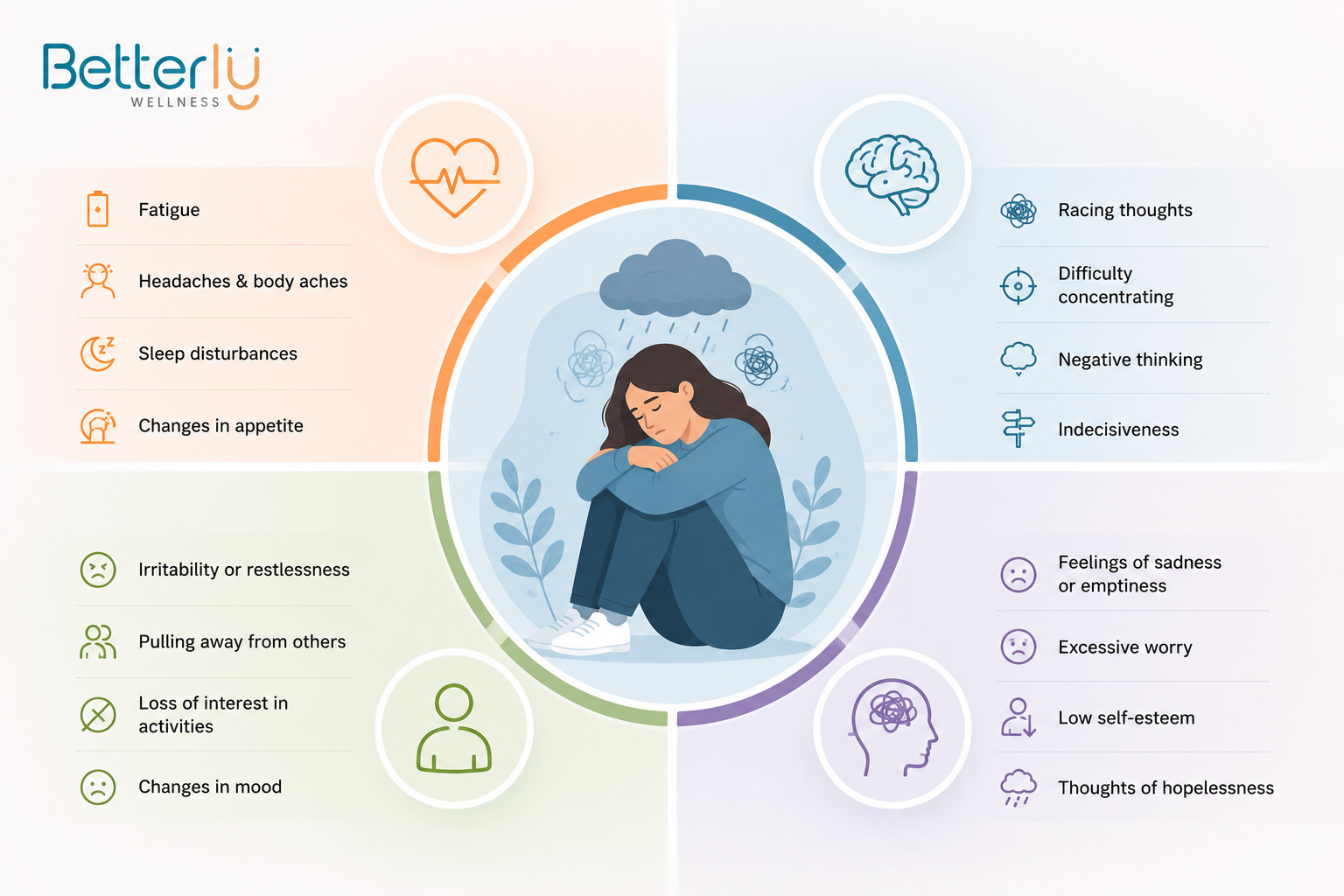
Sadness is a normal response to disappointment, loss, stress, and difficult life circumstances. Depression is different from an occasional low mood.
The World Health Organization describes depression as involving a depressed mood or loss of interest or pleasure for extended periods. Symptoms may affect relationships, work, education, physical health, and daily functioning.
Possible signs include:
- Persistent sadness or emptiness
- Loss of interest in activities you once enjoyed
- Low energy
- Reduced motivation
- Feelings of guilt, hopelessness, or worthlessness
- Changes in appetite
- Difficulty concentrating or making decisions
- Social withdrawal
- Sleeping too much or too little
- Unexplained physical discomfort
- Thoughts about death or self-harm
Not everyone with depression cries or appears visibly distressed. Some people continue meeting their responsibilities while privately feeling detached, exhausted, or hopeless.
The National Institute of Mental Health advises that depression can affect how a person feels, thinks, sleeps, eats, and manages everyday activities.
If a low mood or loss of interest has continued for two weeks or more, arranging a psychiatric assessment or psychological consultation may help clarify what you are experiencing.
3. Your Sleep Has Changed Significantly
Sleep and mental health are closely connected. Stress, anxiety, depression, trauma, mood disorders, medication, physical health conditions, and lifestyle changes can all affect sleep.
You may:
- Take hours to fall asleep
- Wake repeatedly during the night
- Wake much earlier than intended
- Experience distressing dreams
- Sleep for unusually long periods
- Feel exhausted despite getting enough sleep
- Depend on alcohol or medication to fall asleep
- Become afraid of going to bed because of racing thoughts
Poor sleep can worsen irritability, anxiety, concentration, decision-making, and emotional regulation. It may also make existing mental health symptoms harder to manage.
If sleep problems have continued for several weeks or are affecting safety and daily functioning, consult a healthcare professional. Betterly Wellness offers specialised support through its sleep and OCD clinics.
A psychiatrist may also consider whether your sleep changes are related to medication, anxiety, depression, a mood disorder, substance use, or another medical concern.
4. Your Mood Swings Feel Difficult to Control
Daily mood changes are normal. However, unusually intense or unpredictable shifts in mood may need further assessment, especially when they affect relationships, work, finances, or safety.
Possible signs include:
- Periods of unusually high energy
- Feeling intensely confident or powerful
- Needing much less sleep than usual
- Speaking more quickly
- Racing thoughts
- Impulsive spending
- Increased risk-taking
- Extreme irritability
- Sudden emotional outbursts
- Periods of severe low mood
- Feeling unable to control your reactions
Mood changes can have many possible causes, including stress, trauma, hormonal changes, sleep deprivation, medication effects, substance use, depression, or bipolar-spectrum conditions.
A psychiatrist can examine the pattern, frequency, duration, and impact of these changes. This is important because different conditions may involve similar symptoms but require different treatment approaches.
5. You Are Struggling After a Major Life Event
A major change can temporarily disrupt emotional balance. Relocation, bereavement, divorce, parenthood, job loss, financial pressure, illness, workplace conflict, and family difficulties may all affect mental wellbeing.
For people living in Sharjah or elsewhere in the UAE, adjusting to a new country, workplace culture, family structure, or reduced support network may add another layer of stress.
You may need professional support if you:
- Feel unable to adjust after several weeks or months
- Remain overwhelmed by daily responsibilities
- Experience intense anxiety or sadness
- Withdraw from people close to you
- Cannot regain a basic routine
- Feel emotionally numb
- Use unhealthy habits to avoid painful feelings
- Experience intrusive memories after a traumatic event
Seeking help does not mean your response is abnormal. It means the situation may be placing more pressure on your emotional resources than you can comfortably manage alone.
Psychotherapy may be recommended for adjustment-related difficulties. A psychiatrist may become involved when symptoms are severe, persistent, complex, or possibly require medication.
6. Your Work or Studies Are Being Affected
Mental health concerns often become visible through changes in productivity and concentration.
You may notice that you:
- Miss deadlines
- Forget appointments or instructions
- Avoid responsibilities
- Struggle to start simple tasks
- Make more mistakes
- Lose motivation
- Feel mentally foggy
- Become easily distracted
- Take frequent absences
- Work excessively because you are afraid of falling behind
These changes are sometimes labelled as laziness or poor discipline. However, they may be connected to anxiety, depression, burnout, attention difficulties, sleep problems, or another mental health condition.
A detailed psychological assessment in Sharjah may be helpful when attention, memory, emotional functioning, learning, or behavioural patterns require closer evaluation.

7. Your Relationships Are Suffering
Mental health difficulties can change how you communicate, respond to stress, and connect with other people.
You may:
- Withdraw from family or friends
- Avoid calls or messages
- Become more irritable
- React strongly to minor disagreements
- Feel misunderstood
- Lose interest in intimacy
- Struggle to trust others
- Depend heavily on reassurance
- Feel emotionally disconnected
- Repeat the same conflicts without resolution
People close to you may notice changes before you recognise them yourself. They may say that you seem distant, tense, angry, unusually quiet, or unlike yourself.
Relationship difficulties do not always require psychiatric care. Individual therapy, couples therapy, or family support may be more appropriate. However, psychiatric input may help when relationship changes are linked to severe depression, anxiety, mood instability, trauma, addiction, or another clinical condition.
Betterly Wellness provides family and couple therapy for individuals and families who want structured help with communication, conflict, trust, and emotional connection.
8. You Are Using Substances or Repetitive Habits to Cope
People sometimes cope with emotional distress through behaviours that provide temporary relief.
These may include:
- Alcohol use
- Smoking
- Misuse of medication
- Overeating
- Restrictive eating
- Gambling
- Compulsive shopping
- Excessive gaming
- Continuous social media use
- Risky sexual behaviour
- Repeatedly working to avoid difficult emotions
The behaviour may begin casually but gradually become a primary way of managing anxiety, sadness, loneliness, trauma, or stress.
Signs that support may be needed include:
- Feeling unable to reduce or stop the behaviour
- Needing more of it to experience the same relief
- Hiding the behaviour from others
- Experiencing financial, health, work, or relationship consequences
- Feeling distressed or irritable when you cannot engage in it
- Using the behaviour even when you know it is causing harm
A psychiatric assessment can explore whether substance use or compulsive behaviour is connected to another mental health condition. Treatment may involve medical support, psychotherapy, behavioural strategies, and coordinated addiction care.
9. You Feel Hopeless or Have Thoughts of Self-Harm
Thoughts of suicide or self-harm require immediate attention. You should not wait for a routine appointment if you believe you may act on these thoughts or cannot remain safe.
Take one of the following steps immediately:
- Call UAE ambulance services on 998
- Call UAE police on 999
- Go to the nearest hospital emergency department
- Tell a trusted person and ask them to remain with you
- Move away from medications, weapons, or other objects that could be used for harm
- Do not remain alone while waiting for help
If someone tells you that they are thinking about suicide, take the disclosure seriously. Stay with them, listen without judgement, and help them contact emergency or medical services.
Psychiatric emergency care may include an immediate risk assessment, safety planning, medical evaluation, involvement of supportive family members where appropriate, and a treatment plan.
Recovery remains possible even when the situation feels unbearable. Immediate support is the priority.
What Happens During Your First Psychiatric Consultation?
Many people feel nervous before their first appointment. You may worry about being judged, receiving a diagnosis, discussing private experiences, or being prescribed medication immediately.
A first psychiatric consultation is generally an information-gathering and assessment session. The psychiatrist needs to understand what has been happening before recommending treatment.
You may be asked about:
- Your main concerns
- When your symptoms began
- How frequently they occur
- How they affect work, study, relationships, and self-care
- Your sleep, appetite, energy, and concentration
- Previous mental health treatment
- Current and previous medications
- Physical health conditions
- Alcohol or substance use
- Family medical and psychiatric history
- Major life events
- Trauma or loss
- Your support system
- Safety concerns
- Your treatment goals
The psychiatrist may also conduct a mental status assessment. This involves observing aspects such as speech, mood, thought processes, concentration, memory, insight, and behaviour.
You do not need to prepare perfect answers. It is acceptable to say that you do not know how to describe a feeling. A qualified adult psychiatrist can guide the discussion through clear and respectful questions.
What Should You Bring?
Where possible, bring:
- A list of current medications and supplements
- Relevant medical reports
- Previous psychological or psychiatric reports
- Information about past treatments
- Notes about your symptoms and when they occur
- Questions you would like to ask
After the assessment, the psychiatrist may discuss a possible diagnosis, recommend additional tests, or explain that more than one appointment is needed before reaching a conclusion.
A responsible psychiatric assessment should be collaborative. You should have an opportunity to ask questions and understand the reasons behind the recommended treatment plan.

Will You Always Need Medication?
No. Booking a psychiatric consultation does not automatically mean you will be prescribed medication.
Treatment depends on:
- Your symptoms
- Their duration and severity
- Your diagnosis
- Medical history
- Previous treatment
- Current medication
- Lifestyle
- Personal preferences
- Risks and potential benefits
Some people may benefit from psychotherapy, sleep improvement, stress-management strategies, structured routines, or regular follow-ups without medication.
Others may benefit from medication when symptoms are persistent, severe, recurrent, or significantly affecting daily functioning. Medication may also help create enough stability for a person to participate more effectively in psychotherapy.
If medication is recommended, your psychiatrist should explain:
- Why it is being considered
- How it may help
- How and when to take it
- Possible side effects
- Potential interactions
- How progress will be monitored
- What to do if side effects occur
- How long treatment may continue
- Why medication should not be stopped suddenly without medical advice
Do not borrow psychiatric medication from another person, change your dosage independently, or stop treatment without speaking to the prescribing clinician.
Medication may be one component of a broader care plan. Depending on the condition, treatment may combine medication with counselling and psychotherapy, behavioural strategies, family support, sleep care, and lifestyle changes.
Why Early Mental Health Support Matters
People often delay mental health treatment because they expect symptoms to pass, feel ashamed about seeking help, or believe that others have more serious problems.
Some temporary emotional difficulties improve with rest, support, and time. However, persistent symptoms can become more difficult to manage when they are ignored.
For example:
- Anxiety may lead to increasing avoidance
- Avoidance may reduce independence and confidence
- Poor sleep may intensify anxiety and irritability
- Depression may reduce energy and self-care
- Reduced self-care may affect physical and emotional health
- Relationship conflict may become a repeated pattern
- Unhealthy coping habits may become more established
Early support can help you:
- Understand what is happening
- Rule out possible medical causes
- Identify patterns and triggers
- Learn coping strategies
- Protect important relationships
- Improve sleep and concentration
- Make informed treatment decisions
- Reduce the risk of symptoms becoming more disruptive
- Develop a plan before reaching a crisis
The World Health Organization reports that effective interventions exist for many mental health conditions, but significant treatment gaps remain. Seeking timely support can provide a clearer pathway towards recovery and improved functioning.
Mental health care is not limited to people experiencing severe psychiatric illness. It can also support people facing burnout, recurring anxiety, adjustment problems, sleep difficulties, grief, emotional distress, or reduced quality of life.

Why Choose Betterly Wellness?
Betterly Wellness is a multidisciplinary psychiatric and mental health clinic in Sharjah. It provides psychological, psychiatric, developmental, and therapeutic services for adults, children, adolescents, couples, and families.
The clinic is located at:
Betterly Wellness Medical Centre
Office No. 101, Al Maha Building, Old DIB Building
Muwaileh Commercial, Sharjah, UAE
Individuals seeking support at Betterly Wellness may have access to:
- Psychiatric consultations
- Medication assessment and management where clinically appropriate
- Individual counselling and psychotherapy
- Psychological assessments
- Support for anxiety and depression
- Sleep and OCD care
- Child and adolescent mental health services
- Couples and family therapy
- Behavioural and developmental support
- Follow-up care and treatment monitoring
The objective is not to attach a label to every difficult feeling. It is to understand the symptoms, their effect on your life, and the form of treatment most likely to help.
When searching online for a “psychiatrist near me”, consider more than location. Look for appropriate qualifications, clinical experience, clear communication, evidence-informed treatment, confidentiality procedures, and a setting where you feel respected.
Betterly Wellness provides psychiatric consultations in Sharjah for individuals and families from across the UAE. You can contact Betterly Wellness to ask about appointment availability and the most appropriate service for your concerns.
Taking the First Step Towards Better Mental Health
You may still be uncertain whether your symptoms are serious enough. You may worry that you will not know what to say or that the psychiatrist will not understand.
You do not need to arrive with a diagnosis. You do not need to explain everything perfectly. You can begin with a simple statement:
“I have not been feeling like myself, and it is starting to affect my daily life.”
That is enough to begin a professional conversation.
A psychiatric consultation can provide clarity, structure, and a treatment direction. It may confirm that psychotherapy is appropriate, identify a condition that requires medical attention, or reassure you that several treatment options are available.
Paying attention to your mental health is not a sign of weakness. It is a practical step towards protecting your wellbeing, relationships, work, and future.
Related Mental Health Articles

Frequently Asked Questions
Consider seeing a psychiatrist if anxiety, low mood, panic attacks, mood swings, sleep problems, compulsive behaviour, substance use, or emotional distress is affecting your work, studies, relationships, or daily functioning. Professional support may also be appropriate when symptoms continue for several weeks, keep returning, or do not improve with counselling and lifestyle changes.
During a psychiatric consultation, the psychiatrist will ask about your symptoms, emotional health, sleep, appetite, medical history, medication, lifestyle, family history, and current challenges. The consultation may include a psychiatric assessment and discussion of treatment options. Treatment could involve psychotherapy, medication, further evaluation, or a combination of approaches.
A psychiatrist licensed to practise in the UAE can prescribe anxiety medication when it is clinically appropriate. Medication is not necessary for every person with anxiety. The decision depends on the type, severity, duration, and impact of symptoms, as well as medical history and previous treatment.
Psychiatric and psychological consultations are generally handled privately and confidentially in accordance with applicable laws, professional obligations, and clinic policies. There may be limited exceptions when there is a serious and immediate safety concern or when disclosure is legally required. Ask the clinic to explain its confidentiality policy during your first appointment.
No. People consult psychiatrists for persistent stress, anxiety, sleep difficulties, mood changes, burnout, attention concerns, panic attacks, medication reviews, and early signs of depression. Seeking support early may prevent symptoms from becoming more disruptive.
A psychiatrist is a medical doctor who can diagnose psychiatric conditions, conduct medical assessments, and prescribe medication. A psychologist generally focuses on psychological assessment, psychotherapy, emotional regulation, behaviour change, and coping strategies. Some people work with both professionals as part of an integrated treatment plan.
The length of an assessment depends on the clinic, the complexity of the concerns, and whether additional information or testing is required. The first appointment is often longer than a follow-up because the psychiatrist needs to understand your symptoms, history, medical background, and treatment goals.
Yes. A psychiatrist may help when sleep problems are connected to anxiety, depression, trauma, mood changes, obsessive thoughts, medication, or another psychiatric condition. Physical causes of sleep disturbance may also need evaluation by an appropriate medical professional.
Not always. Some concerns can be understood during the first consultation, while others require further discussion, observation, testing, medical investigations, or information from previous healthcare providers. A responsible psychiatrist will explain what is known, what remains uncertain, and what the next step should be.
You can contact Betterly Wellness through its appointment and contact page or speak with the clinic team about psychiatric consultation availability. The team can help determine whether psychiatry, psychology, assessment, or another service is the most appropriate starting point.
Authoritative Medical References
Connect with Us