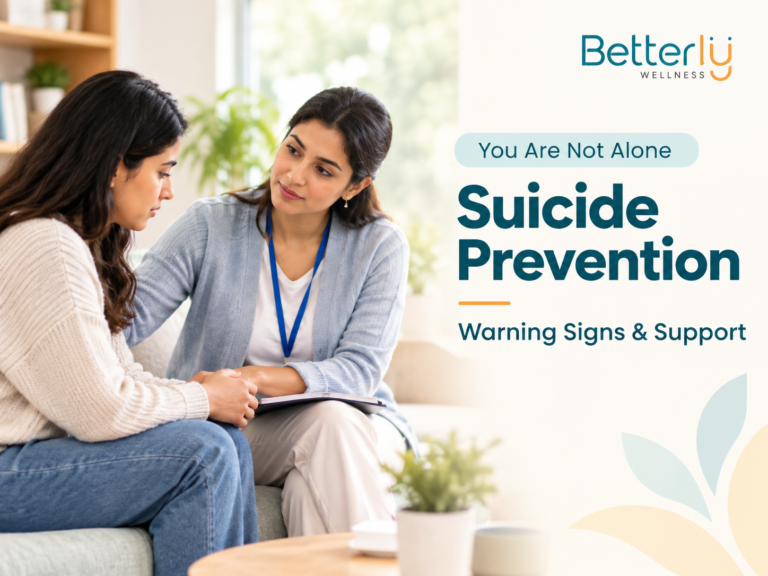

World Suicide Prevention Day: Creating Awareness, Offering Support, Saving Lives
Suicide Prevention Day
Suicide is a serious global mental health concern that affects individuals, families, and communities. World Suicide Prevention Day is an important reminder that awareness, compassion, and timely support can help save lives.
Many people experiencing suicidal thoughts may not openly express what they are going through. Recognizing the early warning signs and reaching out with empathy can make a meaningful difference.

At Betterly Wellness, we believe that mental health support begins with understanding, listening, and creating safe spaces where people feel heard and valued.
Recognizing Suicide Warning Signs
Suicidal thoughts can affect anyone, and they are often accompanied by noticeable changes in emotions, behavior, or daily functioning. Being aware of these signs can help you offer support at the right time.
1. Verbal Warning Signs
Sometimes, people express their emotional pain through words or indirect statements, such as:
- “I don’t want to do this anymore.”
- “Everyone would be better without me.”
- “I feel like there is no way out.”
- Frequent jokes or comments about death or suicide
- Expressing feelings of being a burden to others
- Talking about feeling hopeless or trapped
Even statements that seem casual should be taken seriously, especially when they represent a change from a person’s usual behavior.
2. Emotional and Mental Health Changes
Significant changes in mood or emotional well-being may indicate that someone is struggling internally.
Possible signs include:
- Persistent sadness, emptiness, or hopelessness
- Feelings of extreme guilt, shame, or worthlessness
- Increased anxiety, frustration, anger, or emotional distress
- Difficulty concentrating or making decisions
- Changes in sleeping patterns, including insomnia or excessive sleeping
- Losing interest in activities, relationships, or things they previously enjoyed
- Decline in personal care, work, studies, or daily responsibilities
3. Behavioural Changes
Changes in a person’s actions or routines can also be important indicators.
Watch for:
- Searching for ways to harm themselves or making a suicide plan
- Social withdrawal from friends, family, or activities
- Increased use of alcohol or substances
- Engaging in risky or reckless behavior
- Giving away personal belongings or saying unusual goodbyes
- Sudden changes in eating or sleeping habits
- A sudden sense of calm after a long period of emotional struggle
How You Can Support Someone Who May Be Struggling
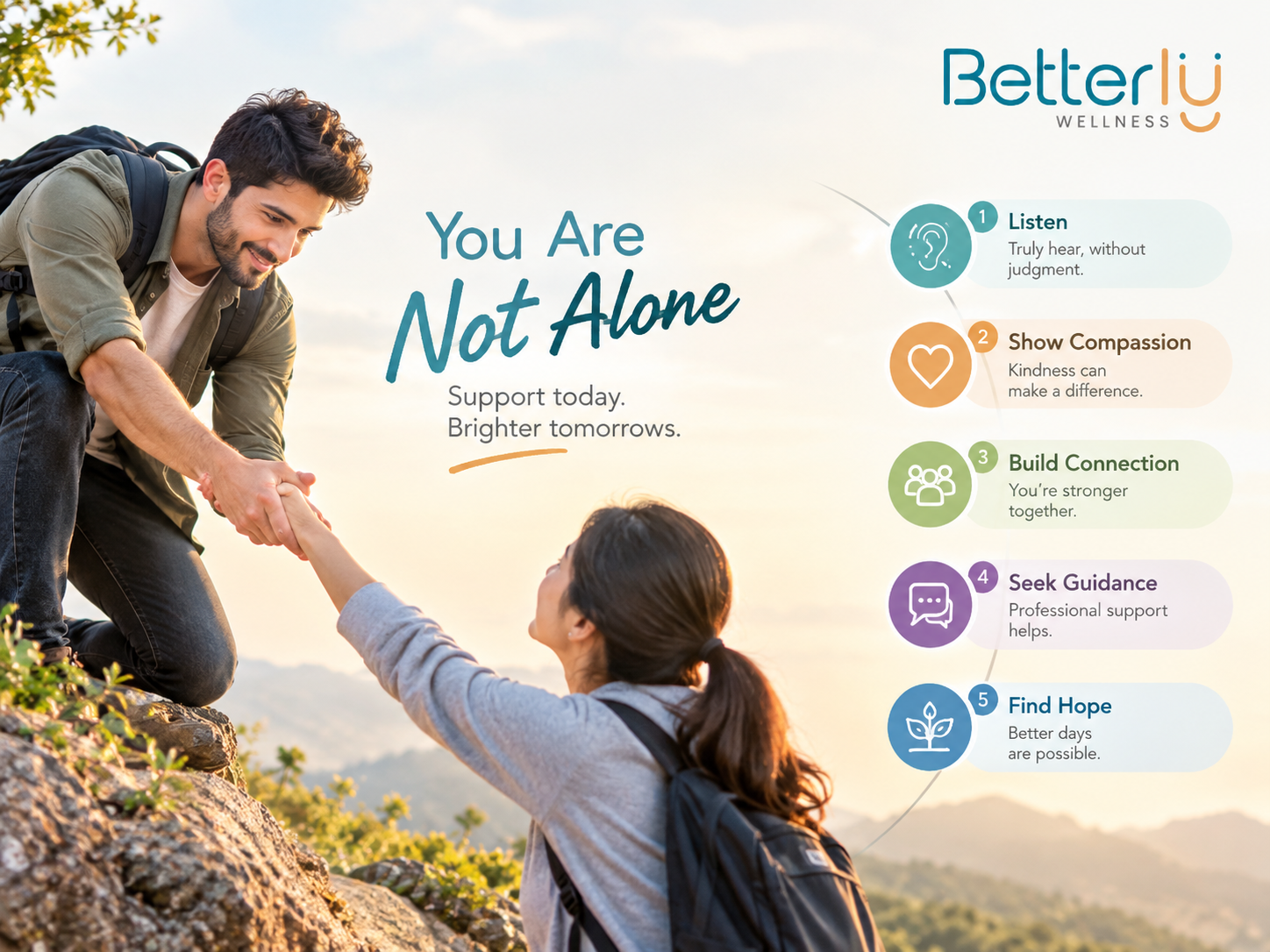
You do not need to be a mental health professional to make a difference. A caring conversation and genuine support can be the first step toward help.
Notice
Pay attention to changes in someone’s emotions, communication, or behavior. Small signs can sometimes indicate deeper struggles.
Ask
Approach the person with kindness and concern.
You can say:
- “I’ve noticed you haven’t seemed like yourself lately. How are you feeling?”
- “I’m here if you want to talk.”
Listen
Give them space to express their feelings without judgment, criticism, or trying to immediately fix everything.
Support
Encourage them to connect with professional mental health support, counselors, trusted people, or wellness services.
Take Action
If someone is at immediate risk of harming themselves:
- Stay with them or ensure they are not left alone
- Encourage immediate professional support
- Contact emergency services or a crisis helpline when necessary

Mental Health Support Is Always Available
If you or someone you know is experiencing emotional distress, remember that help is available. Reaching out is a sign of strength, and no one should have to face difficult moments alone.
Betterly Wellness provides compassionate mental health support to help individuals navigate challenges, build resilience, and improve overall well-being.
Need support? Connect with Betterly Wellness today and take the first step toward better mental health.
Frequently Asked Questions
Warning signs may include talking about feeling hopeless, feeling like a burden, withdrawing from friends and activities, sudden mood changes, changes in sleep or eating habits, risky behavior, giving away belongings, or talking about death or wanting to disappear. Recognizing these signs early and offering support can help someone get the help they need.
You can help by listening without judgment, showing genuine concern, asking how they are feeling, and encouraging them to seek professional support. Stay connected with them and, if there is immediate danger, do not leave them alone and contact emergency or crisis support services.
No. Asking someone about suicidal thoughts does not create or increase suicidal feelings. A caring and direct conversation can help them feel understood, reduce isolation, and open the door to receiving support.
World Suicide Prevention Day raises awareness about suicide prevention, reduces stigma around mental health challenges, and encourages people to recognize warning signs and support those who may be struggling. It reminds us that compassion, connection, and early intervention can save lives.
If you or someone you know is experiencing emotional distress or suicidal thoughts, reaching out for professional help is an important step. Mental health professionals, counselors, wellness centers, and crisis helplines can provide guidance, support, and care during difficult times. Betterly Wellness offers mental health support to help individuals manage challenges and improve emotional well-being.
Betterly Wellness provides accessible mental health support through professional guidance and wellness services. Individuals looking for emotional support, counseling, or mental health resources can connect with Betterly Wellness for compassionate care.
Connect with Us