
Speech Delay Treatment in Children: A Sharjah Parent's Complete Guide to Deaf Awareness and Early Speech Therapy
You’ve compared your toddler to the neighbour’s child one too many times. Maybe your three-year-old still isn’t stringing words together, or your paediatrician mentioned “monitoring” his hearing after the last check-up. Either way, that quiet worry in the back of your mind deserves a real answer, not another “he’ll catch up eventually.”
Speech delay is one of the most common developmental concerns parents raise in the UAE, and in a meaningful share of cases, it traces back to something as fixable as undiagnosed hearing loss. That link between hearing and talking is exactly why Deaf Awareness conversations and speech delay treatment belong in the same discussion – you cannot fully address one without understanding the other.
This guide walks through what causes speech delay, how hearing affects language development, what a proper speech therapist Sharjah families can trust actually does in a session, and how to choose the right child speech therapy programme without wasting months on the wrong approach. By the end, you’ll know exactly what steps to take next – and why acting early, rather than waiting, is what actually changes outcomes.
What Is Speech Delay? A Clear Definition
Speech delay is a condition in which a child’s spoken language skills – sound production, vocabulary, sentence structure, or intelligibility – develop noticeably slower than what is typical for their age group. It differs from a language delay, which affects understanding and using words more broadly, though the two frequently overlap and are assessed together by a speech-language pathologist (SLP).
Speech delay is not a diagnosis in itself – it’s a description of a pattern. The real work of speech delay treatment starts with finding why the delay is happening, because the cause determines the therapy.
Why Hearing and Speech Are Inseparable
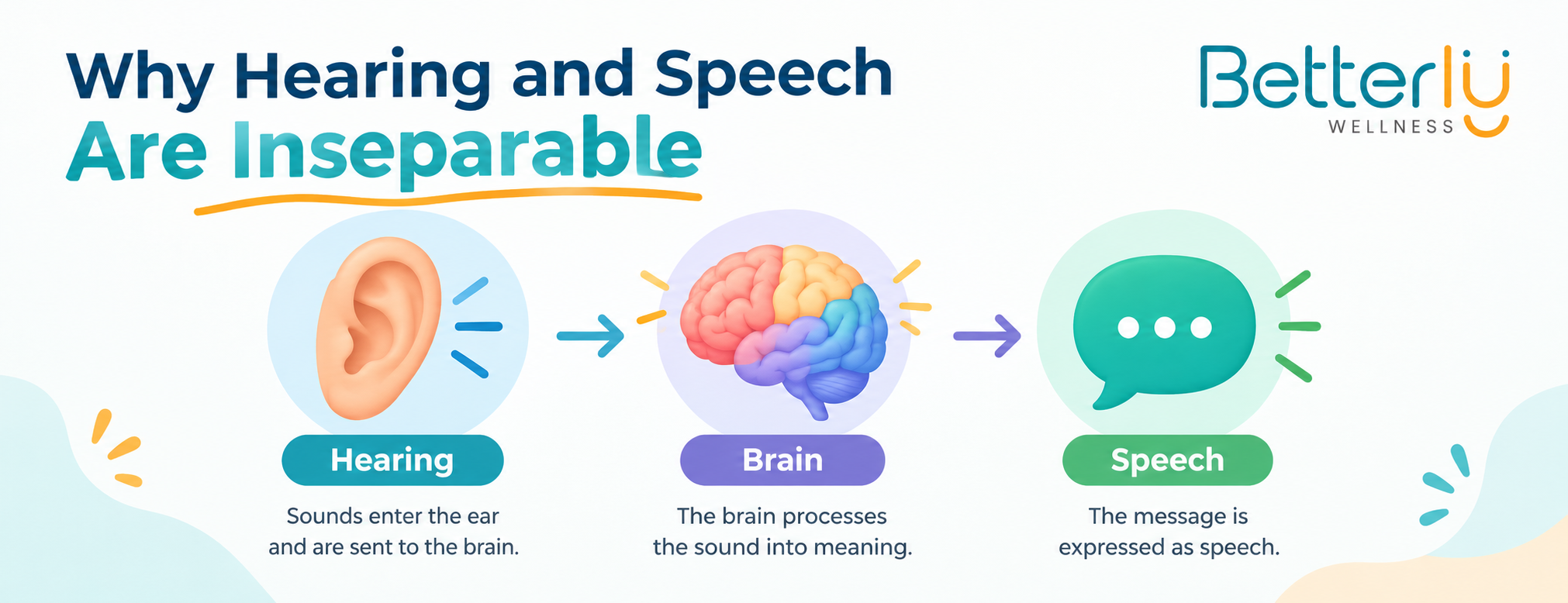
Children learn to talk primarily by listening – to parents, siblings, cartoons, background chatter at the mall. A child who cannot hear speech clearly cannot easily imitate it, which is why hearing loss is consistently flagged as one of the leading, and most preventable, causes of delayed talking.
According to the World Health Organization, around 360 million people, roughly 5% of the world’s population, live with hearing loss considered disabling, and nearly 32 million of them are children, the vast majority in low- and middle-income countries. More recent WHO figures put the number of affected children and adolescents even higher: on World Hearing Day, the WHO reported that globally, over 95 million children and adolescents aged 5 to 19 live with unaddressed hearing loss and without access to the services they need.
The encouraging part: the WHO estimates that around 60% of childhood hearing loss could be avoided through prevention measures, and when it isn’t avoidable, timely intervention helps children reach their full potential through rehabilitation, education, and support. Roughly a third of hearing loss in children is linked to infections such as measles, mumps, rubella, and meningitis, which is part of why immunisation schedules matter so much for hearing health, not just general immunity.
This is precisely why Deaf Awareness campaigns exist alongside speech therapy services – raising awareness about hearing screening, reducing the stigma around hearing devices, and encouraging early testing directly reduces the number of children who develop avoidable speech delays. Betterly Wellness treats this connection as a starting point, not an afterthought, when assessing a child who isn’t talking on schedule.
Expert Insight: In clinical practice, one of the most under-recognised causes of “stubborn” speech delay is mild or fluctuating hearing loss from recurrent ear infections (otitis media). A child can pass a casual hearing check at home and still be missing high-frequency sounds like “s,” “f,” or “th” that are critical for clear speech. If progress in therapy plateaus without an obvious reason, a full audiological work-up – not more of the same drills – is usually the right next move.
Common Causes of Speech Delay in Children
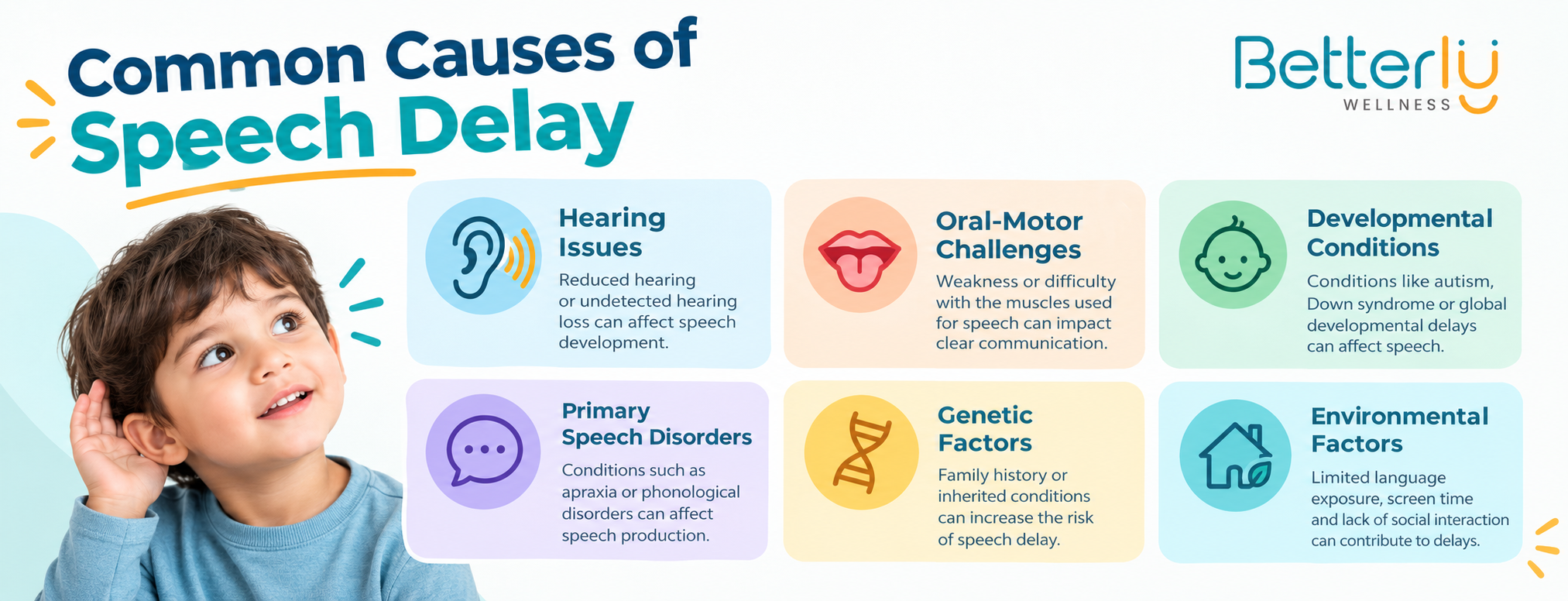
Speech delay rarely has a single cause. A qualified evaluation typically looks across several categories:
1. Hearing-Related Causes
One of the most common causes of delayed speech in children is a loss of hearing – if a child cannot hear well, learning to imitate and produce sounds becomes very difficult, and hearing loss is often linked to delays in both speech and broader language development. This is why testing a child’s hearing is a core part of any communication-delay evaluation, whether at a hospital ENT department, an audiology clinic, or through a paediatric speech therapy Sharjah assessment.
2. Oral-Motor Difficulties
Some children have trouble coordinating the lips, tongue, and jaw needed to produce speech sounds, often linked to the brain areas responsible for speech, and these oral-motor issues can also show up as feeding difficulties.
3. Developmental Conditions
Developmental disorders such as autism spectrum disorder frequently involve speech and language delays alongside broader communication challenges, including difficulty with eye contact and sustaining conversation. Down syndrome, cerebral palsy, and global developmental delay are also recognised risk factors.
4. Primary Speech and Language Disorders
Primary speech delay is typically not a sign of another underlying condition – a child may have entirely typical hearing, comprehension, intelligence, and emotional development, with speech simply lagging behind, and speech-language therapy is helpful in most of these cases. Research on this group suggests interventions lasting longer than eight weeks tend to be more effective than short courses.
5. Genetic and Family History
Speech delay can run in families, and studies show it is more common in children whose parents or siblings also experienced speech delay.
6. Environmental and Other Factors
Additional contributors that researchers have studied include bilingual language exposure with phonological differences, childhood apraxia of speech, auditory processing disorder, prematurity, and cognitive impairment, alongside ongoing debate about excess screen time as a possible risk factor. Complications at birth – such as prematurity, low birth weight, and neonatal jaundice – are also implicated in a share of hearing-related speech delay cases.
Key Takeaways
- Speech delay is a symptom, not a single diagnosis – the underlying cause dictates the treatment plan.
- Hearing loss is one of the most common and most preventable contributors, which is why hearing screening should always precede or accompany speech therapy.
- A family history of speech delay is a legitimate risk factor worth mentioning at your first assessment.
- Primary speech delay, with no other developmental concerns, generally has a favourable outlook with consistent, structured therapy.
- No two children need the exact same treatment plan – even the same diagnosis can call for very different exercises.
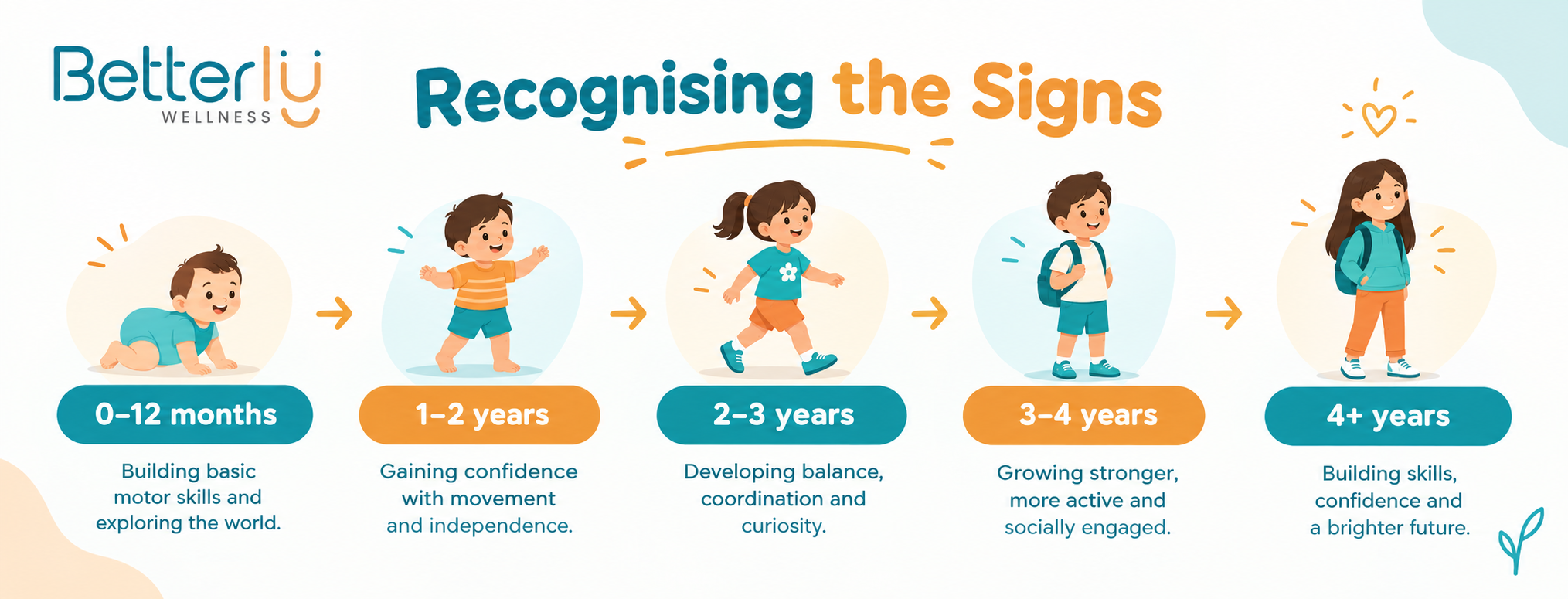
Recognising the Signs: Age-by-Age Red Flags
Age Range | Signs Worth Discussing With a Specialist |
0–12 months | Limited babbling; lack of varied sounds; no gestures such as waving or pointing by 12 months |
12–24 months | Not saying single words by 16 months; little interest in interacting through speech; trouble understanding simple directions |
2–3 years | Inability to combine words; speech that is unclear or hard to understand; failure to use two-word phrases by 24 months |
3–4 years | Struggles to express ideas; limited conversation skills |
4+ years | Not understood roughly half of the time by strangers, or persistent trouble with specific sounds such as “s” or “r” |
If any of these apply, the next right step isn’t to “wait and see” – it’s a proper evaluation with a speech-language pathologist, paired with a hearing check if one hasn’t been done recently.
How Speech Therapy Works: What Actually Happens in a Session
A qualified child speech therapy programme is built around assessment first, then a tailored plan – never a generic worksheet handed to every child who walks through the door.
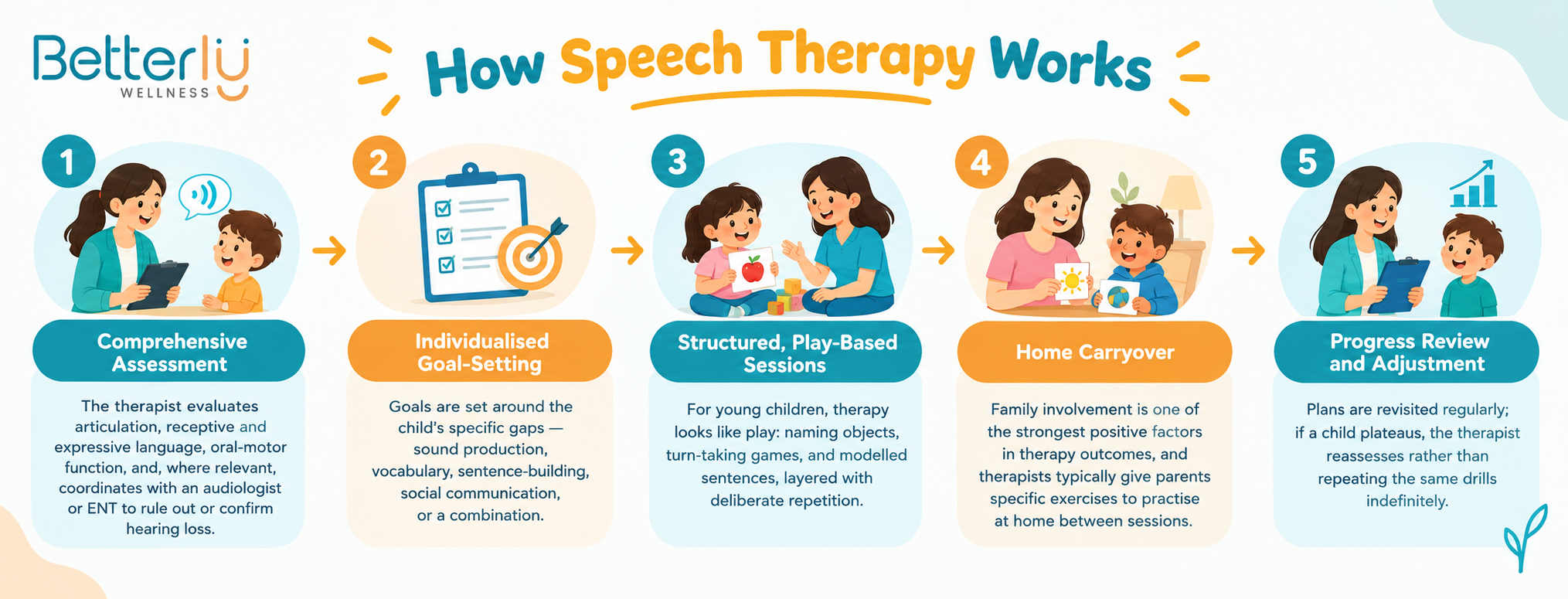
Step 1 – Comprehensive Assessment
The therapist evaluates articulation, receptive and expressive language, oral-motor function, and, where relevant, coordinates with an audiologist or ENT to rule out or confirm hearing loss.
Step 2 – Individualised Goal-Setting
Goals are set around the child’s specific gaps – sound production, vocabulary, sentence-building, social communication, or a combination.
Step 3 – Structured, Play-Based Sessions
For young children, therapy looks like play: naming objects, turn-taking games, and modelled sentences, layered with deliberate repetition.
Step 4 – Home Carryover
Family involvement is one of the strongest positive factors in therapy outcomes, and therapists typically give parents specific exercises to practise at home between sessions.
Step 5 – Progress Review and Adjustment
Plans are revisited regularly; if a child plateaus, the therapist reassesses rather than repeating the same drills indefinitely.
Expert Insight: Parents often ask how soon they’ll “see results.” In our experience, sound and vocabulary gains usually become noticeable within the first two to three months of consistent weekly sessions combined with home practice – but timelines vary considerably depending on the underlying cause, the child’s age at the start of therapy, and how consistently home exercises are followed. Skipping the home-practice piece is the single biggest reason progress stalls.
Speech Delay Treatment Options Compared
Approach | Best For | What It Involves | Typical Setting |
Speech-language therapy | Articulation, vocabulary, primary speech delay, expressive/receptive language disorders | 1:1 sessions, play-based exercises, home carryover plans | Clinic, school, or teletherapy |
Hearing-loss intervention (hearing aids, cochlear implants) | Speech delay linked to diagnosed hearing loss | Audiology-led device fitting, combined with speech therapy | Hospital/audiology clinic + speech clinic |
Occupational therapy (adjunct) | Children with coexisting sensory or motor difficulties | Sensory integration, fine-motor and feeding support alongside speech goals | Multidisciplinary clinic |
Early intervention / ABA-style programmes | Speech delay linked to autism spectrum conditions | Structured behavioural and communication-building strategies | Specialised centre |
“Wait and see” (not recommended without evaluation) | Rarely appropriate as a first response | No structured input | N/A |
Traditional home remedies – more reading time, slower speech, patience – genuinely help alongside professional therapy, but they are not a substitute for it once red-flag signs are present. A trained speech therapist Sharjah families work with can tell the difference between a phase and a pattern that needs intervention.
Common Mistakes Parents Make When Choosing a Speech Therapy Provider

Mistake 1: Skipping the hearing check
Parents often go straight to a speech therapist without ruling out hearing loss first, because the child “responds to loud noises.” Even mild or unilateral hearing deficits can delay speech and language development, and subtle hearing loss is easy to miss without formal testing. Better approach: ask whether a hearing screening has been done recently, and request one if not.
Mistake 2: Waiting for the child to “grow out of it”
This is understandable, but delaying evaluation past the toddler years narrows the window when intervention tends to be most effective. Better approach: book an assessment as soon as a red flag appears – an evaluation costs little and rules out nothing but uncertainty.
Mistake 3: Choosing a provider based on price alone
Cheaper sessions sometimes mean shorter, less individualised time with the child. Better approach: ask what the assessment includes and how progress is measured, not just the price per session.
Mistake 4: Inconsistent attendance
Interventions lasting longer than eight weeks tend to be more effective than short, sporadic bursts of therapy. Better approach: commit to a realistic, sustainable weekly schedule rather than an intensive block you can’t maintain.
Mistake 5: No home practice
Therapy that stays inside the clinic walls progresses more slowly. Better approach: ask for specific take-home exercises at every session, not just a generic handout.
What to Look for Before Choosing Speech Therapy in Sharjah
Choosing between providers offering speech therapy Sharjah families can rely on comes down to a few concrete checks:
Registration and credentials
The therapist is registered with the UAE Ministry of Health and Prevention (MOHAP) and holds a recognised qualification in audiology and speech-language pathology.
Assessment-first approach
A provider should evaluate before prescribing a programme, not the reverse.
Multidisciplinary access
Look for a centre that can coordinate with audiologists, ENTs, or occupational therapists when a case needs it, rather than working in isolation.
Age-range experience
Paediatric speech-language pathology is a distinct skill set from adult rehabilitation – ask specifically about experience with your child’s age group and condition (for example, Down syndrome, autism, or motor speech disorders).
Clear pricing and session structure
Understand the cost per session, expected frequency, and how progress will be reviewed and reported to you.
Accessibility
Practical factors – location, parking, wheelchair access, online session options – genuinely affect whether a family can sustain a consistent schedule.
Why Early Intervention MattersMore Than People Realise
The WHO’s 2026 World Hearing Day campaign, themed “From communities to classrooms: hearing care for all children,” emphasises the importance of identifying and addressing ear and hearing problems early to prevent long-term developmental and educational challenges. As one paediatric hearing expert put it, good hearing is essential for enabling children to learn to speak and to develop at an appropriate rate for their age.
The UAE has taken this seriously at a national level. According to the Ministry of Health and Prevention (MOHAP), its National Newborn Screening Guidelines standardise medical examination procedures for newborns across the country, including screening for hearing abnormalities alongside genetic, metabolic, and cardiac conditions. This built on earlier maternal and child health initiatives, which introduced early hearing-disorder screening for newborns specifically to help avoid the speech and social-communication problems that untreated hearing impairment can cause.
That national commitment to early hearing screening is the exact same logic that should guide individual families: the earlier a hearing or speech issue is identified, the more options are available, and the shorter the path back to typical development tends to be.
Deaf Awareness: What Every Parent Should Understand
Deaf Awareness isn’t only about sign language or accessibility symbols – for parents of young children, it’s a practical mindset:
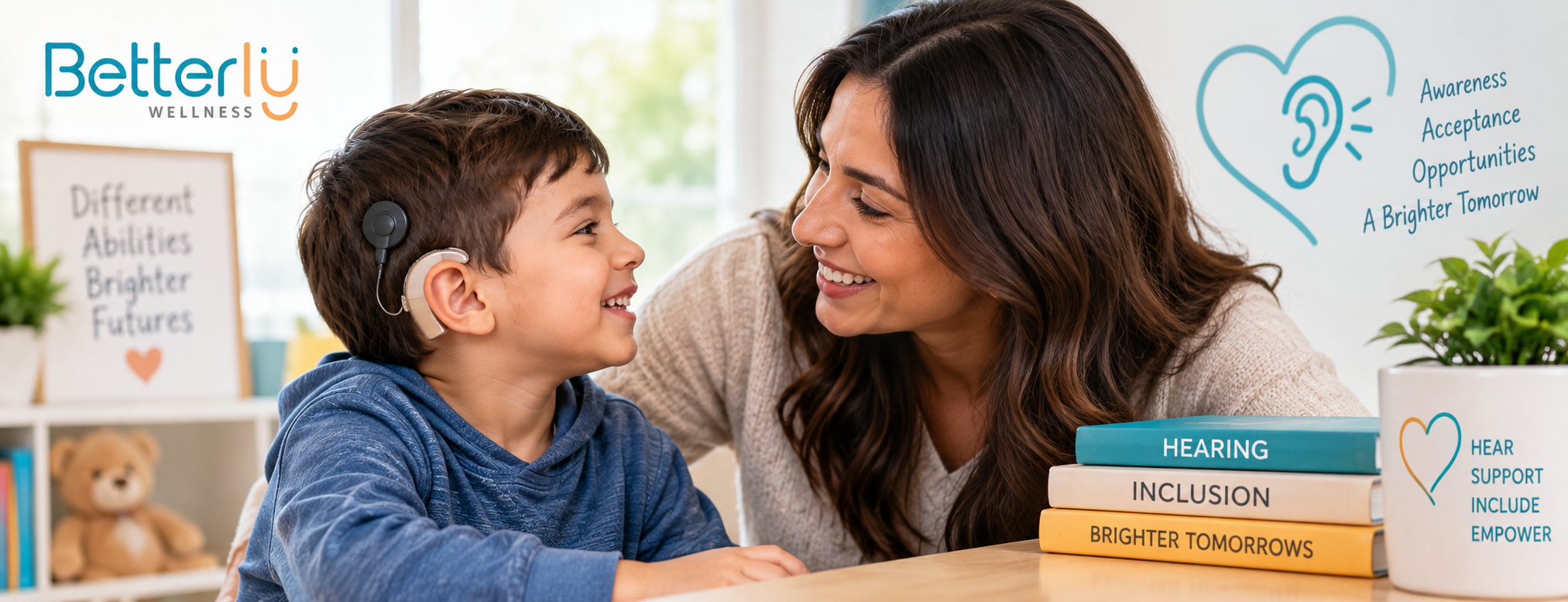
Hearing loss is often invisible
A baby can startle at loud sounds and still miss the finer frequencies needed for clear speech.
Screening is the safety net, not the diagnosis
A “pass” on a newborn screening doesn’t rule out hearing loss that develops later from ear infections, illness, or other causes – ongoing monitoring matters.
Devices and therapy work together
People with hearing loss benefit from early identification, hearing aids, cochlear implants, and other assistive devices, alongside captioning, sign language, and educational and social support where appropriate.
Stigma slows down help-seeking
Normalising conversations about hearing devices and speech therapy – the way we’d normalise glasses for vision – helps children get support sooner rather than later.
What Does Speech Therapy Cost, and What Affects the Price?
Costs for speech delay treatment vary based on:
- Whether the first visit is a full diagnostic assessment or a shorter consultation
- Session length and frequency (once versus multiple times per week)
- Whether the case needs coordination with an audiologist, ENT, or occupational therapist
- In-clinic versus online (teletherapy) sessions
- The therapist’s specific specialisation (general paediatric speech delay versus complex cases like motor speech disorders or dysphagia)
Ask any provider for a clear breakdown of assessment fees versus ongoing session fees before committing, and confirm whether your health insurance in the UAE covers speech-language pathology – many plans do, at least partially, for children with a documented diagnosis.
Speech Therapy vs. "Waiting It Out": A Direct Comparison
Factor | Professional Speech Therapy | Waiting Without Evaluation |
Underlying cause identified | Yes – assessment rules in/out hearing loss, oral-motor issues, developmental conditions | No – the cause remains unknown |
Time to progress | Often measurable within weeks to a few months of consistent therapy | Unpredictable; some children catch up, others fall further behind |
Risk if the cause is hearing loss | Low – caught and treated early | Higher – untreated hearing loss compounds delay over time |
Parental guidance | Structured home exercises provided | None |
Peace of mind | Clear next steps and progress tracking | Ongoing uncertainty |
Frequently Asked Questions
If your child isn't saying single words by 16 months, isn't combining two words by 24 months, or isn't understood by strangers about half the time by age 4, it's time for a professional evaluation rather than waiting.
Yes. A child can respond to loud noises while still missing softer or higher-frequency sounds needed for clear speech, which is why a formal hearing test - not a home check - is recommended.
Many children show noticeable progress within two to three months of consistent weekly therapy combined with home practice, though timelines vary by cause, age, and consistency.
No. Speech delay can occur on its own with no other developmental concerns (primary speech delay), or alongside conditions like autism, Down syndrome, or hearing loss. An assessment clarifies which applies to your child.
Raising a child bilingually does not cause speech delay on its own, though some bilingual children show differing phonological patterns that a speech-language pathologist can assess appropriately.
Bring any prior hearing test results, a note of key milestones (first words, current vocabulary size), and specific examples of sounds or words your child struggles with.
Many children with primary speech delay reach age-appropriate speech with consistent therapy. Outcomes for delay linked to hearing loss or developmental conditions depend on the underlying cause, but early, consistent intervention consistently improves results.
Choose Speech Therapy in Sharjah With a Team That Checks the Whole Picture
Speech delay deserves more than a generic worksheet – it deserves an assessment that actually looks for the cause, whether that’s hearing-related, developmental, or a primary speech delay that responds well to structured therapy. Betterly Wellness Medical Center in Muwaileh, Sharjah, works with children across the full range of speech and language needs, coordinating hearing and developmental evaluations where needed rather than treating speech in isolation.
Ready to get clarity on your child’s speech development?
Book a consultation with Betterly Wellness to start with a proper assessment, not more guesswork.
Prefer to learn more first? Explore our paediatric speech and language services or read our related guide on early childhood communication milestones before booking.
Editorial note: This article is written for general educational purposes and does not replace an individualised clinical assessment. Every child's speech and hearing profile is different - a qualified speech-language pathologist and, where relevant, an audiologist or ENT should confirm any diagnosis and treatment plan.Connect with Us