Betterly

Category: Blog

Your blog category

  • Sind Fristen für Auszahlungen bei Casino Fiz flexibel?

    Die Frage nach der Flexibilität der Auszahlungsfristen im Online-Casino, wie dem fiz casino, ist für Spieler von großer Bedeutung. Die Auszahlungsmodalitäten können einen entscheidenden Einfluss auf das Nutzererlebnis haben und bestimmen oft, wie schnell Spieler auf ihre Gewinne zugreifen können.

    Verfügbare Zahlungsmethoden und ihre Fristen

    Die Auswahl der Zahlungsmethoden spielt eine zentrale Rolle bei den Auszahlungsfristen in Online-Casinos. Die wichtigsten Zahlungsmethoden sind:

    • Kreditkarten (Visa, MasterCard)
    • E-Wallets (PayPal, Skrill, Neteller)
    • Banküberweisungen
    • Kryptowährungen (Bitcoin, Ethereum)
    • Prepaid-Karten (Paysafecard)

    Die Auszahlungsfristen variieren je nach Methode. E-Wallets bieten in der Regel die schnellsten Auszahlungen, meist innerhalb von 24 Stunden. Kreditkarten und Banküberweisungen können hingegen mehrere Werktage in Anspruch nehmen.

    Flexibilität der Auszahlungsfristen

    Im Online-Casino wird oft eine Standardzeit für die Auszahlung angegeben, jedoch gibt es Unterschiede in der Verarbeitung. Einige Casinos bieten die Möglichkeit, Auszahlungen bei Bedarf zu beschleunigen, während andere feste Fristen einhalten. Es ist daher wichtig, die Bedingungen des jeweiligen Casinos zu prüfen.

    Besonders in der Hochsaison, wie während großer Sportereignisse oder Feiertagen, kann es zu Verzögerungen kommen. Spieler sollten dies berücksichtigen und ihre Auszahlungen entsprechend planen.

    Tipps für schnelle Auszahlungen

    Um schnell auf Gewinne zugreifen zu können, sind folgende Punkte zu beachten:

    • Wählen Sie eine schnelle Zahlungsmethode wie E-Wallets.
    • Verifizieren Sie Ihr Konto so früh wie möglich.
    • Prüfen Sie die Casino-Richtlinien bezüglich Auszahlungen.
    • Beantragen Sie Auszahlungen während der Geschäftszeiten des Kundendienstes.
    • Halten Sie die erforderlichen Dokumente bereit für eine zügige Verifizierung.

    Zusammenfassung der Auszahlungszeiten im Vergleich

    ZahlungsmethodeDurchschnittliche AuszahlungsfristFlexibilität
    E-Wallets24 StundenHoch
    Kreditkarten3-5 WerktageMittel
    Banküberweisung3-7 WerktageNiedrig

    Häufige Fragen zu Auszahlungen im Casino

    1. Wie lange dauert eine Auszahlung? Die Dauer variiert je nach Zahlungsmethode; E-Wallets sind am schnellsten.
    2. Kann ich die Auszahlungsfristen beschleunigen? Einige Casinos ermöglichen eine schnellere Bearbeitung gegen Aufpreis oder unter bestimmten Bedingungen.
    3. Was kann Verzögerungen verursachen? Verzögerungen können durch hohe Auszahlungsanfragen, Feiertage oder unvollständige Verifizierungen entstehen.

  • Est-ce que le support client d’Atlantis Slots Casino est à la hauteur ?

    Lorsqu’il s’agit de jouer en ligne, le support client est essentiel pour garantir une expérience fluide et satisfaisante. Dans ce contexte, atlantis slots casino gratuit se démarque en offrant divers canaux d’assistance pour ses utilisateurs. Analyser la qualité de ce service est primordial pour comprendre si cela répond aux attentes des joueurs. Cet article se penche sur les différents aspects du support client d’Atlantis Slots Casino.

    Les canaux de support disponibles

    Atlantis Slots Casino propose plusieurs moyens pour contacter son service clientèle. Les principaux canaux incluent :

    • Chat en direct : disponible 24/7 pour des réponses immédiates.
    • Email : un moyen efficace pour soumettre des problèmes ou des questions plus complexes.
    • FAQ : une section complète qui aborde les questions fréquentes des utilisateurs.

    La variété des options offre aux joueurs la possibilité de choisir le canal le plus adapté à leurs besoins. Cependant, la rapidité des réponses peut varier en fonction du canal utilisé.

    Réactivité et efficacité du support

    En matière de réactivité, le chat en direct est souvent considéré comme le meilleur moyen d’obtenir de l’aide instantanément. Les agents du support client sont généralement formés pour traiter une large gamme de demandes. Les courriels, bien qu’efficaces, peuvent entraîner un temps d’attente plus long, souvent de 24 à 48 heures pour une réponse.

    Les utilisateurs signalent que les réponses reçues via le chat en direct sont souvent précises et utiles. Cependant, certains joueurs mentionnent des délais lors des heures de pointe, ce qui peut être problématique.

    Langues et accessibilité

    Atlantis Slots Casino s’efforce d’être accessible à une vaste audience internationale. Le support client est disponible en plusieurs langues, ce qui permet aux joueurs de communiquer dans leur langue maternelle. Cela contribue à une meilleure compréhension et à une résolution plus efficace des problèmes

    Malgré cela, certains utilisateurs ont noté que le niveau de compétence des agents peut varier selon la langue choisie, ce qui peut parfois engendrer des malentendus.

    CaractéristiqueÉvaluationCommentaire
    Temps de réponse (Chat)RapideImmédiate dans 80% des cas
    Temps de réponse (Email)ModéréRéponse dans 24-48 heures
    Langues disponiblesMultilingueSupport en plusieurs langues

    Conclusion et recommandations

    Dans l’ensemble, le support client d’Atlantis Slots Casino s’avère être un atout appréciable pour les joueurs. Bien que les temps de réponse puissent varier, en particulier via email, l’accès au chat en direct compense largement ce facteur. Les efforts pour maintenir un support multilingue montrent également un engagement envers la satisfaction des joueurs.

    Il est conseillé aux nouveaux utilisateurs de consulter la section FAQ avant d’entrer en contact avec le support, car de nombreuses questions courantes y sont déjà abordées.

    FAQ sur le support client

    • Quel est le temps moyen de réponse via le chat en direct ? Le temps de réponse est généralement immédiat dans 80% des cas.
    • Le support est-il disponible en plusieurs langues ? Oui, Atlantis Slots Casino propose un support dans plusieurs langues.
    • Comment soumettre une question complexe ? Il est recommandé d’utiliser l’option d’email pour des demandes plus détaillées.

  • Turbo Wins Casino: Die besten Tipps für neue Spieler

    Das turbo wins casino ist eine aufstrebende Plattform im Bereich Online-Glücksspiel, die sich durch ein benutzerfreundliches Design und ein umfangreiches Spielangebot auszeichnet. Für neue Spieler, die auf der Suche nach einem aufregenden Spielerlebnis sind, bietet dieses Casino einige wertvolle Tipps, um das Beste aus ihrer Zeit herauszuholen.

    Vielfältiger Gaming-Katalog

    Das Spielangebot im turbo wins casino ist beeindruckend und umfasst eine Vielzahl von Spielautomaten, Tischspielen und Live-Casino-Optionen. Die Plattform arbeitet mit einigen der besten Spieleentwickler zusammen, um den Nutzern qualitativ hochwertige Spiele bereitzustellen. Spieler können zwischen klassischen Slot-Spielen, modernen Video-Slots und aufregenden Live-Spielen wählen.

    • Über 1000 Spiele von namhaften Anbietern
    • Regelmäßige neue Spieleinführungen
    • Folgende Spielkategorien sind verfügbar:
    • Jackpot-Spiele mit hohen Auszahlungsraten
    • Live-Casino mit echten Dealern

    Boni und Promotions für neue Spieler

    Neuankömmlinge im turbo wins casino können von attraktiven Willkommensboni und laufenden Promotions profitieren. Die Bonusangebote sind oft an bestimmte Bedingungen geknüpft, daher ist es für neue Spieler wichtig, die jeweiligen Bedingungen sorgfältig zu lesen. Hier sind einige der angebotenen Boni:

    BonusartDetailsUmsatzbedingungen
    Ersteinzahlungsbonus100% auf die erste Einzahlung bis zu 200 €30x Umsatz
    Freispiele50 Freispiele für ausgewählte SpieleDurchspielen innerhalb von 7 Tagen

    Zahlungsmethoden und Sicherheit

    Ein weiterer wichtiger Aspekt, den neue Spieler berücksichtigen sollten, sind die angebotenen Zahlungsmethoden. Das turbo wins casino bietet eine Vielzahl an Optionen für Einzahlungen und Auszahlungen, darunter Kreditkarten, E-Wallets und Banküberweisungen. Die Sicherheit der Transaktionen wird durch moderne Verschlüsselungstechnologien gewährleistet, sodass die Spieler sich stets sicher fühlen können.

    Das Casino legt auch großen Wert auf den verantwortungsvollen Umgang mit Glücksspiel und bietet verschiedene Werkzeuge, um den Spielern zu helfen, ihr Spielverhalten im Blick zu behalten.

    Häufige Fragen

    Hier sind einige häufige Fragen, die neue Spieler möglicherweise haben:

    • Wie lange dauern Auszahlungen? Auszahlungen können je nach Zahlungsmethode zwischen 24 Stunden und bis zu 5 Werktagen dauern.
    • Welche Spiele sind am beliebtesten? Spielautomaten und Live-Casino-Spiele gehören zu den beliebtesten Optionen.
    • Ist das Casino sicher? Ja, das Turbo Wins Casino besitzt eine gültige Lizenz und nutzt fortschrittliche Sicherheitstechnologien, um die Daten der Spieler zu schützen.

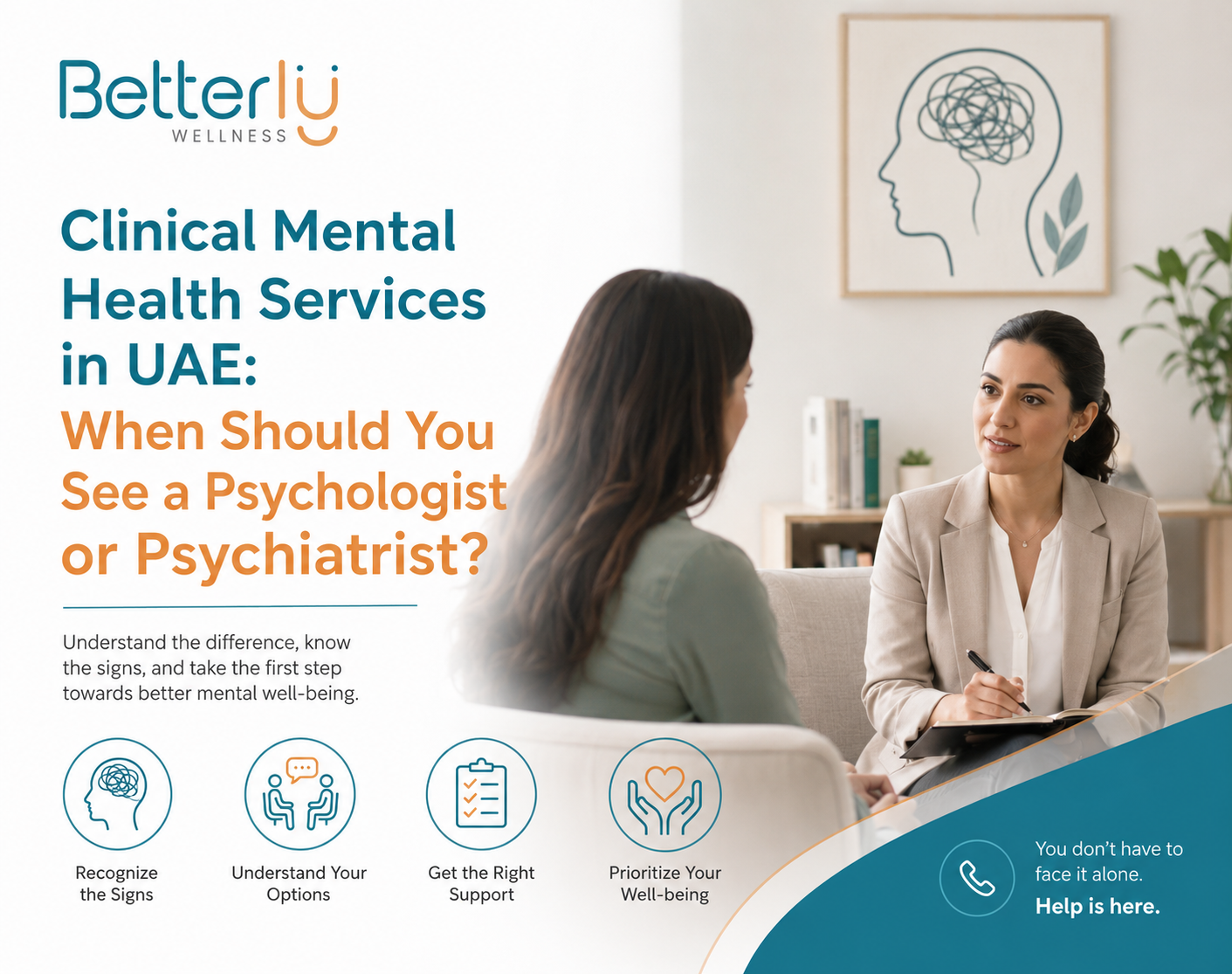
  • Clinical Mental Health Services in UAE: When Should You See a Psychologist or Psychiatrist?

    Clinical Mental Health Services in UAE: When Should You See a Psychologist or Psychiatrist?

    clinical-mental-health-services-mental-health-care-uae

    Clinical Mental Health Services in UAE: When Should You See a Psychologist or Psychiatrist?

    There is a moment when many people quietly ask themselves the same question: “Is this something I can handle on my own, or should I speak to a professional?”

    It may happen after weeks of poor sleep. It may happen when anxiety starts affecting work. It may happen when a teenager begins withdrawing from family. It may happen after a relationship feels stuck in the same argument. Sometimes, it happens when life looks fine from the outside, but inside, you feel exhausted, disconnected, or unlike yourself.

    That is where clinical mental health services in UAE become important. The right support can help you understand what is happening, what kind of care you need, and whether you should see a psychologist, a psychiatrist, or both.

    At Betterly Wellness, we understand that seeking help is not always easy. Many people are unsure where to begin. They may not know the difference between a psychologist and a psychiatrist. They may worry about being judged. They may wonder if therapy is enough or if medication is needed. They may also feel nervous about receiving a mental health diagnosis.

    This guide explains the difference in clear language, so you can make a confident decision about your care.

    Why Clinical Mental Health Care Matters

    Mental health concerns do not always appear suddenly. They often build slowly.

    At first, you may feel more stressed than usual. Then your sleep changes. You may become more irritable. Work feels harder. Conversations feel draining. You stop enjoying things that once felt simple. You may tell yourself, “I just need a break,” but even after resting, you still do not feel better.

    Clinical care matters because it looks beyond surface-level symptoms. It asks the right questions:

    • What are you experiencing? 
    • How long has it been happening? 
    • How is it affecting your daily life? 
    • Are there patterns in your thoughts, emotions, behavior, or relationships? 
    • Is there a medical, developmental, psychological, or psychiatric factor involved? 
    • What kind of treatment is most likely to help?

    Good clinical mental health services in UAE are not about labeling people. They are about understanding what is going on and creating a treatment plan that fits the person, not just the symptom.

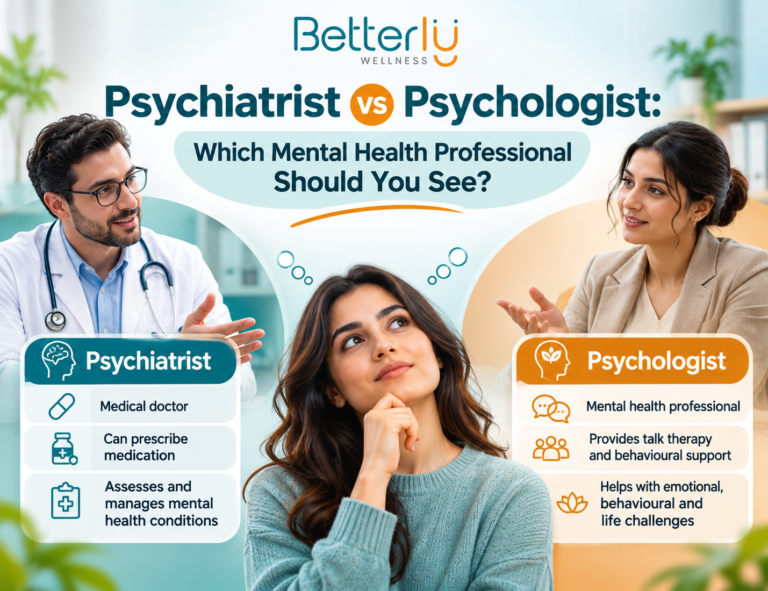
    Psychologist vs Psychiatrist: What Is the Difference?

    One of the most searched questions in mental health care is psychiatrist vs psychologist. The confusion is understandable because both professionals help people with emotional, behavioral, and psychological concerns. The difference lies in their training, role, and treatment methods.

    A psychologist is trained in human behavior, emotions, thinking patterns, development, assessment, and psychotherapy. Psychologists help people understand and manage concerns such as anxiety, depression, stress, trauma, relationship difficulties, self-esteem issues, family conflict, behavioral concerns, and adjustment problems. They often use evidence-based therapy approaches such as Cognitive Behavioral Therapy, psychodynamic therapy, acceptance-based therapies, trauma-informed therapy, and family-based interventions.

    A psychiatrist is a medical doctor who specializes in mental health. Psychiatrists can assess mental health conditions, provide a medical diagnosis, prescribe medication, monitor medication response, and manage psychiatric conditions that may require medical treatment. They may support people with depression, bipolar disorder, severe anxiety, ADHD, OCD, psychosis, sleep problems, substance-related concerns, and other psychiatric conditions.

    A simple way to understand it is this:

    A psychologist usually focuses on therapy, assessment, emotional insight, coping skills, behavior change, and psychological treatment.

    A psychiatrist focuses on medical evaluation, psychiatric diagnosis, medication, biological factors, and complex mental health conditions that may need medical management.

    Many people benefit from one or the other. Some benefit from both.

    When Should You See a Psychologist?

    You may want to see a psychologist when your thoughts, emotions, relationships, or behavior are affecting your quality of life, but you may not necessarily need medication.

    A psychologist can help if you are dealing with:

    • Anxiety or constant worry 
    • Panic attacks 
    • Low mood or loss of motivation 
    • Stress and burnout 
    • Relationship problems 
    • Grief and loss 
    • Low self-esteem 
    • Trauma or painful past experiences 
    • Family conflict 
    • Workplace stress 
    • Parenting challenges 
    • Adjustment after relocation 
    • Emotional eating or body image concerns 
    • Anger or emotional outbursts 
    • Child or teen behavioral concerns 
    • Learning, attention, or school-related difficulties

    Psychologists do more than listen. A good psychologist helps you notice patterns, understand triggers, build coping skills, improve emotional regulation, and make changes that are realistic for your life.

    For example, if you are experiencing anxiety, therapy may help you identify the thinking patterns that keep worry active. If you are facing relationship conflict, therapy may help you understand communication cycles and unmet emotional needs. If your child is struggling at school, a psychologist may recommend assessment, parent guidance, or therapy based on the child’s developmental needs.

    If you are searching for licensed mental health professionals, choosing a qualified psychologist can be a strong first step when you want structured, confidential, and evidence-informed care.

    When Should You See a Psychiatrist?

    A psychiatrist may be the right professional to see when symptoms are more intense, long-lasting, complex, or possibly linked to a psychiatric condition that may need medication.

    You may want to see a psychiatrist if:

    • Your depression is severe or not improving 
    • You have thoughts of self-harm or suicide 
    • You experience extreme mood swings 
    • You have panic attacks that feel unmanageable 
    • You have symptoms of bipolar disorder 
    • You hear or see things others do not 
    • You have obsessive thoughts or compulsive behaviors that disrupt daily life 
    • You have ADHD symptoms affecting work, study, or relationships 
    • You have severe sleep disturbance 
    • You have tried therapy but symptoms remain intense 
    • You need medication evaluation or medication review 
    • You have a previous psychiatric diagnosis and need ongoing care

    A psychiatrist can assess whether medication may be helpful, explain risks and benefits, monitor side effects, and adjust treatment as needed.

    Seeing a psychiatrist does not mean your condition is “serious” in a frightening way. It means you are getting a medical opinion from a specialist. For some people, medication gives enough stability to make therapy more effective. For others, medication may be short-term. For some, it may be part of long-term care.

    The important thing is that the decision should be made carefully, with a qualified professional who explains your options clearly.

    Therapy vs Medication: Which One Do You Need?

    The question of therapy vs medication is not always either-or. In many cases, both can work together.

    Therapy helps you understand your thoughts, emotions, habits, relationships, trauma history, coping style, and behavior patterns. It gives you tools to respond differently and build long-term emotional skills.

    Medication may help reduce symptoms that are linked to brain chemistry, mood regulation, attention, sleep, or severe anxiety. It can make symptoms more manageable, especially when they are interfering with daily functioning.

    Therapy may be enough when symptoms are mild to moderate, linked to stress or life events, or when the person wants to work on coping, relationships, insight, or behavior change.

    Medication may be considered when symptoms are severe, persistent, biologically driven, linked to a psychiatric condition, or causing major disruption in work, sleep, safety, relationships, or daily functioning.

    A combined approach may be recommended for conditions such as moderate to severe depression, severe anxiety, OCD, bipolar disorder, ADHD, trauma-related symptoms, or long-standing emotional difficulties.

    At Betterly Wellness, care is not about pushing one option. It is about helping you find the right clinical pathway.

    What Is a Mental Health Diagnosis?

    A mental health diagnosis is a professional way of identifying patterns in symptoms, behavior, mood, thinking, and functioning. It helps clinicians understand what may be happening and which treatment options are most appropriate.

    A diagnosis is not your identity. It is not a judgment. It is not a character flaw.

    It is a clinical tool.

    For example, someone who has been feeling low, tired, unmotivated, and hopeless for several weeks may be assessed for depression. Someone with repeated panic episodes may be assessed for panic disorder. A child with ongoing attention, impulsivity, and learning difficulties may be assessed for ADHD or related developmental concerns.

    A responsible diagnosis should include careful listening, clinical history, symptom review, functional impact, and sometimes standardized assessments. In some cases, clinicians may also consider medical factors, sleep, substance use, family history, developmental history, or current stressors.

    The goal is clarity. Once you understand what you are dealing with, you can stop guessing and begin the right treatment.

    Why People Delay Getting Help

    Many people wait months or years before speaking to a professional. Not because they do not care, but because they are unsure, embarrassed, busy, or afraid of what they might hear.

    Common reasons people delay care include:

    • “I should be able to handle this myself.” 
    • “Other people have it worse.” 
    • “What if I am diagnosed with something?” 
    • “I do not want medication.” 
    • “I do not know who to book with.” 
    • “I am worried therapy will be uncomfortable.” 
    • “I do not want anyone to know.” 
    • “I am too busy.”

    These concerns are very common. They are also exactly why a supportive first consultation matters. You do not need to arrive with the right words. You do not need to know whether you need a psychologist or psychiatrist. You only need to describe what has been happening.

    A good clinician will help you make sense of the next step.

    Signs You Should Not Ignore

    Not every bad week requires clinical treatment. Life naturally includes stress, sadness, grief, and conflict. But there are signs that professional help may be important.

    You should consider booking an appointment if symptoms last more than two weeks, keep returning, or interfere with your work, relationships, sleep, appetite, parenting, studies, or daily routine.

    Pay attention to:

    • Persistent sadness or hopelessness 
    • Loss of interest in normal activities 
    • Frequent anxiety or panic 
    • Sleep problems that do not improve 
    • Emotional numbness 
    • Ongoing irritability or anger 
    • Trouble concentrating 
    • Avoiding people, work, or responsibilities 
    • Unexplained physical symptoms linked to stress 
    • Relationship conflict that keeps repeating 
    • Feeling overwhelmed by normal tasks 
    • Thoughts of self-harm 
    • Sudden changes in mood, behavior, or personality 
    • A child or teen becoming withdrawn, aggressive, fearful, or unusually quiet

    If there is any immediate risk of harm to yourself or someone else, seek urgent medical or emergency support right away.

    What Happens During a Clinical Mental Health Assessment?

    A clinical mental health assessment is usually the starting point. It gives the professional a clearer picture of your concerns and helps guide treatment.

    During an assessment, the clinician may ask about:

    • Your current symptoms 
    • When the symptoms started 
    • How they affect your daily life 
    • Your sleep, appetite, energy, and concentration 
    • Your mood and anxiety levels 
    • Your relationships and family background 
    • Work, school, or home stress 
    • Medical history 
    • Previous therapy or psychiatric care 
    • Medication history 
    • Trauma or major life events 
    • Substance use 
    • Risk or safety concerns 
    • Your goals for treatment

    For children and teens, the assessment may also include parent input, developmental history, school concerns, behavior patterns, emotional regulation, learning challenges, and social development.

    Depending on your needs, the clinician may recommend therapy, psychological testing, psychiatric consultation, parent guidance, couples therapy, family sessions, or referral to another specialist.

    Clinical Services That May Support Your Care

    High-quality clinical mental health services in UAE may include several types of support. The right service depends on what you are experiencing.

    Individual Therapy

    Individual therapy is a private space to work through emotional challenges, stress, anxiety, depression, trauma, grief, self-esteem issues, and life transitions. It can be short-term and goal-focused, or deeper and longer-term.

    Counseling and Psychotherapy

    Counseling may focus on current challenges, decision-making, coping skills, and emotional support. Psychotherapy may explore deeper patterns, trauma, beliefs, attachment, personality, and long-standing emotional struggles.

    Both can be helpful. The best choice depends on your goals.

    Psychiatric Consultation

    A psychiatric consultation helps clarify whether symptoms may need medical treatment. It can be especially useful when symptoms are severe, complex, recurring, or not improving with therapy alone.

    Psychological Assessments

    Assessments can help with diagnostic clarity, learning difficulties, attention concerns, personality patterns, emotional functioning, developmental concerns, or treatment planning.

    Child and Adolescent Support

    Children and teens often communicate distress through behavior rather than words. Clinical support may include therapy, parent guidance, school recommendations, developmental assessment, or psychiatric input when needed.

    Couples and Family Therapy

    Relationship issues often involve patterns, not just individual problems. Couples and family therapy can help improve communication, reduce conflict, rebuild trust, and create healthier emotional dynamics.

    Speech and Developmental Support

    Some children and adults may need support with communication, language, speech clarity, social communication, or developmental concerns. When emotional and developmental needs overlap, multidisciplinary care can be especially helpful.

    How Betterly Wellness Helps You Choose the Right Path

    Many people hesitate because they do not want to book the “wrong” appointment. At Betterly Wellness, the first goal is to understand what you need and guide you toward the right support.

    You may come in thinking you need therapy, but an assessment may show that a psychiatric consultation would also help. You may think you need medication, but therapy may be the recommended first step. You may be worried about your child’s behavior, and the best plan may involve parent guidance, child therapy, and assessment.

    This is why a thoughtful intake process matters.

    Betterly Wellness can support clients who are looking for:

    If you are exploring mental health treatment Dubai, Betterly Wellness offers a clear, compassionate starting point for understanding your options.

    How to Choose the Right Mental Health Provider in the UAE

    Choosing the right provider can affect your comfort, trust, and treatment progress. Before booking, consider the following.

    Check Credentials

    Work with qualified and licensed professionals. Mental health care should be handled by people with proper training, supervision, and ethical standards.

    Match the Provider to Your Needs

    If you need therapy for anxiety or relationships, a psychologist or therapist may be appropriate. If you need medication evaluation, a psychiatrist is the right professional. If your child has learning or developmental concerns, look for child-focused clinical experience.

    Ask About the Treatment Approach

    Different professionals use different methods. Ask whether they use CBT, psychodynamic therapy, trauma-informed care, family systems work, behavioral therapy, or another approach.

    Notice How You Feel

    A good provider should make you feel respected, heard, and safe. You may feel nervous in the first session, but you should not feel dismissed or judged.

    Look for Clear Communication

    Fees, confidentiality, session length, cancellation policy, treatment planning, and next steps should be explained clearly.

    Consider Accessibility

    Location, online availability, appointment timing, language, and budget all matter. The best care plan is one you can realistically continue.

    Common Myths About Seeing a Psychologist or Psychiatrist

    Mental health stigma still stops many people from getting support. Let’s clear up a few common myths.

    Myth 1: Therapy is only for people with severe mental illness.

    Therapy is for anyone who wants support with emotions, relationships, stress, coping, behavior, or personal growth.

    Myth 2: Seeing a psychiatrist means you will be forced to take medication.

    A psychiatrist can recommend medication, but treatment decisions should be discussed with you. You have the right to understand your options.

    Myth 3: A diagnosis will define me.

    A diagnosis is a clinical guide, not your personality or future.

    Myth 4: Talking to friends is the same as therapy.

    Supportive friends are valuable, but therapy is structured, confidential, trained, and clinically guided.

    Myth 5: If I start therapy, I will be in it forever.

    Some people attend therapy briefly. Others choose longer-term support. It depends on your needs and goals.

    Why Early Support Often Works Better

    Mental health concerns can become harder to manage when ignored. Anxiety can lead to avoidance. Avoidance can shrink your life. Depression can reduce energy. Low energy can affect work, relationships, and self-care. Relationship conflict can become a cycle. A child’s school stress can turn into emotional distress at home.

    Early support can prevent symptoms from becoming more complex.

    It can also help you:

    • Understand what is happening 
    • Learn practical coping tools 
    • Improve communication 
    • Reduce emotional overwhelm 
    • Make informed treatment decisions 
    • Protect relationships 
    • Support your child earlier 
    • Know when medication may or may not be needed 
    • Feel less alone

    Getting help early does not mean you are weak. It means you are paying attention.

    Why Choose Betterly Wellness?

    When you are looking for clinical mental health services in UAE, you are not just choosing a clinic. You are choosing the people who will listen to your story, guide your care, and help you make decisions that may affect your health, family, work, and future.

    Betterly Wellness offers care that is professional, compassionate, and tailored to your needs.

    Clients choose Betterly Wellness because they want:

    • Clear guidance on whether to see a psychologist or psychiatrist 
    • A safe and confidential environment 
    • Support from qualified mental health professionals 
    • Personalized therapy and assessment planning 
    • Care for adults, couples, families, children, and teens 
    • Help with anxiety, depression, stress, trauma, and relationship concerns 
    • Clinical clarity without judgment 
    • Practical treatment recommendations 
    • A human approach, not a generic checklist

    Whether you are comparing psychiatrist vs psychologist, wondering about therapy vs medication, or trying to understand a possible mental health diagnosis, Betterly Wellness can help you take the next step with confidence.

    The First Step Is Often the Hardest

    You do not need to wait until everything falls apart. You do not need to know exactly what type of help you need. You do not need to prepare a perfect explanation.

    You can begin with one honest sentence:

    “I have not been feeling like myself, and I think I need support.”

    From there, the right professional can help you understand what is happening and what kind of care may help.

    Mental health care is not about fixing a broken person. It is about helping a whole person feel safer, clearer, stronger, and more connected to life again.

    If you are ready to explore clinical mental health services in UAE, Betterly Wellness is here to help you choose the right path, whether that begins with therapy, assessment, psychiatric referral, or a combination of supports.

    Your next step does not have to be big. It just has to be honest.

    FAQs

    A psychologist provides therapy, psychological assessment, coping strategies, and behavioral support. A psychiatrist is a medical doctor who can diagnose psychiatric conditions and prescribe medication when needed.

    Clinical Mental Health Services work best when paired with the right treatment approach. Explore the complete UAE therapy guide to find the support path that aligns with your goals and needs.

  • Complete Guide to Mental Health Services in UAE: How to Choose the Right Therapy for You

    Complete Guide to Mental Health Services in UAE: How to Choose the Right Therapy for You

    mental-health-services-uae-right-therapy

    Complete Guide to Mental Health Services in UAE: How to Choose the Right Therapy for You

    Finding the right support for your mental health can feel personal, confusing, and sometimes a little overwhelming. You may know that something feels off, but you may not know whether you need therapy, counseling, assessment, medication support, family guidance, or a more structured treatment plan. That is exactly why understanding mental health services in UAE matters.

    The UAE has become home to people from many cultures, professions, family systems, and life stages. A young professional in Dubai may be dealing with burnout. A parent in Abu Dhabi may be worried about a child’s behavior or learning concerns. A couple may be struggling to communicate. An expat may feel isolated despite living in a busy city. A student may be facing anxiety, sleep problems, or loss of motivation.

    At Betterly Wellness, the goal is not to place people into one standard program. The goal is to understand the person first, then recommend the right type of support. Therapy works best when it feels safe, relevant, respectful, and practical.

    This guide will help you understand how mental health care works in the UAE, what types of services are available, and how to choose a therapy option that fits your needs, schedule, budget, and goals.

    Why Mental Health Support Matters in the UAE

    Life in the UAE can be exciting, fast-moving, and full of opportunity. It can also be stressful. Many people are balancing demanding work schedules, relocation, family responsibilities, financial pressure, school expectations, cultural adjustment, or relationship concerns.

    Some people wait until things become very difficult before they seek help. Others worry that therapy means something is “wrong” with them. In reality, therapy is not only for crisis situations. It is also for people who want to understand themselves better, improve relationships, manage stress, build resilience, or make healthier decisions.

    Good therapy services in UAE can help with:

    • Anxiety, panic, and constant worry 
    • Depression, sadness, or emotional numbness 
    • Work stress and burnout 
    • Relationship and communication issues 
    • Trauma and difficult life events 
    • Grief and loss 
    • Parenting challenges 
    • Child and adolescent emotional concerns 
    • Sleep problems 
    • OCD symptoms 
    • Low self-esteem 
    • Adjustment issues after relocation 
    • Anger, irritability, or emotional overwhelm 
    • Family conflict 
    • Life transitions and identity concerns

    The right therapist does not judge your story. They help you make sense of it.

    What Are Mental Health Services in UAE?

    Mental health services in UAE include a wide range of professional supports designed to improve emotional, psychological, behavioral, and relational well-being. Depending on your needs, care may involve one or more of the following:

    • Individual therapy 
    • Couples therapy 
    • Family therapy 
    • Child and adolescent therapy 
    • Psychological assessments 
    • Psychiatry consultation 
    • Medication management 
    • Parent guidance 
    • Corporate wellness support 
    • Online therapy 
    • Specialized programs for anxiety, OCD, sleep, trauma, or stress

    Some people need short-term therapy for a specific issue. Others benefit from longer-term support, especially when concerns have been present for years or are linked to trauma, family patterns, or deeply rooted beliefs.

    A good provider will not push you into a service you do not need. Instead, they should explain your options clearly and help you choose a care plan that makes sense.

    How to Know You May Benefit From Therapy

    You do not need to hit rock bottom before speaking to a mental health professional. Therapy can help when your usual coping methods are no longer working.

    You may benefit from therapy if:

    • You feel anxious most days 
    • You struggle to sleep because your mind will not switch off 
    • You feel emotionally drained or disconnected 
    • You keep having the same relationship conflicts 
    • You are easily irritated or overwhelmed 
    • You avoid situations because of fear or worry 
    • You feel stuck in patterns you do not understand 
    • You are grieving and cannot seem to move forward 
    • You have lost interest in things you used to enjoy 
    • Your child is showing emotional, behavioral, or school-related difficulties 
    • You and your partner are unable to communicate without conflict 
    • You feel lonely even when surrounded by people

    Therapy is not about giving you generic advice. It is about helping you understand what is happening underneath the surface and giving you tools that fit your real life.

    Choosing the Right Type of Therapy

    One of the most common questions people ask is, “What kind of therapy do I need?” The answer depends on your concern, your goals, your age, and how you prefer to work through challenges.

    If you are exploring types of psychotherapy, here are some common approaches you may come across.

    Cognitive Behavioral Therapy

    Cognitive Behavioral Therapy, often called CBT, focuses on how thoughts, emotions, and behaviors influence each other. It is commonly used for anxiety, depression, panic, phobias, OCD symptoms, and stress.

    CBT can be helpful if you want practical tools, structured sessions, and strategies you can use between appointments.

    Psychodynamic Therapy

    Psychodynamic therapy explores patterns that may come from earlier life experiences, relationships, and unconscious emotional conflicts. It can help when you keep repeating the same patterns in relationships, work, or self-image.

    This approach is often useful for people who want deeper insight, not just symptom management.

    Acceptance and Commitment Therapy

    Acceptance and Commitment Therapy, or ACT, helps you relate differently to difficult thoughts and feelings while moving toward values-based action. It is often used for anxiety, depression, stress, chronic worry, and emotional avoidance.

    ACT can be useful if you feel trapped by your thoughts and want to build a more flexible relationship with them.

    Trauma-Informed Therapy

    Trauma-informed therapy recognizes how distressing experiences can affect the nervous system, emotions, relationships, and daily functioning. It may include different methods depending on the therapist’s training and your needs.

    This approach is important for anyone who has experienced abuse, loss, accidents, violence, medical trauma, or ongoing emotional distress.

    Couples Therapy

    Couples therapy helps partners improve communication, rebuild trust, understand conflict patterns, and work through emotional distance. It is not only for couples close to separation. It can also support couples who want to strengthen their relationship before problems become bigger.

    Family Therapy

    Family therapy looks at how family members interact, communicate, and respond to stress. It can be helpful when a child or teen is struggling, when parents feel overwhelmed, or when family conflict has become frequent.

    Child and Adolescent Therapy

    Children and teens do not always express distress the same way adults do. Their struggles may show up as anger, withdrawal, school refusal, sleep problems, changes in appetite, poor concentration, or behavior concerns.

    A qualified child or adolescent therapist can help identify what is happening and guide both the young person and the family.

    Therapy, Counseling, Psychology, and Psychiatry: What Is the Difference?

    People often use these terms interchangeably, but they are not exactly the same.

    Counseling often focuses on emotional support, coping strategies, life challenges, and specific problems such as stress, adjustment, grief, or relationship concerns.

    Psychotherapy may go deeper into patterns, emotions, trauma, beliefs, and long-standing psychological difficulties.

    Psychology services may include therapy, psychological assessment, diagnosis, behavioral support, and treatment planning.

    Psychiatry is a medical specialty. A psychiatrist can assess mental health conditions, diagnose psychiatric disorders, and prescribe medication when needed.

    You may not know which one you need at first. That is normal. At Betterly Wellness, an initial consultation can help clarify the best starting point.

    When to Choose a Mental Health Clinic in Dubai

    Choosing a mental health clinic in Dubai can be a good option if you want professional, structured, and confidential care in a clinical setting. Dubai is home to a diverse population, so many people look for therapists who understand expat life, workplace stress, family pressures, cultural adjustment, and multilingual or multicultural concerns.

    A clinic setting may be especially helpful if you need:

    • A detailed mental health assessment 
    • A therapist with a specific area of expertise 
    • Support for your child or teenager 
    • Couples or family therapy 
    • A care plan that may involve more than one professional 
    • Referrals for psychiatric support when needed 
    • A confidential space away from home or work

    When choosing a clinic, look beyond the website design. Pay attention to the qualifications of the team, the range of services, the clarity of communication, the intake process, and whether the clinic takes time to match you with the right professional.

    Online Therapy and Remote Support in the UAE

    For many people, convenience is a major factor. Work hours, traffic, childcare, travel, and privacy concerns can make in-person appointments difficult. That is why online counselling in UAE has become an important option for many residents.

    Online therapy can be useful if:

    • You travel often 
    • You live outside major city centers 
    • You prefer therapy from home 
    • You have a busy work schedule 
    • You feel nervous about visiting a clinic 
    • You want continuity while relocating or traveling 
    • You need flexible appointment options

    Online sessions can work well for anxiety, stress, relationship concerns, low mood, life transitions, coaching-style support, and many forms of talk therapy. However, some cases may still require in-person assessment or a higher level of care. A responsible clinic will tell you when online support is appropriate and when face-to-face care is recommended.

    How to Choose the Right Therapist

    The relationship between you and your therapist is one of the most important parts of successful therapy. Qualifications matter, but so does comfort, trust, and fit.

    Here are the most important things to consider.

    1. Check Professional Credentials

    Choose a licensed, qualified professional with appropriate training in psychology, counseling, psychotherapy, or psychiatry. Mental health care is not the same as casual coaching. The person you work with should have real clinical training and ethical standards.

    2. Match the Therapist to Your Concern

    A therapist who works well with workplace stress may not be the best fit for child development concerns. A couples therapist may use different methods than a trauma therapist. Look for someone who has experience with your specific concern.

    3. Ask About Their Approach

    Some therapists are structured and skills-focused. Others are more reflective and insight-oriented. Some combine approaches. There is no single best method for everyone. The right fit depends on your personality, goals, and comfort level.

    4. Notice How You Feel in the First Session

    You do not need to feel completely comfortable right away, especially if opening up is hard for you. But you should feel respected, heard, and not rushed. A good therapist will explain confidentiality, answer questions, and help you understand what therapy may look like.

    5. Look for Clear Communication

    A strong clinic will explain fees, session length, cancellation policies, confidentiality, and treatment planning clearly. Confusion at the beginning can create frustration later.

    6. Consider Practical Factors

    Location, timing, language, online availability, and cost all matter. Therapy is more likely to work when it fits into your life consistently.

    Affordable Therapy in UAE: What to Consider

    Many people search for affordable therapy in UAE because they want quality care without feeling financially overwhelmed. Cost matters, especially when therapy may require several sessions.

    However, affordable should not mean unqualified or unsafe. The goal is to find the best value, not simply the lowest price.

    When comparing options, ask:

    • What are the therapist’s qualifications? 
    • How long is each session? 
    • Is the care plan explained clearly? 
    • Are online sessions available? 
    • Does the clinic offer different service options? 
    • How many sessions may be recommended at the beginning? 
    • Is there a clear cancellation policy? 
    • Can the therapist help you set measurable goals?

    Some people save money by choosing fewer, more focused sessions with a qualified therapist rather than trying several low-cost providers who are not the right fit. The right care can prevent problems from becoming more complex later.

    What to Expect in Your First Therapy Session

    Your first session is usually about understanding your story. You do not have to share everything at once. The therapist may ask about what brought you to therapy, your current symptoms, lifestyle, relationships, health history, work or school stress, family background, and what you hope to change.

    You may also discuss:

    • Confidentiality 
    • Session frequency 
    • Therapy goals 
    • Risk or safety concerns 
    • Previous therapy experiences 
    • Coping strategies you already use 
    • Whether assessment or referral is needed

    A first session is not a test. You do not need to perform, prepare a perfect explanation, or know the “right” answer. It is the therapist’s job to help organize the conversation.

    Common Mental Health Services Offered at Betterly Wellness

    Betterly Wellness supports people who want professional, compassionate, and evidence-informed care. While every client is different, many people come to therapy for one of the following services.

    Individual Therapy

    Individual therapy gives you a private space to talk through stress, anxiety, depression, t

    Couples Therapy

    Couples therapy supports partners who want to improve communication, reduce conflict, rebuild trust, or reconnect emotionally.

    Child and Teen Therapy

    Children and adolescents may need support for anxiety, school pressure, emotional regulation, behavior concerns, family changes, ADHD-related challenges, or social difficulties.

    Family Therapy and Parent Guidance

    Family support can help improve communication, reduce conflict, and give parents practical tools for responding to emotional and behavioral concerns.

    Psychological Assessments

    Assessments can help clarify learning concerns, attention difficulties, emotional functioning, personality patterns, developmental concerns, or diagnostic questions.

    Stress and Burnout Support

    Many professionals in the UAE deal with high expectations and demanding schedules. Therapy can help you set boundaries, manage stress, and rebuild emotional energy.

    Online Therapy

    For clients who need flexibility, online therapy can make support more accessible without compromising privacy or professionalism.

    Red Flags When Choosing a Therapy Provider

    Not every provider will be right for you. Be cautious if you notice any of the following:

    • They promise instant results 
    • They dismiss your concerns 
    • They avoid explaining qualifications 
    • They pressure you into unnecessary services 
    • They do not explain confidentiality 
    • They make you feel judged or blamed 
    • They give advice without understanding your situation 
    • They use the same approach for every client 
    • They are unclear about fees or session policies

    Good therapy should feel professional, respectful, and collaborative.

    Why Choose Betterly Wellness?

    Choosing therapy is not only about booking an appointment. It is about trusting someone with parts of your life that may feel private, painful, or difficult to explain.

    Betterly Wellness focuses on care that is:

    • Personalized to your needs 
    • Clinically informed and ethical 
    • Respectful of cultural background 
    • Confidential and nonjudgmental 
    • Clear in communication 
    • Practical for real-life challenges 
    • Supportive for individuals, couples, families, children, and teens

    Whether you are looking for mental health services in UAE, flexible therapy services in UAE, a trusted mental health clinic in Dubai, or affordable therapy in UAE, the right support can help you feel less alone and more equipped to move forward.

    How to Take the First Step

    The hardest part is often not therapy itself. It is deciding that your well-being deserves attention.

    You do not need to have the perfect words. You do not need to know your diagnosis. You do not need to wait until things become unmanageable.

    Start with one honest question: “What kind of support would help me feel healthier, safer, and more in control of my life?”

    From there, Betterly Wellness can help you choose the right therapist, the right format, and the right care path.

    Mental health care is not a sign of weakness. It is a practical investment in how you think, feel, work, love, parent, communicate, and live.

    If you are ready to understand yourself better and get support that fits your life, Betterly Wellness is here to help.

    FAQs

    Common services include individual therapy, couples therapy, family therapy, child and adolescent therapy, psychological assessments, psychiatry consultation, stress management, and online counseling.

    Mental Health Services become more effective when you understand the journey behind healing. Explore the UAE perspectives that are helping people find hope again. 

  • Understanding Mental Health in the UAE: How Therapy Can Make a Difference

    Understanding Mental Health in the UAE: How Therapy Can Make a Difference

    Expert counseling psychology session and clinical care

    Understanding Mental Health in the UAE: How Therapy Can Make a Difference

    Managing our well-being is a big part of life. In this post, we want to talk about Mental Health in UAE. We will look closely at how therapy can provide real, tangible support for people carrying daily stress right now. Finding a path toward balance is something we all face, and understanding the resources available is a great place to begin.

    Table of Contents

    1. Why Seeking Support Matters Today
    2. The Real Impact on Mental Health in the UAE
    3. Common Symptoms You Might Notice
    4. Effective Treatment Methods We Use
    5. Finding Support at Betterly Wellness
    6. Final Thoughts
    7. Take the Next Step for Your Mental Health
    8. FAQ

    Why Seeking Support Matters Today

    Everyday life brings stress, and sometimes that stress builds up quietly over months and years. It is common to observe who try to handle everything on their own for extended periods. It is a very normal human reaction to try and manage independently. We often think we should just be able to handle it all by ourselves without complaining. But carrying that heavy emotional weight alone is hard, and honestly, professional support can ease this burden. Reaching out for professional support is a strong first step toward feeling better and making sense of your complicated thoughts. Ignoring a problem rarely makes it go away. In fact, it usually makes things worse. Seeking help is simply the logical thing to do when your mental fatigue and emotional overload.

    The Real Impact on Child Mental Health in the UAE

    Living and working here brings some very unique challenges. The fast pace of life can contribute to increased stress levels and impact mental well-being. People often feel isolated, even when they are surrounded by thousands of others in busy, loud cities. Expatriates might miss home and their old support networks. Locals face the intense pressures of modern life while trying to balance traditional family values. It is a complicated mix of high expectations, demanding jobs, and busy social schedules.

    This kind of environment can really take a toll on a person. We firmly believe that acknowledging this reality is incredibly important. It is perfectly okay to admit that things are stressful. Therapy offers a calm, safe room to process these overwhelming feelings. Sometimes, you just need a quiet place to sit down and untangle your thoughts. According to the World Health Organization, well-being is a basic human right. We cannot ignore our minds while we focus only on our physical health or our careers. We have to treat the mind with respect.

    Common Symptoms You Might Notice

    When should someone actually look for help? The signs are not always obvious right away. Sometimes they sneak up on you slowly over months. You might feel constantly tired, even after getting a full night of sleep. Sleep problems are actually very common and often the first warning sign that something is wrong. You might have trouble falling asleep because your mind will not stop racing. Or, you might wake up way too early and not be able to get back to sleep at all.

    Another common sign is feeling easily irritated by very small things. Things that used to be totally fine suddenly make you very angry or frustrated. You might snap at your loved ones without meaning to. You might also lose interest in hobbies you usually love doing.

    Anxiety can show up in very physical ways, too. You might feel a racing heart, a tight chest, or you might find yourself constantly worrying about what will happen tomorrow. Feeling deeply sad, hopeless, or empty for weeks at a time is a strong indicator. People also report physical symptoms like unexplained headaches or stomach issues when they are struggling emotionally. If you notice these persistent changes in yourself, it means your mind and body are clearly asking for support. It is a signal, not a weakness.

    Recognizing Symptoms and Finding the Right Approach

    Sometimes it is hard to know exactly what kind of support you need. We often see people who know they feel bad, but they do not know what to do about it. The table below outlines some of the most frequent issues we see and how different therapeutic methods can actually help.

    Common Sign or SymptomHow Therapy Can Help
    Constant worry or racing thoughtsUsing Cognitive Behavioral Therapy (CBT) to identify and change unhelpful thought patterns step by step.
    Feeling deeply sad or empty for weeksGeneral talk therapy gives you a safe, quiet room to process heavy emotions without any judgment.
    Sleep problems or physical exhaustionBuilding practical, healthy routines and learning direct stress management skills to calm the nervous system.
    Sudden irritability or frequent angerLearning emotion regulation techniques and clearly identifying what triggers these strong reactions.
    Frequent arguments at homeFamily therapy to help everyone communicate better and set healthy boundaries together.
    Effective Treatment Methods We Use
    mental health care centre in uae

    We use proven approaches to help you feel better. One common method is Cognitive Behavioral Therapy, or CBT for short. CBT helps identify negative thought patterns that keep you feeling stuck. Once we can clearly see those patterns together, we can work step by step to change them. This practical approach can help reduce strong feelings of anxiety and depression over time.

    We also use general talk therapy. This simply gives you a structured, dedicated time just to speak and be heard. You are heard completely without any judgment. Sometimes, saying things out loud to a neutral professional changes everything. Family therapy is another vital option we provide. Sometimes the whole family system needs support to heal, especially when there are communication breakdowns at home.

    We want to be clear: treatment is not a quick fix. We never promise a magic cure. Healing takes real time. Healing takes real effort. But these methods can absolutely help you build strong coping skills, understand yourself better, and make your daily life much more manageable.

    Finding Support at Betterly Wellness

    Finding the right fit with a therapist is so important. As a dedicated Mental Health Clinic in Sharjah, our focus is entirely on your unique situation. We bring both genuine empathy and professional training to every single session. We sit down with you, listen closely, and figure out the best next steps together. You are never just a file or a number to us. We truly care about your progress and we want to see you feel better. We work directly with individuals and families to find strategies that actually work for them in their real lives.

    Final Thoughts

    Taking care of your mind is just as important as taking care of your physical body. It requires regular attention and, very often, professional guidance.Clinically, many individuals present with deeply meaningful changes every single day just by making the decision to start therapy. It is not always an easy process. There will be hard days and difficult conversations. But it is deeply worthwhile. Remember that reaching out is a clear sign of strength and self-awareness. You owe it to yourself to feel better.

    Take the Next Step for Your Mental Health

    If you are ready to talk, we are here to listen. Improving your Mental Health starts with one simple, honest conversation. Reach out to our team today to schedule an appointment. Schedule a consultation to explore evidence-based support tailored to your needs.

    FAQ

    Your first session is mostly about getting to know each other. We will ask questions about your history, what brings you to the clinic, and what your goals are. It is a relaxed conversation to help us understand how we can best support you moving forward.

    *This content is for informational purposes only and does not substitute professional medical advice, diagnosis, or treatment. Please consult a qualified mental health professional for personalized care.*

  • Speech Delay in Children: When Should Parents See a Child Therapist in UAE

    Speech Delay in Children: When Should Parents See a Child Therapist in UAE

    Expert child psychology and development care

    Speech Delay in Children: When Should Parents See a Child Therapist in UAE

    As parents, waiting for those first real words is incredibly exciting. But sometimes, the wait takes a little longer than expected. It is honestly tough when your friend’s kids are talking in full sentences and your little one is still quiet. In this guide, we are talking about speech delays, what to watch out for, and exactly when you should consider reaching out to a Child Therapist in UAE to give your little one the support they need to finally find their voice.

    Table of Contents

    1. Introduction
    2. The Difference a Good Child Therapist in UAE Can Make
    3. Symptoms and Signs We Tell Parents to Watch For
    4. Treatment Methods We Use to Help Kids Speak Up
    5. Betterly Wellness: Supporting Your Child’s Voice
    6. Final Thoughts
    7. Ready to See a Child Therapist in UAE?
    8. Frequently Asked Questions (FAQ)

    Introduction

    Hearing your baby babble is one of the best sounds in the world. But it can be pretty scary when they are not hitting those typical talking milestones. We sit with worried parents every single week who just want to know if their child is on the right track. It is completely normal to worry. Every kid grows at their own pace. Some walk early. Some talk early. Some take their time. But recognizing when a slight pause becomes an actual delay is important for their future. Clinically, we frequently observe – A child knows what they want to say, but the words just won’t come out right. This can create a challenging communication cycle within the family. A ‘wait and monitor ’approach may delay early intervention in some cases. Sitting around and waiting just adds to a parent’s stress. If you feel like your child is struggling, paying attention to those early warning signs is the kindest thing you can do for them.

    The Difference a Good Child Therapist in UAE Can Make

    It is really hard to know what to do next when you feel stuck. Finding the right help matters so much. A good professional looks at the whole picture, not just the missing words. They try to figure out the “why” behind the delay. Maybe it is a small hearing issue from old ear infections, or maybe it is something tied to how their brain processes sounds. We know that early help changes everything. It gives kids the tools to express their feelings, ask for a snack, and make friends without feeling left out. When parents bring their kids to a Child Therapist in UAE, they are often surprised by how fun the sessions are. It doesn’t look like hard medical work. Therapy is play-based, but guided by structured clinical goals to support language development. But behind that play, there is a very clear plan to get those words flowing. According to the CDC’s child milestone guidelines, acting early on developmental delays can make a massive difference in a child’s progress. They just need the right gentle push.

    Symptoms and Signs We Tell Parents to Watch For

    So, what should you actually be looking out for? It is not just about having a quiet house. There are a few clear signs that show us a child might be struggling a bit with their speech and language. Sometimes it is about how they understand you, and other times it is about how they speak to you.

    Here are the common symptoms we see at the clinic:

    • Quiet babies: Not babbling or making a lot of vowel sounds by 9 to 10 months.

    • Missing the first words: No clear first words (like mama or up) by 15 months.

    • Ignoring directions: Not looking when you call their name or struggling to follow simple instructions by 18 months.

    • Losing words: This is a big one. If they used to say a few words and suddenly stop using them, that is a clear red flag.

    • Action over words: Pulling on your clothes or pointing to get what they want instead of trying to vocalize it, especially after age two.

    • Hard to understand: If people outside your family cannot understand what your three-year-old is saying most of the time.

    Sometimes, these speech issues overlap with other behavioral signs or emotional struggles. If that happens, consulting a Child Psychiatrist in Sharjah can help rule out any deeper developmental conditions and give you a clearer picture of your child’s overall mental health.

    Treatment Methods We Use to Help Kids Speak Up

    Treatment is not scary at all. We focus on making it fun so kids don’t even realize they are doing the hard work. They just think they are having a great time playing games!

    speach delay in uae

    Here is how we typically approach it:

    Play-Based Therapy: We get down on the floor with them. We use blocks, cars, and dolls to encourage them to make specific sounds naturally during playtime.

    Parent Coaching: We don’t just work with the child; we work with you. We teach parents how to ask questions and prompt their kids at home without causing frustration.

    Articulation Exercises: If the child is talking but the sounds are messy, we do funny mouth exercises. Making silly faces in the mirror helps them learn where to put their tongue and lips.

    Language Rich Environments: We show families how to narrate their day. Just talking out loud while cooking or folding laundry can soak into a child’s brain like a sponge.

    Betterly Wellness: Supporting Your Child’s Voice

    At Betterly Wellness, our licensed specialists in Sharjah provide evidence-based assessment and therapy tailored to each child’s developmental needs

    We don’t rush labels. We start with understanding your child-how they communicate, feel, and connect. Our approach is calm, structured, and built around your child’s pace.

    Whether it’s speech therapy, behavioral support, or guidance for parents, we focus on what actually helps – not just what sounds clinical. And yes, we involve you in every step, because progress at home matters just as much as in sessions.

    Our team takes the time to figure out exactly where your child is on their journey. We build a care plan that fits them perfectly, respecting their personality and your family’s daily routine.

    Final Thoughts

    Watching your child struggle to speak is hard, but you really do not have to carry that heavy worry alone. You are doing a good job just by looking for answers. Trust your instincts as a parent. If you feel like something is slightly off with your child’s communication, it is always okay to ask for help. Getting support early is the best thing you can do for your child’s future confidence. They have a brilliant little voice inside them, and together, we can help them find their voice with confidence and clarity..

    Ready to See a Child Therapist in UAE?

    We are here to listen and help your family move forward. If you have questions, doubts, or just want to chat about what you are noticing at home, please reach out to us. Booking a simple assessment with a Child Therapist in UAE is your first step toward getting the answers and the right, compassionate care your child deserves.

    FAQ

    Some kids do catch up on their own, yes. But waiting is a gamble. Getting a professional opinion early gives you peace of mind and saves your child a lot of unnecessary frustration.

  • Overthinking and Mental Health: How a Mental Health Professional in Sharjah Can Help

    Overthinking and Mental Health: How a Mental Health Professional in Sharjah Can Help

    Expert psychological therapy and clinical consultation

    Overthinking and Mental Health: How a Mental Health Professional in Sharjah Can Help

    Overthinking has a strange way of creeping into everyday life. One small worry suddenly becomes ten thoughts. Then those thoughts start circling in your head again and again. It can feel exhausting… almost like your brain refuses to switch off. In this blog, we’ll talk about why overthinking happens and how a Mental Health Professional in Sharjah can help people slow down these constant thought loops and regain mental balance.

    Table of Contents

    1. Overthinking and Mental Health: How a Mental Health Professional in Sharjah Can Help
    2. Why Overthinking Is More Common Than We Think
    3. Understanding Overthinking with a Mental Health Professional in Sharjah
    4. Common Signs That Overthinking Is Affecting Mental Health
    5. Practical Treatment Approaches That Can Help
    6. How We Support Individuals Experiencing Overthinking at Betterly Wellness
    7. Final Thoughts
    8. Talk to a Mental Health Professional in Sharjah
    9. FAQ

    Why Overthinking Is More Common Than We Think

    Most people assume overthinking only happens during stressful moments. But honestly, it often shows up during normal days too. A simple conversation replaying in your mind. Wondering if you said the wrong thing. Thinking about the future… then worrying about it again later.

    It may start small. But when overthinking becomes a habit, it can slowly affect sleep, mood, work focus, and even relationships.

    Many people ignore it at first. “It’s just stress,” they say. But when thoughts become constant, it might be time to talk to someone who understands how the mind works.

    Understanding Overthinking with a Mental Health Professional in Sharjah

    Overthinking usually comes from the brain trying to protect us. Our mind keeps analyzing situations to avoid mistakes or danger. Sometimes it goes too far.

    A Mental Health Professional in Sharjah often sees people who describe the same pattern:

    • Replaying past conversations repeatedly

    • Imagining worst-case scenarios

    • Difficulty making simple decisions

    • Trouble falling asleep because the mind won’t slow down

    When these patterns continue for weeks or months, they may also be connected to anxiety or stress-related conditions. According to the World Health Organization, long-term stress and anxiety can affect both emotional and physical wellbeing if left unaddressed.

    That’s why early guidance matters.

    Common Signs That Overthinking Is Affecting Mental Health

    Not every busy mind means there is a serious issue. But certain signs show that overthinking may be affecting mental wellbeing.

    Some of the most common symptoms include:

    Constant mental replay
    You keep going over the same situation again and again, trying to “figure it out.”

    Sleep problems
    Many people say their thoughts become loudest at night.

    Decision fatigue
    Even simple choices start feeling overwhelming.

    Self-doubt
    Overthinking can slowly make people question their own judgement.

    Physical tension
    Headaches, fatigue, or tight muscles sometimes appear when stress builds up.

    These signs don’t mean something is “wrong” with you. They simply mean your mind is asking for support.

    Practical Treatment Approaches That Can Help
    overthinking problem in uae

    When people finally speak with a professional, many feel surprised. They expected complicated solutions. But often, the process starts with small steps.

    Some of the most helpful treatment methods include:

    Cognitive Behavioral Therapy (CBT)
    This approach helps people recognize negative thought patterns and gradually change them.

    Mindfulness practices
    Learning how to notice thoughts without reacting to them immediately can reduce mental noise.

    Stress-management strategies
    Simple daily routines, breathing techniques, and lifestyle adjustments can make a big difference.

    Guided emotional conversations
    Sometimes people just need a safe place to talk through their worries without judgement.

    Research from the National Institute of Mental Health shows that therapy approaches such as CBT are widely used and have shown effectiveness in supporting individuals.

    And honestly, some individuals may begin to feel relief within the initial sessions, though experiences can vary.

    How We Support Individuals Experiencing Overthinking at Betterly Wellness

    At Betterly Wellness, we often meet people who arrive feeling mentally drained. Their thoughts are racing. Sleep is poor. Work feels harder than it should.

    Our role isn’t to “fix” someone overnight. Real change doesn’t work like that.

    Instead, we start by listening.

    We try to understand what is happening beneath the thoughts. Sometimes it’s work pressure. Sometimes family expectations. Sometimes old emotional experiences that never had space to be spoken about.

    As a Mental Health Clinic in Sharjah, our approach focuses on helping individuals understand their own thought patterns. When people begin recognizing those patterns, something interesting happens… the thoughts slowly lose their control.

    With the guidance of a Mental Health Professional in Sharjah, many individuals learn how to pause before reacting to their thoughts. That pause alone can reduce stress more than most people expect.

    Final Thoughts

    Overthinking doesn’t mean you are weak. In many ways, it means your mind is trying very hard to make sense of the world.

    But when thoughts start running in circles all day, every day, it becomes exhausting.

    The good news? It doesn’t have to stay that way.

    With the right support, people can learn how to slow their thinking patterns, respond differently to stress, and feel calmer in daily life. Sometimes the first step is simply talking to someone who understands how the mind works.

    Talk to a Mental Health Professional in Sharjah

    If overthinking has been affecting your sleep, focus, or emotional balance, it may be helpful to speak with a Mental Health Professional in Sharjah. At Betterly Wellness, we provide supportive and confidential mental health care designed around each person’s needs.

    Starting a conversation about your mental health might feel uncomfortable at first. That’s normal. But many people find that once they take that step, things begin to feel a little lighter.

    And sometimes… that’s exactly where healing begins.

    FAQ

    Not necessarily. Overthinking is a mental habit, but when it becomes constant it may be linked to anxiety, stress, or other emotional concerns.

  • Signs of Anxiety in the UAE You Should Not Ignore

    Signs of Anxiety in the UAE You Should Not Ignore

    Expert stress and headache clinical consultation

    Signs of Anxiety in the UAE You Should Not Ignore

    Anxiety is not always loud. It doesn’t always stop you or make you panic. In many cases, it quietly becomes part of your routine – your thoughts, your sleep, your daily habits. This blog breaks down the Concerns about Anxiety in the UAE that often go unnoticed, especially in fast-paced environments where stress is easily normalized.

    Table of Contents

    1. Introduction
    2. Understanding Anxiety
    3. Work Pressure and Mental Load
    4. Overthinking Patterns
    5. Physical Symptoms
    6. UAE Lifestyle Factors
    7. Impact on Daily Life
    8. Betterly Wellness Approach
    9. Treatment Methods
    10. Final Thoughts
    11. FAQ

    Introduction

    Living in the UAE often means balancing multiple responsibilities at once. Work demands, social expectations, financial planning, and for many, adapting to a life away from home. On the surface, everything may seem fine. People continue with their routines, meet deadlines, and stay productive. However, internally, individuals may feel something’s not quite right.

    It’s not always easy to explain. Just a persistent sense of unease, or mental exhaustion that doesn’t go away. Over time, these patterns may point toward anxiety, even if they don’t look obvious at first.

    Understanding Anxiety

    Anxiety is more than occasional stress. It’s persistent, repetitive, and often affects both the mind and body together. Signs of anxiety can be subtle in the beginning, which is why many people overlook them.

    What we often observe is this – people adapt to discomfort. They assume it’s part of their lifestyle. But when certain patterns repeat daily, it becomes important to pay attention.

    When Productivity Turns Into Constant Pressure ?

    Being busy is normal. But feeling constantly pressured is different.

    • You complete tasks, yet your mind doesn’t slow down
    • You feel restless even during breaks
    • There’s a constant need to “do something”
    • Relaxation starts to feel uncomfortable

    This is common among working professionals in the UAE. Over time, this ongoing pressure becomes one of the early indicators of anxiety. It doesn’t feel serious at first, but it builds gradually.

    The Cycle of Overthinking

    Overthinking is often dismissed as a personality trait. But in many cases, it’s closely linked to anxiety.

    • Replaying past conversations repeatedly

    • Worrying about things that haven’t happened

    • Struggling to make simple decisions

    • Expecting negative outcomes without clear reason

    This mental loop doesn’t switch off easily. Even at night, when the body is tired, the mind continues. Which can begin to affect sleep quality.

    Physical Symptoms That Often Get Ignored

    One of the most misunderstood aspects of anxiety is how strongly it affects the body.

    • Tightness in the chest or a racing heart
    • Frequent headaches or muscle tension
    • Digestive discomfort
    • Feeling tired even after proper sleep
    • Sudden changes in appetite

    Individuals initially seek medical tests for these symptoms. When results come back normal, it can feel confusing. But anxiety often presents itself physically before it becomes emotionally obvious.

    The UAE Lifestyle and Its Impact on Anxiety

    The environment we live in plays a role in how anxiety develops. In the UAE, certain lifestyle factors can contribute:

    • High expectations at work and performance pressure

    • Long working hours with limited downtime

    • Living away from family support systems

    • Social isolation despite being surrounded by people

    • Financial commitments and lifestyle standards

    For expatriates, there’s also an added layer of adjustment – new culture, new routines, and sometimes limited emotional support. These factors may not feel overwhelming individually, but together, they can increase mental strain over time.

    If you want to understand how these challenges connect with broader conditions, you can read our article on Common Mental Health Problems in the UAE.

    When Anxiety Starts Affecting Daily Functioning

    There comes a point where anxiety begins to interfere with everyday life. This is where it becomes more noticeable.

    • Avoiding meetings, calls, or social situations

    • Difficulty focusing on routine tasks

    • Feeling overwhelmed by small responsibilities

    • Increased irritability or emotional sensitivity

    • Changes in sleep patterns – either too little or too much

    At this stage, seeking professional help is important. Consulting a Psychiatrist in Sharjah or a trained mental health professional can help identify what’s happening and guide the next steps clearly.

    How Betterly Wellness Supports Individuals with Anxiety

    At Betterly Wellness, we often meet individuals who are unsure about what they’re experiencing. Many describe it as stress, burnout, or just being tired.

    Our role is to bring clarity.

    We focus on:

    • Understanding personal patterns and triggers

    • Structured therapy sessions based on proven methods

    • Creating a space where individuals can speak openly

    • Supporting both emotional and physical aspects of anxiety

    Each individual’s experience is different. That’s why our approach is not fixed or rushed. Progress happens step by step, at a pace that feels manageable.

    Effective Treatment Methods for Anxiety

    how to handle stress in uae

    Anxiety can be effectively managed with the right support and approach. The right approach depends on the individual, but some commonly effective methods include:

    1. Cognitive Behavioral Therapy (CBT)
    This helps identify thought patterns and gradually shift them into more balanced responses.

    2. Lifestyle Adjustments

    • Maintaining a consistent sleep routine
    • Reducing caffeine and screen exposure
    • Adding regular physical activity

    These may seem simple, but they can have a meaningful impact when practiced consistently.

    3. Medical Support
    In some cases, medication may be recommended as part of treatment. This is always carefully evaluated and monitored.

    4. Mindfulness Techniques
    Breathing exercises, grounding methods, and short relaxation practices can help manage symptoms in the moment.

    For clinically reviewed information, you can refer to National Institute of Mental Health (NIH)

    Final Thoughts

    Anxiety does not always appear in extreme ways. More often, it blends into everyday life – disguised as stress, tiredness, or overthinking. That’s what makes it easy to ignore.

    The common signs of anxiety in the UAE may start small, but when they persist, they can affect overall well-being. Recognizing these signs early allows for timely support and better outcomes.

    Take the First Step Toward Support

    If you’ve noticed these patterns in yourself or someone close to you, it may be time to seek guidance.

    At Betterly Wellness, we provide professional support to help you understand and manage anxiety in a structured and supportive way. Reaching out can be the first step toward feeling more in control again.

    Frequently Asked Questions

    Early signs include overthinking, restlessness, fatigue, and difficulty sleeping.

  • Can Stress Cause Physical Symptoms? What People in the UAE Should Know

    Can Stress Cause Physical Symptoms? What People in the UAE Should Know

    Expert stress and workplace mental health care

    Can Stress Cause Physical Symptoms? What People in the UAE Should Know

    Yes, stress can cause physical symptoms – and people don’t always recognise it until those symptoms start interfering with daily life. It can show up as headaches, chest discomfort, digestive issues, or even constant fatigue. In this blog, we explain how stress can cause physical symptoms, what warning signs to notice, and what people living in the UAE should understand before ignoring these signals.

    Table of Contents

    1. Introduction
    2. What Is Stress?
    3. Can Stress Cause Physical Symptoms
    4. Early Body Signals You Shouldn’t Ignore
    5. Types of Stress
    6. Common Physical Symptoms of Stress
    7. When Should You Be Concerned?
    8. Treatment and Management Options
    9. How We Support You at Betterly Wellness
    10. Final Thoughts
    11. FAQs

    Introduction

    Stress is often treated like a normal part of life. Something you just “handle and move on.” But the body doesn’t work like that. It keeps responding, even when we try to ignore it.

    Over time, stress builds quietly. At first, it feels manageable. Then slowly, it starts showing up in physical ways – a headache here, a sleepless night there. Nothing too serious at first. But if it continues, it becomes harder to ignore.

    What Is Stress?

    Stress is the body’s response to pressure, change, or demand. It can come from work, relationships, finances, or even major life transitions like moving to a new country.

    In short bursts, stress is not harmful. It can actually help you stay alert and focused. But when stress becomes frequent or constant, the body doesn’t get enough time to recover.

    The nervous system stays active. Hormones remain elevated. The body is, in a way, stuck in a state of readiness. And this is where problems begin.

    In fast-moving environments like the UAE, where expectations are high and routines can feel intense, this kind of prolonged stress is quite common.

    Can Stress Cause Physical Symptoms ?

    Yes – and not just mild discomfort. Stress can lead to noticeable physical symptoms that feel very real and sometimes even alarming.

    When stress continues over time, the body releases stress hormones like cortisol and adrenaline repeatedly. These hormones are useful during short-term challenges, but when they stay elevated, they begin to affect different systems in the body.

    This ongoing response leads to what is often called a mind-body or psychosomatic connection – where emotional stress begins to affect physical health.

    So if you’ve been wondering whether stress could be behind certain unexplained symptoms, the answer is yes. It’s more common than people expect.

    Early Body Signals You Shouldn’t Ignore

    Before major symptoms appear, the body usually sends smaller warning signs. These are easy to miss or dismiss:

    • Feeling unusually tired even after proper sleep
    • Frequent, mild headaches
    • Tightness in the neck or shoulders
    • Difficulty focusing on simple tasks
    • Feeling slightly overwhelmed without clear reason
    • Changes in appetite or eating habits

    These signs may seem minor. But they often indicate that the body is under pressure. Ignoring them for too long can lead to more intense symptoms later.

    Types of Stress

    Understanding different types of stress helps in recognising how serious the situation might be:

    1. Acute Stress
    Short-term stress that appears in response to immediate challenges – deadlines, presentations, or sudden changes. It usually fades once the situation passes.

    2. Episodic Acute Stress
    This occurs when acute stress happens repeatedly. People may feel constantly rushed, anxious, or unable to relax.

    3. Chronic Stress
    This is long-term stress that stays for weeks or months. It may be linked to ongoing work pressure, financial concerns, or personal struggles. Chronic stress is the most likely to cause physical symptoms.

    Chronic stress doesn’t just affect mood – it slowly impacts physical health if left unmanaged.

    Common Physical Symptoms of Stress

    As stress continues, symptoms become more noticeable and sometimes more intense:

    • Headaches and migraines that occur frequently

    • Chest tightness or discomfort, often mistaken for heart issues

    • Muscle pain and stiffness, especially in the back, neck, and shoulders

    • Digestive problems such as bloating, acidity, or irregular bowel habits

    • Persistent fatigue, even after resting

    • Sleep disturbances, including difficulty falling or staying asleep

    • Rapid heartbeat or palpitations, even without physical activity

    One thing that makes stress-related symptoms confusing is that they can come and go. Some days feel normal, others don’t. This inconsistency often delays people from seeking help.For a medical perspective, you can refer to National Institute of Mental Health (NIH)

    When Should You Be Concerned?

    Not every symptom needs immediate attention, but certain signs should not be ignored.

    You should consider seeking support if:

    • Symptoms last for several weeks

    • Medical tests do not explain the condition

    • Physical discomfort starts affecting daily routines

    • You feel anxious or worried about your health frequently

    • Symptoms are becoming more intense over time

    These signs indicate that stress may be affecting your body more than expected.

    Treatment and Management Options

    Managing stress-related physical symptoms is possible, but it requires consistency and awareness.

    1. Psychological Therapy
    Talking to a trained professional helps identify stress triggers and patterns. It also helps in developing healthier ways to respond to pressure.

    2. Relaxation and Breathing Techniques
    Simple breathing exercises, when practiced regularly, can calm the nervous system and reduce physical tension.

    3. Lifestyle Adjustments
    Improving sleep habits, maintaining regular meals, and including some physical movement in your day can make a noticeable difference.

    4. Time and Routine Management
    Reducing overload and creating a balanced daily structure helps prevent stress from building up.

    5. Medical Guidance
    In some cases, additional medical support may be recommended depending on the severity of symptoms.

    There’s no single solution. What works best is a combination of small, consistent steps.

    How We Support You at Betterly Wellness

    stress support in sharjah

    At Betterly Wellness, we understand that physical symptoms linked to stress can feel confusing and sometimes even worrying.

    As a Mental Health Clinic in Sharjah, we support individuals who experience ongoing stress and its physical effects, especially when there’s no clear medical explanation.

    Our approach focuses on:

    • Identifying underlying stress patterns
    • Understanding emotional triggers
    • Offering practical coping strategies
    • Supporting both mental and physical well-being

    We keep things realistic and manageable. The goal is not to remove stress completely, but to help your body respond to it in a healthier way.

    Final Thoughts

    Stress is not just something you think about – it’s something your body reacts to.

    The earlier you recognise the signs, the easier it becomes to manage them. Ignoring symptoms often leads to more discomfort, while understanding them brings clarity.

    Small changes, done consistently, can improve both mental and physical well-being over time.

    Reach Out to Betterly Wellness

    If you’re experiencing physical symptoms and suspect stress could be the reason, reach out to Betterly Wellness. We’re here to help you understand what your body is trying to tell you and guide you toward feeling better.

    Frequently Asked Questions

    Yes, the body can react to stress even if you don’t feel mentally anxious.