Betterly

Category: Blog

Your blog category

  • Depression vs Burnout: How to Tell the Difference When You Feel Emotionally Exhausted

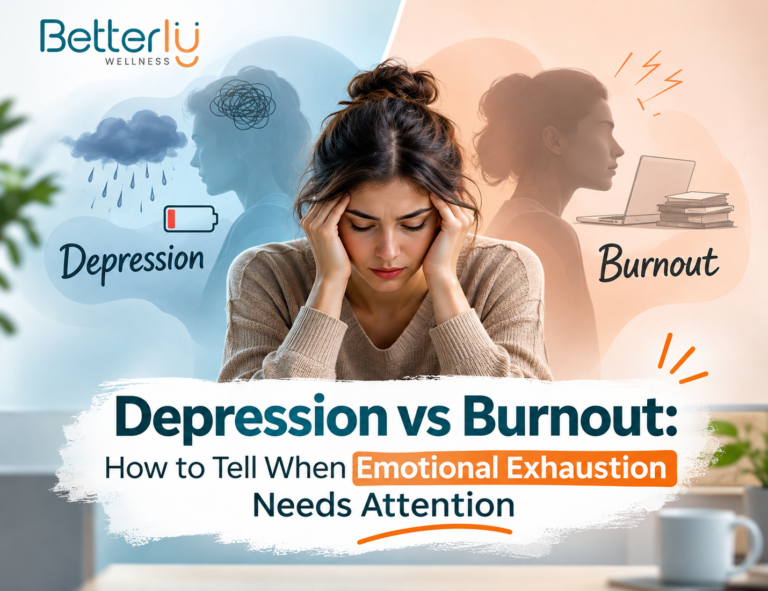
    Depression vs Burnout: How to Tell the Difference When You Feel Emotionally Exhausted

    Depression vs Burnout - Symptoms and When to Get Help

    Depression vs Burnout: How to Tell the Difference When You Feel Emotionally Exhausted

    There is a particular kind of tiredness that a good night’s sleep cannot fix.

    You wake up feeling drained. Your morning coffee barely makes a difference. Tasks that once felt manageable now seem overwhelming, and even ordinary conversations require more energy than you have available.

    At first, you blame your workload. Perhaps you have been working longer hours, missing breaks, or carrying more responsibilities than usual.

    But what happens when the weekend arrives and you still feel miserable? You cancel plans, lose interest in activities you once enjoyed, and begin wondering why you no longer feel like yourself.

    Is it burnout? Could it be depression? Or are you simply going through a difficult period?

    Understanding depression vs burnout matters because the two experiences share several symptoms, yet they are not the same. Recognising the differences can help you understand when changes to your working environment may be useful and when professional mental health support deserves consideration.

    Key Takeaways

    • Burnout is associated with chronic workplace stress and typically involves exhaustion, increased distance or negativity towards work, and reduced professional effectiveness.
    • Depression is a mental health condition that can affect mood, motivation, relationships, and activities across different areas of life.
    • Emotional exhaustion is a central component of burnout but can also occur with depression. Both conditions can exist together, and a professional assessment can help distinguish them.

    Why Do Depression and Burnout Feel So Similar?

    Why Do Depression and Burnout Feel So Similar

    Burnout and depression can both leave you feeling mentally drained, emotionally disconnected, and unable to concentrate.

    Someone experiencing burnout might struggle to get through a normal working day. Someone living with depression may experience similar difficulties, but their symptoms can also affect relationships, hobbies, family responsibilities, and activities unrelated to work.

    Much of the confusion comes from emotional exhaustion.

    Emotional exhaustion is one of the defining experiences of burnout. It describes the feeling of having little emotional or mental energy left after prolonged demands and stress.

    However, emotional exhaustion is not exclusive to burnout. People experiencing depression may also report profound tiredness, reduced motivation, and difficulty engaging with everyday life.

    This overlap makes it difficult to distinguish the two experiences based on tiredness alone.

    For example, someone who feels overwhelmed at work may begin withdrawing from colleagues and struggling to concentrate. Those same behaviours can appear in someone experiencing depression.

    Neither situation can be understood through a single symptom.

    Sleep problems, physical health conditions, medication effects, and other psychological concerns may also contribute to similar difficulties.

    What matters is the broader pattern: when the symptoms began, where they occur, how long they have continued, and how significantly they affect daily functioning.

    What Is Burnout, and Why Does It Happen?

    What Is Burnout, and Why Does It Happen

    Burnout develops in response to chronic workplace stress that has not been successfully managed.

    The World Health Organization describes burnout as an occupational phenomenon rather than a medical condition.

    It is characterised by three dimensions:

    • Feelings of energy depletion or exhaustion
    • Increased mental distance from work, or feelings of negativity or cynicism related to one’s job
    • Reduced professional effectiveness

    Imagine someone who once enjoyed their job but now dreads Monday mornings.

    They struggle to concentrate during meetings, become frustrated with colleagues, and feel that their efforts never accomplish enough.

    However, outside work, they may still enjoy spending time with family, meeting friends, or pursuing personal interests.

    This pattern can be consistent with burnout, particularly when symptoms improve after meaningful relief from workplace stress.

    Common Burnout Symptoms

    Burnout symptoms often develop gradually rather than appearing overnight.

    They may include:

    • Persistent physical and emotional exhaustion
    • Difficulty concentrating on professional responsibilities
    • Irritability or frustration during working hours
    • Reduced motivation and productivity
    • Feeling disconnected from colleagues or work responsibilities
    • Increasingly negative feelings about work
    • Difficulty recovering after demanding workdays

    Prolonged stress may also be accompanied by headaches, muscle tension, or disrupted sleep. These symptoms are not unique to burnout and may require medical assessment.

    Burnout is not necessarily a reflection of someone’s ability to cope.

    Excessive workloads, unclear expectations, limited workplace support, and insufficient opportunities for recovery can all contribute to chronic occupational stress.

    Sometimes, addressing burnout requires meaningful changes to working conditions rather than expecting someone to manage increasing pressure through personal coping strategies alone.

    What Is Depression, and How Is It Different?

    Depression is a mental health condition that can affect how a person thinks, feels, behaves, and manages everyday responsibilities.

    Unlike burnout, which is specifically associated with workplace stress, depression can influence several areas of life.

    You may notice that activities you previously enjoyed no longer feel rewarding.

    Meeting friends becomes difficult. Your appetite changes. Sleep no longer feels refreshing, or you struggle to fall asleep despite feeling exhausted.

    Even when workplace pressure decreases, the emotional difficulties may continue.

    Depression can involve persistent low mood, loss of interest or pleasure, hopelessness, and changes in energy, sleep, appetite, or concentration.

    How Long Do Depression Symptoms Need to Last?

    A depressive episode generally involves symptoms occurring most of the day, nearly every day, for at least two weeks.

    However, the two-week period is only one part of the diagnostic criteria.

    A diagnosis usually requires several symptoms occurring together, including at least one of the following:

    • Persistent depressed mood
    • A significant loss of interest or pleasure in usual activities

    Other symptoms may include changes in sleep, appetite, energy, concentration, feelings of worthlessness, or thoughts about death.

    Symptoms must also be considered in relation to their severity, impact on functioning, medical history, and possible alternative causes.

    A qualified clinician determines whether the diagnostic criteria are met.

    Importantly, you do not need to wait two weeks before seeking professional support. The duration criterion helps guide diagnosis, but it should never prevent someone from asking for help when symptoms are concerning.

    Signs of Depression That Deserve Attention

    Some common signs of depression include:

    • Persistent sadness, emptiness, or low mood
    • Losing interest in hobbies, relationships, or everyday activities
    • Feelings of worthlessness, excessive guilt, or hopelessness
    • Significant changes in sleep or appetite
    • Difficulty concentrating or making decisions
    • Persistent fatigue, even after adequate rest
    • Withdrawing from social interactions
    • Thoughts about death, self-harm, or suicide

    Not everyone experiences depression in the same way.

    Some people continue working, meeting responsibilities, and appearing socially engaged while privately struggling with significant emotional difficulties.

    Important: Mental Health Support in the UAE

    If you or someone you know is experiencing thoughts of self-harm or suicide, seek professional help promptly.

    For mental health support: Contact the UAE’s 800-HOPE (800 4673) mental support line by phone or WhatsApp. This initiative was launched by the National Programme for Happiness and Wellbeing.

    The Emirates Foundation’s published service information lists operating hours of 8 AM to 8 PM daily. Hours should be reconfirmed before publication, as other sources provide conflicting information.

    For immediate danger: Call 999 for police emergency assistance or 998 for an ambulance in the UAE. Do not rely on a non-emergency support line when someone’s safety is at immediate risk.

    Understanding the Key Differences

    Although burnout and depression share certain symptoms, their typical patterns can differ.

    Factor

    Burnout

    Depression

    Primary context

    Chronic workplace stress

    Can affect multiple areas of life

    Emotional experience

    Exhaustion, cynicism, frustration with work

    Persistent low mood, emptiness, or loss of pleasure

    Motivation

    Often reduced around work responsibilities

    May decline across work, relationships, and hobbies

    Response to time away

    May improve when workplace stress is reduced

    May continue despite rest or time away

    Classification

    Occupational phenomenon

    Recognised mental health condition

    Support

    Workplace adjustments, stress management, professional support

    Clinical assessment and appropriate treatment

    These differences can help explain the conditions, but they are not a self-diagnostic checklist.

    A person experiencing burnout may also have depression. Similarly, someone with depression may notice their symptoms becoming particularly difficult to manage at work.

    The presence of one does not rule out the other.

    Emotional Exhaustion: The Symptom Both Conditions Share

    Emotional Exhaustion - The Symptom Both Conditions Share

    Emotional exhaustion is often the reason people struggle to distinguish burnout from depression.

    It can leave someone feeling unable to respond to ordinary demands, even when those demands previously seemed manageable.

    For someone experiencing burnout, this exhaustion is closely connected to prolonged occupational stress.

    A teacher might feel emotionally drained after months of managing demanding workloads. A business owner may find it difficult to switch off from professional responsibilities. A healthcare professional might begin feeling detached from work that previously carried personal meaning.

    These experiences can reflect the exhaustion associated with burnout.

    However, emotional exhaustion can also appear in depression.

    Someone experiencing depression may struggle to engage with family, maintain friendships, complete household responsibilities, or enjoy activities unrelated to their job.

    The exhaustion may be accompanied by persistent sadness, hopelessness, or loss of pleasure.

    This distinction is important because the same feeling of being emotionally drained can arise from different circumstances.

    Emotional exhaustion alone does not establish a diagnosis.

    If it continues, becomes more severe, or begins affecting several areas of life, speaking with a qualified mental health professional may help identify what is contributing to it.

    Can Burnout and Depression Happen Together?

    Yes. Burnout and depression can occur at the same time.

    Research has identified associations between burnout symptoms and depressive symptoms, although the relationship is complex.

    Prolonged workplace stress may contribute to mental health difficulties, particularly when combined with inadequate sleep, limited social support, or other personal pressures.

    Consider someone who has been working long hours for several months.

    Initially, their frustration appears mainly during working hours. They feel exhausted after meetings and begin dreading professional responsibilities.

    Over time, however, they also stop enjoying weekends, withdraw from friends, and experience persistent sadness.

    The difficulties are no longer confined to work.

    This change deserves attention, but it does not automatically mean that burnout has developed into depression.

    A qualified clinician can assess whether depression, burnout, another health condition, or a combination of factors may be contributing to the symptoms.

    Practical Ways to Manage Burnout and Support Emotional Wellbeing

    If you have been experiencing persistent stress or exhaustion, certain changes may help you manage your wellbeing.

    These strategies are supportive measures rather than substitutes for professional assessment or treatment when needed.

    1. Identify What Is Contributing to Your Stress

    Workplace pressure does not always come from having too many tasks.

    Unclear expectations, difficult working relationships, insufficient support, or feeling unable to influence decisions can also contribute.

    Understanding which demands are affecting you may help identify realistic changes.

    For some people, this means reviewing workloads. For others, it involves discussing responsibilities with a manager or seeking additional workplace support.

    2. Prioritise Rest and Sleep

    Regular breaks, consistent sleep habits, and opportunities to disconnect from work can support emotional wellbeing.

    However, persistent sleep difficulties should not automatically be attributed to stress.

    If you experience ongoing insomnia, disrupted sleep, or excessive daytime tiredness, a clinical assessment may help identify possible contributing factors.

    Betterly Wellness also provides specialised support for sleep-related concerns.

    Rest can support recovery from stress, but it does not replace appropriate treatment for depression.

    3. Speak With Someone You Trust

    Discussing emotional difficulties with a trusted friend, family member, or colleague may help reduce isolation and make it easier to seek support.

    You do not need to understand exactly what is happening before starting that conversation.

    Sometimes, simply explaining that you have been struggling is a useful first step.

    4. Reconsider Workplace Boundaries

    If professional responsibilities are contributing to exhaustion, consider whether changes to working hours, workload, communication expectations, or available support are possible.

    Meaningful recovery from burnout may require changes within the workplace itself.

    Personal coping techniques can help, but they should not be treated as a replacement for addressing harmful or unsustainable working conditions.

    5. Develop Sustainable Coping Strategies

    Stress management may involve regular physical activity, maintaining social connections, practising relaxation techniques, and making time for activities outside work.

    The most useful approach depends on your circumstances and the difficulties you are experiencing.

    Structured wellness and preventive programmes may also help people explore practical ways to manage stress and support emotional wellbeing.

    If symptoms persist, worsen, or interfere with daily functioning, professional assessment is important.

    Psychiatrist or Psychologist: Who Should You See?

    Many people experiencing burnout or emotional exhaustion are unsure which mental health professional to approach.

    The answer depends on the symptoms, their severity, and the type of support needed.

    When a Psychologist or Counsellor May Help

    A psychologist or appropriately qualified counsellor can be a useful starting point when someone is struggling with workplace stress, emotional exhaustion, difficult emotions, or relationship concerns.

    Psychological support may help people understand patterns of stress, develop coping strategies, address unhelpful thought patterns, and manage emotional difficulties.

    A clinical psychologist can also assess symptoms of depression and provide evidence-based psychological treatment within their professional scope.

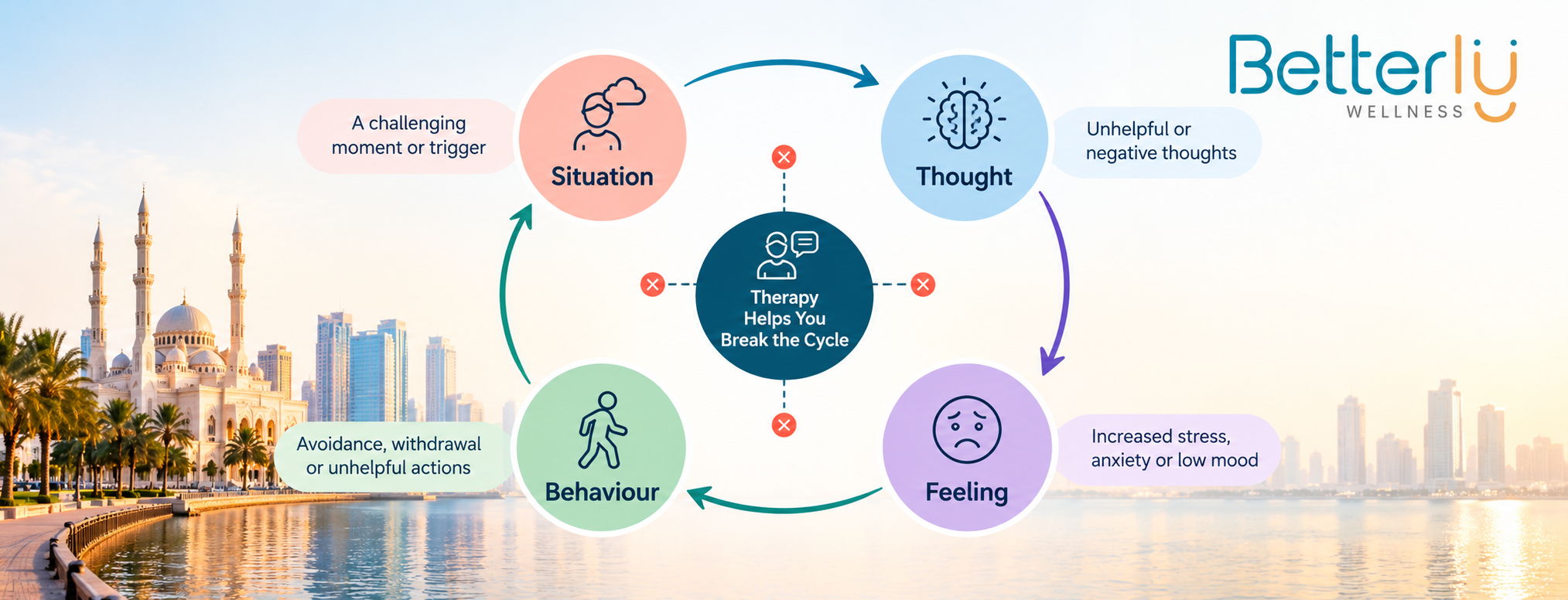
    Approaches may include cognitive behavioural therapy (CBT), acceptance and commitment therapy (ACT), and other appropriate therapeutic methods.

    At Betterly Wellness, patients can explore counselling and psychotherapy services in Sharjah for concerns involving stress, low mood, emotional difficulties, and related challenges.

    When a Psychiatrist May Be Appropriate

    A psychiatrist is a medical doctor who specialises in assessing, diagnosing, and treating mental health conditions.

    A psychiatric consultation may be particularly appropriate when symptoms are severe, persistent, complex, or significantly affecting everyday functioning.

    Psychiatrists can assess possible medical and psychological contributors, consider medication when clinically indicated, and coordinate treatment with other mental health professionals.

    If you are experiencing persistent low mood, significant changes in sleep or appetite, or difficulties that are affecting several areas of life, you can find the right psychiatrist in Sharjah through Betterly Wellness.

    Seeing a psychiatrist does not automatically mean you will be prescribed medication.

    Treatment recommendations depend on a clinical assessment, your medical history, symptoms, preferences, and individual needs.

    Can You See Both?

    Yes.

    Psychiatrists and psychologists often work together when someone would benefit from both medical assessment and psychological therapy.

    For example, a person experiencing depression alongside significant workplace stress may benefit from psychotherapy, workplace adjustments, and psychiatric care when appropriate.

    You do not need to decide on a diagnosis before seeking an initial consultation.

    Mental Health Support at Betterly Wellness in Sharjah

    When you are already emotionally exhausted, arranging a mental health appointment can feel like another responsibility.

    Knowing who you will speak with and what to expect may make the process easier.

    Betterly Wellness is a mental health and wellness clinic located in Muwaileh Commercial, Sharjah. Its clinical services include psychiatry, clinical psychology, counselling, psychotherapy, and psychological assessment.

    Who Is on the Clinical Team?

    The clinic’s mental health professionals include:

    • Dr. Zoheb Raj, Specialist Psychiatrist: Provides psychiatric assessment and management for concerns including mood disorders, anxiety, sleep difficulties, and stress-related conditions.
    • Afsal Moosa K K, Lead Clinical Psychologist: Works in psychological assessment, psychotherapy, and related clinical services.
    • Nimisha Sureshbabu, Clinical Psychologist: Provides psychological assessment and therapy for concerns including depression, anxiety, and emotional difficulties.

    The clinic’s multidisciplinary approach allows patients to access psychological or psychiatric care depending on their clinical needs.

    What Can You Expect From an Appointment?

    An initial consultation generally involves discussing your symptoms, relevant history, everyday functioning, and the concerns that prompted you to seek support.

    Depending on the assessment, your clinician may discuss psychotherapy, practical coping strategies, further evaluation, or psychiatric treatment where appropriate.

    Appointments are available in-clinic, with online psychology sessions offered for eligible services, subject to clinical suitability and availability.

    You can also book directly without a referral.

    This means someone experiencing persistent burnout symptoms, emotional exhaustion, or possible signs of depression can contact the clinic without first obtaining a diagnosis.

    Understanding Your Symptoms Is a Good Place to Start

    Feeling exhausted after a demanding week is common. Feeling persistently disconnected, overwhelmed, or unable to enjoy everyday life deserves closer attention.

    Burnout and depression can share several symptoms, but they are not interchangeable.

    Burnout is associated with chronic workplace stress, while depression can affect mood and functioning across different areas of life.

    Emotional exhaustion may occur in both, which is why identifying the cause is not always straightforward.

    You do not need to determine whether you have depression or burnout before asking for support.

    If your symptoms are affecting your work, relationships, sleep, or daily responsibilities, a qualified mental health professional can help you understand what may be contributing and discuss suitable next steps.

    Concerned about persistent emotional exhaustion or low mood?

    Contact Betterly Wellness to arrange a psychology or psychiatry consultation in Sharjah and discuss the support appropriate for your needs.

    Frequently Asked Questions

    Burnout is associated with chronic workplace stress, while depression can affect several areas of life. Both may involve emotional exhaustion, poor concentration, and reduced motivation. Persistent low mood, loss of interest, or symptoms that continue outside work may warrant assessment for depression. A qualified clinician can help distinguish the conditions.

  • Psychiatrist vs Psychologist: Which Mental Health Professional Should You See?

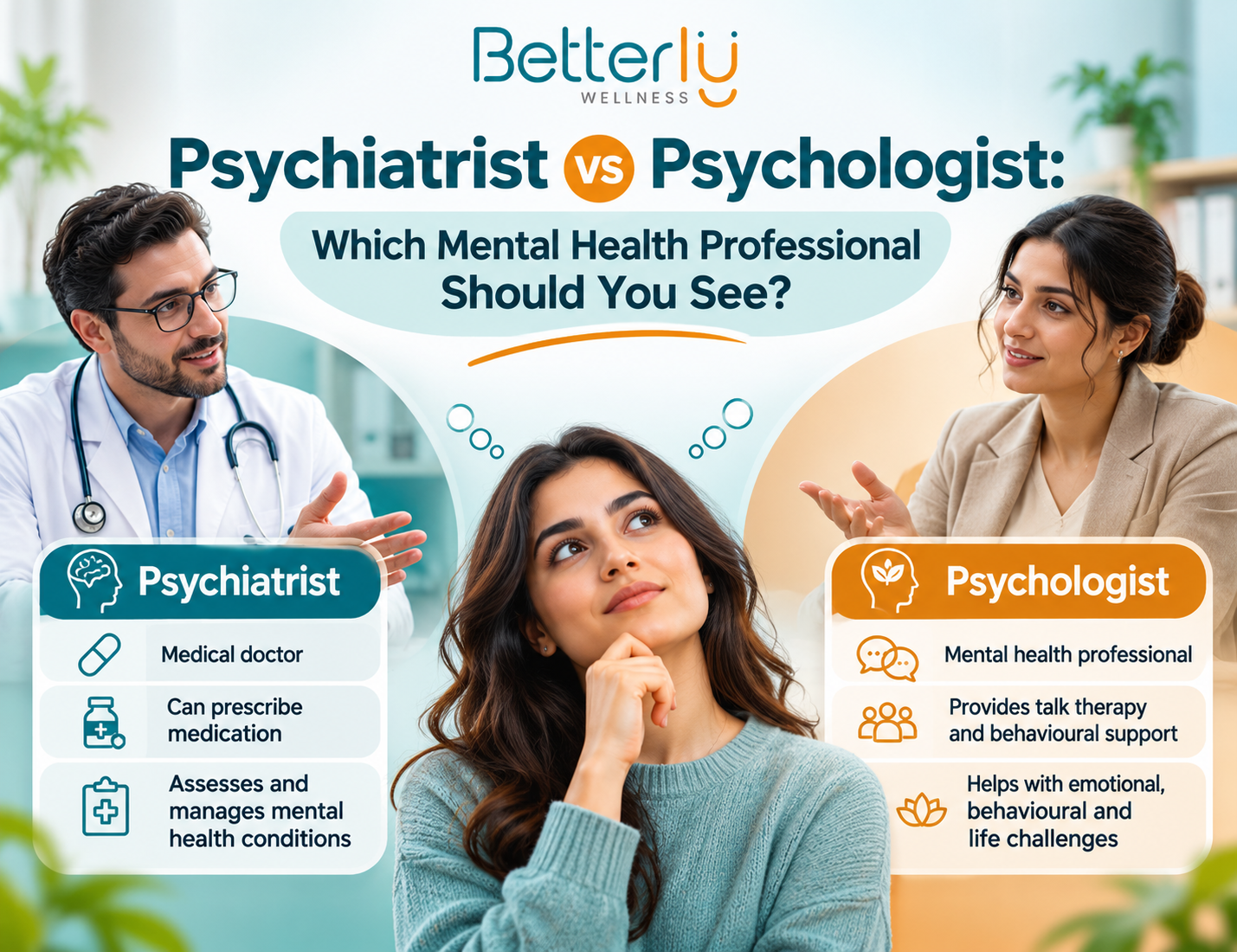
    Psychiatrist vs Psychologist: Which Mental Health Professional Should You See?

    Psychiatrist vs Psychologist: Which Mental Health Professional Should You See?

    Mental health concerns do not always come with clear answers. You might be struggling with anxiety that affects your sleep, feeling emotionally exhausted after weeks of stress, or noticing changes in your mood that are difficult to explain. When you finally decide to seek professional help, another question may arise: should you see a psychiatrist or a psychologist?

    Although both professionals help people manage mental health concerns, their qualifications, treatment methods, and responsibilities differ. Understanding the distinction between a psychiatrist vs psychologist can help you make a more informed decision about your care.

    For individuals exploring mental health services in Sharjah, knowing where to begin can make accessing professional support easier. At Betterly Wellness, our clinical psychology and psychiatry services support individuals experiencing emotional, behavioural, and psychiatric concerns through personalised assessments and treatment.

    This guide explains what psychiatrists and psychologists do, how their roles differ under UAE healthcare regulations, and when consulting one or both professionals may be appropriate.

    What Does a Psychiatrist Do?

    A psychiatrist is a qualified medical doctor who specialises in assessing, diagnosing, and treating mental health conditions. Psychiatrists complete medical education followed by specialist training in psychiatry, allowing them to evaluate mental health concerns alongside physical health, medical history, and other factors that may influence symptoms.

    One of the main differences between psychiatrists and psychologists is that psychiatrists can prescribe psychiatric medication within their licensed scope of practice.

    A psychiatrist may recommend medication when clinically appropriate, but medication is not automatically necessary for everyone who attends a psychiatric consultation.

    What Mental Health Conditions Can a Psychiatrist Treat?

    Psychiatrists assess and manage a range of mental health conditions, including:

    • Depression and other mood disorders
    • Anxiety and panic disorders
    • Bipolar disorder
    • Schizophrenia and related psychotic disorders
    • Obsessive-compulsive disorder (OCD)
    • Post-traumatic stress disorder (PTSD)
    • Attention-deficit/hyperactivity disorder (ADHD)
    • Certain sleep-related and stress-related concerns
    • Substance use disorders

    Psychiatric treatment may involve medical assessment, medication management, psychotherapy where the psychiatrist is appropriately trained, and coordination with other healthcare professionals.

    For example, someone experiencing severe depression may require a psychiatric assessment to understand the severity of their symptoms, evaluate possible medical contributors, and discuss suitable treatment options.

    If you are considering a psychiatrist in Sharjah, Betterly Wellness provides psychiatric consultations focused on individual clinical needs.

    What Does a Psychologist Do?

    A psychologist is a mental health professional trained in understanding human behaviour, emotions, thinking patterns, and psychological functioning.

    Clinical psychologists undertake specialised education and supervised clinical training in psychological assessment and treatment. Their work often involves helping individuals understand the relationship between thoughts, feelings, experiences, and behaviour.

    Unlike psychiatrists, psychologists in the UAE do not have independent authority to prescribe psychiatric medication through their psychology licence.

    Instead, their clinical work focuses on psychological assessment, psychotherapy, and behavioural interventions within their authorised professional scope.

    What Concerns Can a Psychologist Help With?

    A psychologist may provide support for:

    • Anxiety, stress, and emotional exhaustion
    • Depression and persistent low mood
    • Relationship and family difficulties
    • Trauma, grief, and adjustment concerns
    • Emotional regulation and anger management
    • Low self-esteem and confidence difficulties
    • Childhood and adolescent behavioural concerns
    • Work-related stress and major life transitions
    • Cognitive, learning, and behavioural difficulties

    Psychologists may use evidence-based therapies such as Cognitive Behavioural Therapy (CBT), Acceptance and Commitment Therapy (ACT), and other approaches appropriate to their training and the patient’s needs.

    For instance, a person experiencing persistent workplace anxiety might benefit from psychological therapy to identify unhelpful thinking patterns, manage emotional responses, and develop practical coping strategies.

    Individuals searching for a psychologist in Sharjah can explore the clinical psychology services available at Betterly Wellness.

    Psychiatrist vs Psychologist: Understanding the Key Differences

    Although psychiatrists and psychologists both contribute to mental healthcare, their clinical responsibilities are not identical.

    The following comparison explains the differences.

    Aspect

    Psychiatrist

    Psychologist

    Professional background

    Medical doctor with specialist psychiatric training

    Psychology professional with relevant academic and clinical training

    Primary focus

    Psychiatric diagnosis, medical evaluation, and treatment

    Psychological assessment, psychotherapy, and behavioural care

    Medication

    Can prescribe within authorised scope

    Cannot independently prescribe psychiatric medication in the UAE

    Treatment methods

    Medication, psychiatric interventions, and psychotherapy where qualified

    Psychological therapies and assessments

    Common reasons for consultation

    Complex symptoms, medication assessment, significant mood or psychiatric concerns

    Anxiety, emotional difficulties, trauma, relationships, and behavioural concerns

    Collaboration

    May refer patients for psychological therapy

    May recommend psychiatric assessment when medical input is needed

    These differences do not mean one profession is more important than the other.

    A psychiatrist may be the appropriate starting point when medical assessment is a priority. A psychologist may be suitable when structured psychological therapy is the main treatment need.

    Both professionals can also work together.

    How Are Psychiatrists and Psychologists Regulated in the UAE?

    When choosing a mental health professional in Sharjah, checking their qualifications and professional licensing is important.

    The UAE has established healthcare professional qualification requirements that cover psychiatry and psychology. The applicable licensing authority depends on the facility’s jurisdiction.

    The UAE’s Unified Healthcare Professional Qualification Requirements establish educational, experience, and licensing criteria for recognised healthcare professions. These requirements distinguish medical psychiatric qualifications from psychology qualifications and recognised psychological specialisations.

    Psychiatric Practice in the UAE

    Psychiatrists must hold the relevant medical qualifications, specialist training, and professional authorisation required for their role.

    Their clinical responsibilities may include psychiatric diagnosis, medication prescribing, treatment monitoring, and appropriate referrals.

    Psychological Practice in the UAE

    Clinical psychologists must meet the applicable qualification and licensing requirements for their professional title.

    Their authorised activities may include psychological assessment, psychotherapy, and relevant clinical interventions.

    Psychologists do not gain medical prescribing authority through a psychology licence.

    Patients should verify that their chosen professional holds an appropriate, current licence and has experience relevant to their concerns. The professional’s scope of practice should match the services they provide.

    Should You See a Psychiatrist or Psychologist First?

    The most appropriate starting point depends on your symptoms, how they affect your daily life, and whether medical assessment or psychological therapy is needed.

    When Should You Consider Seeing a Psychiatrist?

    A psychiatric consultation may be appropriate when you experience:

    • Persistent or severe depression
    • Significant mood changes or suspected bipolar disorder
    • Hallucinations, delusions, or other changes in perception
    • Anxiety or panic symptoms that substantially interfere with daily functioning
    • Mental health symptoms that may require medication assessment
    • Complex symptoms involving both physical and psychological concerns

    For example, someone experiencing prolonged low mood, severe sleep disruption, and difficulty carrying out everyday responsibilities may benefit from psychiatric assessment.

    A psychiatrist can evaluate possible causes and discuss whether medication, psychological therapy, further medical investigation, or a combination of treatments is appropriate.

    At Betterly Wellness, Dr. Zoheb Raj, a MOH-licensed Specialist Psychiatrist, provides assessment and management for conditions including anxiety, mood disorders, OCD, and related mental health concerns.

    When Should You Consider Seeing a Psychologist?

    A psychologist may be an appropriate starting point when you are experiencing:

    • Persistent stress or overthinking
    • Relationship or communication difficulties
    • Grief, trauma, or adjustment challenges
    • Emotional regulation difficulties
    • Low confidence or self-esteem
    • Behavioural concerns affecting children or adolescents
    • Anxiety or depression for which psychological therapy may be helpful

    Consider someone who has recently experienced a difficult life transition. They may feel overwhelmed, struggle with negative thoughts, or find it difficult to adjust to new circumstances.

    A clinical psychologist can assess these concerns and recommend an appropriate therapeutic approach.

    At Betterly Wellness, Nimisha Sureshbabu, a clinical psychologist, provides psychological assessment and therapy for children, adolescents, and adults, using approaches suited to individual needs.

    You can also explore the profile of Afsal Moosa K K, whose clinical interests include adult mental health, couple and family therapy, and neuropsychological rehabilitation.

    Importantly, you do not need to determine your own diagnosis before making an appointment. A qualified professional can assess your concerns and recommend the appropriate next steps.

    Can You See Both a Psychiatrist and a Psychologist?

    Can You See Both a Psychiatrist and a Psychologist

    Yes. Some individuals benefit from receiving psychiatric and psychological care as part of a coordinated treatment plan.

    For example, a person experiencing moderate to severe depression might receive medication management from a psychiatrist while attending psychotherapy sessions with a psychologist.

    The psychiatrist can monitor symptoms, medication effectiveness, and potential side effects. Meanwhile, the psychologist can help the individual address unhelpful thought patterns, develop coping strategies, and manage emotional difficulties.

    A combined approach may also be considered for certain presentations of OCD, PTSD, bipolar disorder, and anxiety disorders.

    However, receiving both forms of treatment is not necessary for every patient.

    The decision should depend on clinical assessment, individual preferences, and treatment requirements.

    What Happens During Your First Mental Health Consultation?

    Uncertainty about the first appointment can sometimes discourage people from seeking support.

    Although consultation procedures vary, the initial appointment generally focuses on understanding your concerns rather than immediately recommending a particular treatment.

    During a Psychiatric Consultation

    Your psychiatrist may discuss your current symptoms, medical and psychiatric history, medications, sleep, daily functioning, and relevant family history.

    Depending on the findings, the psychiatrist may recommend treatment, further assessment, or follow-up appointments.

    Medication is considered only when clinically appropriate.

    During a Psychology Consultation

    Your psychologist will usually explore the difficulties you are experiencing, their effect on your life, and what you hope to achieve through therapy.

    The psychologist may use clinical interviews or appropriate assessment tools to understand your concerns.

    Together, you can discuss suitable therapy options, goals, and the likely structure of future sessions.

    At Betterly Wellness in Sharjah, patients can explore both psychiatry and clinical psychology services, allowing them to seek the type of support most appropriate to their circumstances.

    How to Choose the Right Mental Health Professional in Sharjah

    Finding a suitable professional involves more than deciding between psychiatry and psychology.

    The quality of communication, relevant experience, and suitability of treatment can influence your experience.

    1. Verify Professional Qualifications

    Choose a healthcare professional with appropriate qualifications and a valid licence for their role.

    You may also want to check whether they have experience working with concerns similar to yours.

    2. Understand the Available Treatment Options

    Ask whether the professional offers psychological assessment, psychotherapy, medication management, or coordinated care.

    Understanding the available services can help you make an informed decision.

    3. Consider Communication and Personal Comfort

    Mental health consultations often involve sensitive personal information.

    Feeling comfortable discussing your concerns and asking questions is important when building a therapeutic relationship.

    4. Ask About Confidentiality

    Mental health professionals must follow applicable privacy, confidentiality, and professional requirements.

    Patients should understand how their information is protected and the circumstances in which disclosure may be legally required or necessary for safety.

    5. Consider Accessibility and Follow-Up Care

    Appointment availability, location, language preferences, and continuity of treatment are practical factors worth considering.

    For individuals seeking mental health services in Sharjah, access to local consultations may make regular follow-up appointments easier to manage.

    Why Choose Betterly Wellness for Mental Health Support in Sharjah?

    Finding the right professional should not feel like another challenge when you are already dealing with emotional or psychological difficulties.

    Betterly Wellness provides psychiatry and clinical psychology services at its medical centre in Muwaileh Commercial, Sharjah.

    Our approach focuses on understanding individual concerns and recommending care that reflects each patient’s clinical needs.

    Psychiatric Consultations

    Our psychiatry services in Sharjah include psychiatric assessment, personalised treatment planning, medication management when appropriate, and follow-up care.

    Clinical Psychology and Therapy

    Our clinical psychology services include psychological assessment and therapeutic support for individuals, couples, families, children, and adolescents.

    Individualised Mental Healthcare

    Mental health concerns can differ considerably from person to person. Our clinicians consider each individual’s symptoms, circumstances, and treatment goals when recommending appropriate care.

    Where clinically indicated, psychiatric and psychological services can complement one another.

    A Convenient Location in Sharjah

    Betterly Wellness Medical Centre is located in Muwaileh Commercial, Sharjah, UAE, offering a local option for individuals and families seeking professional mental healthcare.

    Take the First Step Towards Better Mental Health with Betterly Wellness

    Take the First Step Towards Better Mental Health

    You do not need to have every answer before seeking professional support.

    Whether you are considering a psychiatrist for persistent mood concerns or a psychologist to help manage anxiety, stress, or emotional difficulties, a professional consultation can help clarify your next steps.

    At Betterly Wellness, we offer access to qualified mental health professionals in Sharjah who can assess your concerns and discuss suitable treatment options.

    Explore our psychiatry and psychology services or contact Betterly Wellness to book a consultation.

    Our team can help you understand the available appointment options and choose an appropriate starting point.

    Conclusion

    Understanding the difference between a psychiatrist and a psychologist can help you approach mental healthcare with greater confidence.

    Psychiatrists are medical doctors who diagnose and manage psychiatric conditions, including prescribing medication when appropriate. Psychologists specialise in psychological assessment and therapeutic interventions that address emotional, cognitive, and behavioural concerns.

    Neither professional is automatically the better choice. The right option depends on your symptoms, treatment needs, and clinical assessment.

    For individuals seeking mental health services in Sharjah, Betterly Wellness provides access to both psychiatry and clinical psychology services, helping patients explore appropriate care within a supportive clinical environment.

    Frequently Asked Questions

    A psychiatrist is a medical doctor who can diagnose psychiatric conditions and prescribe medication. A psychologist provides psychological assessment and therapy within their licensed professional scope.

  • Top Signs Your Child May Need a Child Psychologist in Sharjah and How Early Support Can Help

    Top Signs Your Child May Need a Child Psychologist in Sharjah and How Early Support Can Help

    Top Signs Your Child May Need a Child Psychologist in Sharjah

    Top Signs Your Child May Need a Child Psychologist in Sharjah and How Early Support Can Help

    Every child has difficult days. Some children cry more than usual, some become quiet, some have tantrums, and others struggle to explain what they are feeling. For many parents, the hardest part is knowing whether a behaviour is simply a phase or a sign that their child could benefit from professional support.

    In a busy family environment, it is natural to wait and hope things settle on their own. Sometimes they do. However, when emotional, social, or behavioural changes continue for several weeks and begin affecting school, friendships, sleep, confidence, or home life, it may be worth speaking with a child psychologist in Sharjah.

    At Betterly Wellness, parents often come with the same worry: “Am I overreacting?” The answer is often simple. Seeking guidance early does not necessarily mean something is seriously wrong with your child. It means you are taking their concerns seriously and giving them appropriate support before smaller difficulties become harder to manage.

    This guide explains the signs parents can look for, why early intervention for children can matter, and how professional child therapy in Sharjah may support a child’s emotional wellbeing, confidence, and ability to cope.

    Why Children May Struggle Emotionally and Behaviorally

    Children do not always know how to express feelings such as anxiety, overwhelm, or anger. Instead, they may communicate these feelings through their behaviour.

    A child may shout, refuse to go to school, become clingy, stop eating well, complain of stomach pain, or suddenly lose interest in activities they once enjoyed. These reactions are not always simply “bad behaviour.” Sometimes, they can be signs that the child is trying to cope with feelings or situations they do not yet know how to explain.

    Common reasons children may benefit from emotional support include:

    • Family changes such as separation, relocation, or the arrival of a new sibling
    • Academic pressure or fear of failure
    • Bullying or friendship difficulties
    • Low self-esteem
    • Anxiety or excessive worry
    • Grief or loss
    • Difficulty adjusting to a new school or country
    • Attention and concentration challenges
    • Trauma or frightening experiences
    • Ongoing behavioural difficulties that affect everyday routines

    Children growing up in Sharjah and elsewhere in the UAE may experience a combination of school expectations, cultural transitions, social pressures, screen exposure, and changing family routines. These factors can influence a child’s emotional wellbeing in different ways.

    With appropriate psychological support for children, families can better understand what may be contributing to these difficulties and help children build healthier coping skills.

    1. Your Child Has Frequent Emotional Outbursts

    All children have emotional outbursts from time to time, particularly when they are tired, hungry, disappointed, or frustrated. However, when outbursts become unusually intense, frequent, long-lasting, or difficult to calm, your child may need additional support.

    You may notice:

    • Crying spells that are difficult to explain
    • Anger over relatively small issues
    • Screaming, hitting, or throwing things
    • Difficulty calming down after becoming upset
    • Strong reactions to routine changes

    These behaviours do not necessarily mean your child is being difficult on purpose. They may be struggling to regulate emotions or communicate what is bothering them.

    A child psychologist can help children recognise their emotions, put feelings into words, and develop safer ways of responding when they feel frustrated or overwhelmed.

    Parents may also receive practical guidance on responding to emotional outbursts without unintentionally escalating the situation. Over time, this can help create a calmer and more predictable home environment.

    2. Your Child Suddenly Becomes Withdrawn

    Some children are naturally quiet or prefer smaller social settings. That alone is not necessarily a concern. However, a noticeable change in your child’s usual behaviour deserves attention.

    Withdrawal may include:

    • Avoiding eye contact
    • Spending significantly more time alone
    • Not wanting to play or interact with friends
    • Losing interest in hobbies
    • Becoming unusually quiet
    • Refusing to discuss school or feelings

    Children may withdraw because they feel anxious, sad, embarrassed, bullied, or emotionally overloaded. Some children also avoid talking because they do not want to worry their parents.

    Professional child therapy in Sharjah can provide a safe and supportive environment where children can express feelings they may struggle to communicate at home.

    Depending on the child’s age, therapy may involve conversation, drawing, play, stories, or other age-appropriate activities.

    3. School Performance Starts Dropping

    A sudden drop in grades, repeated concerns from teachers, or difficulty concentrating can sometimes be linked to more than academic performance.

    Emotional stress may affect a child’s ability to focus, remember instructions, complete tasks, or feel confident about learning.

    You may notice that your child:

    • Frequently forgets homework
    • Struggles to concentrate
    • Avoids schoolwork
    • Loses confidence in learning
    • Complains of headaches or stomach aches before school
    • Refuses to attend school
    • Receives repeated concerns or complaints from teachers

    Some children experiencing anxiety or emotional distress find it difficult to concentrate even when they want to.

    Others may have attention-related concerns that require further assessment. If attention, impulsivity, or hyperactivity is significantly affecting your child’s learning and everyday life, professional assessment can help families understand whether emotional, developmental, behavioural, or attention-related factors may be contributing.

    4. Your Child Shows Signs of Anxiety

    Anxiety in children can sometimes be difficult to recognise because it does not always look like obvious worry.

    A child may appear clingy, irritable, angry, physically unwell, or reluctant to participate in certain activities. Instead of saying, “I am anxious,” a child might say, “I do not want to go,” “My tummy hurts,” or “What if something bad happens?”

    Possible signs include:

    • Frequent worrying
    • Fear of being away from parents
    • Avoiding school, events, or social situations
    • Difficulty sleeping alone
    • Repeatedly asking for reassurance
    • Perfectionism or fear of making mistakes
    • Physical complaints without an identified medical explanation

    Some anxiety is a normal part of childhood, particularly during periods of change. However, when worry begins interfering with everyday activities, school attendance, sleep, friendships, or family life, additional support may be helpful.

    A child psychologist in Sharjah can use age-appropriate approaches to help children recognise anxious thoughts, understand their emotional reactions, and gradually develop confidence.

    Parents can also learn how to reassure and support their child without accidentally strengthening patterns of avoidance or fear.

    5. Behavioural Concerns Are Affecting Home Life

    Parents often try many strategies before asking for professional help. They may introduce rules, reduce screen time, speak with teachers, offer rewards, give reminders, or adjust routines.

    When difficulties continue despite these efforts, families can understandably become frustrated or exhausted.

    Children’s behavioural concerns may include:

    • Defiance
    • Aggression
    • Lying
    • Frequent arguments
    • Refusing instructions
    • Persistent sibling conflict
    • Repeatedly breaking rules
    • Difficulty accepting boundaries

    These behaviours may have different underlying causes. A child might be reacting to stress, struggling with impulse control, seeking connection, testing boundaries, copying behaviour they have observed, or finding it difficult to express emotions appropriately.

    Effective psychological support for children does not focus simply on blaming the child or parent.

    Instead, a psychologist may explore questions such as:

    What tends to trigger the behaviour?

    What happens immediately before and after it?

    Is the child lacking a particular emotional or communication skill?

    What changes could make routines easier for the family?

    At Betterly Wellness, the focus is not simply on stopping difficult behaviour. The aim is to understand what may be driving it and help children and parents develop healthier ways of communicating and responding.

    6. Your Child Has Changes in Sleep or Eating Habits

    Emotional concerns can sometimes affect the body.

    If your child’s sleep or eating patterns change suddenly and remain different for several weeks, stress, anxiety, sadness, or adjustment difficulties may be contributing.

    Watch for changes such as:

    • Difficulty falling asleep
    • Frequent nightmares
    • Waking repeatedly during the night
    • Sleeping significantly more than usual
    • Reduced appetite
    • Eating in response to emotions
    • Fear of sleeping alone
    • Bedwetting after previously remaining dry at night

    Children may not recognise that these changes are connected to how they are feeling.

    A psychologist can help explore possible emotional factors and teach children calming techniques, coping strategies, and routines that may support a greater sense of safety.

    Persistent physical symptoms or significant changes in sleep or appetite should also be discussed with an appropriate medical professional so that physical health concerns can be assessed.

    7. Your Child Struggles Socially

    Friendship difficulties can have a significant effect on a child’s confidence.

    Some children are naturally shy and need more time to become comfortable with others. However, repeated social difficulties, isolation, or distress around friendships may indicate that additional support could help.

    You may notice:

    • Your child struggles to form close friendships
    • They are frequently involved in conflicts
    • They avoid group activities
    • They experience bullying or teasing
    • They find sharing or taking turns difficult
    • They appear nervous in social situations
    • They regularly become upset after interactions at school

    Social skills develop gradually, and children progress at different rates.

    Some children benefit from additional help understanding emotions, reading social cues, managing rejection, resolving disagreements, or communicating more confidently.

    Child therapy in the UAE can support children in developing social confidence, problem-solving abilities, communication skills, and emotional resilience.

    This may be particularly useful for children adapting to new schools, multicultural classrooms, relocation, or other major changes.

    8. Your Child Has Low Self-Esteem

    Low self-esteem does not always look like sadness.

    Some children become perfectionists because they are afraid of failing. Others stop trying because they believe they will not succeed. Some may act overly confident or aggressive to hide insecurity.

    Pay attention to repeated statements such as:

    • “I am stupid.”
    • “Nobody likes me.”
    • “I cannot do anything right.”
    • “I am bad.”
    • “I do not want to try.”
    • “Everyone is better than me.”

    Occasional frustration is normal, but persistent negative self-talk deserves attention.

    It can affect motivation, learning, friendships, willingness to try new activities, and emotional wellbeing.

    A child psychologist can help children recognise negative thinking patterns, understand their strengths, develop a more balanced view of themselves, and learn that mistakes are a normal part of learning.

    9. Your Child Has Experienced a Major Life Change

    Children can be strongly affected by changes that adults may expect them to “get used to.”

    Moving home, changing schools, parental separation, losing a loved one, illness within the family, relocation, or the arrival of a new sibling can all create emotional stress.

    Some children adapt relatively quickly. Others need more time and support.

    Signs that a child may be struggling after a major change include:

    • Returning to behaviours associated with a younger age
    • Increased clinginess
    • Anger
    • Fearfulness
    • School refusal
    • Crying more frequently
    • Changes in appetite or sleep
    • Repeated questions about separation or safety

    Early intervention for children can provide space to process major changes before emotional difficulties become more disruptive.

    Therapy can also help parents understand what their child may be experiencing and how to provide reassurance during the transition.

    10. You Feel Something Is Not Right

    Parents often notice subtle changes in their child before anyone else.

    If your child seems noticeably different from their usual self, it is reasonable to seek professional advice.

    You do not need to wait until there is a crisis.

    You do not need to wait until school performance declines significantly.

    You also do not need to wait until your child can explain exactly what they are feeling.

    Speaking with a child psychologist in Sharjah can help provide clarity.

    For some families, a small number of consultations may be enough to better understand what is happening and identify practical next steps. Other children may benefit from more ongoing support.

    What matters is responding to concerns in a way that matches your child’s individual needs.

    How a Child Psychologist Can Help

    How a Child Psychologist Can Help

    A child psychologist works with children using approaches suited to their age, personality, developmental stage, and emotional needs.

    Younger children may communicate more comfortably through play, drawing, stories, games, or creative activities. Older children may benefit from conversation, practical coping strategies, emotional exercises, and structured problem-solving.

    Support may include:

    • Emotional regulation strategies
    • Confidence building
    • Anxiety management
    • Behaviour planning
    • Parent guidance
    • School-related support
    • Social skills development
    • Attention and focus strategies
    • Coping skills for stress and change

    The psychologist may also work with parents to improve communication, routines, boundaries, emotional connection, and responses to challenging behaviour.

    At Betterly Wellness, child therapy is focused on understanding each child as an individual rather than defining them by a difficulty or concern.

    The goal is to provide children and families with practical strategies that can be used in everyday life.

    Why Early Intervention for Children Matters

    Why Early Intervention for Children Matters

    Many parents delay seeking help because they worry that therapy will make a concern seem more serious than it is.

    In practice, early support can give families an opportunity to address difficulties while they are still manageable.

    With appropriate support, children may learn to:

    • Understand their emotions
    • Develop healthier coping strategies
    • Communicate more clearly
    • Feel safer and more secure
    • Manage frustration and anxiety
    • Build self-confidence
    • Strengthen relationships with parents, siblings, and peers

    Early support can also help parents feel more confident.

    Instead of repeatedly guessing how to respond to a child’s behaviour, parents can receive professional guidance based on the child’s individual situation.

    Awareness of children’s emotional and behavioural concerns is growing across the UAE, with more families recognising that emotional wellbeing deserves attention alongside physical health, relationships, and academic development.

    When Should You Book an Appointment?

    When Should You Book an Appointment?

    You may want to consider professional support if your child’s emotional or behavioural changes:

    • Continue for more than a few weeks
    • Affect school, sleep, eating, or friendships
    • Create frequent stress at home
    • Seem unusually intense for your child’s age
    • Do not improve with your usual parenting strategies
    • Cause noticeable distress
    • Leave you feeling concerned or unsure about what to do

    You do not need to know exactly what is causing the problem before reaching out.

    An initial consultation can help identify the concerns, understand how they are affecting your child, and determine what type of support may be appropriate.

    A child psychologist in Sharjah can listen to your concerns, assess your child’s needs, and discuss possible next steps with you.

    How Parents Can Help at Home

    Professional child therapy in Sharjah can be valuable, but the support children receive at home is also important.

    Small changes in everyday communication can help children feel heard, secure, and better able to express themselves.

    Try the following:

    • Listen before correcting. Children sometimes need to feel understood before they are ready for advice.
    • Name feelings gently. Try saying, “It looks like you felt really upset,” instead of immediately asking them to stop crying.
    • Keep routines predictable. Knowing what to expect can help children feel safer.
    • Praise effort rather than only results. This can support confidence and resilience.
    • Avoid overly harsh reactions. Strong reactions may make children less willing to share their feelings.
    • Spend individual time together. Even short periods of focused attention can strengthen connection.
    • Avoid comparisons. Comparing children with siblings or classmates can affect self-esteem.
    • Ask simple questions. “What was difficult today?” may feel easier to answer than “What is wrong with you?”

    These strategies do not replace professional treatment when it is needed, but they can complement therapy and support the skills children are developing.

    Why Choose Betterly Wellness?

    Choosing the right therapist for your child is a personal decision.

    Parents commonly look for someone who is appropriately qualified, compassionate, patient, and able to communicate with children in a way that feels safe and respectful.

    Betterly Wellness provides child-focused psychological support for families in Sharjah.

    The approach is practical and tailored to each child’s emotional and behavioural needs. Support may be appropriate for children dealing with anxiety, school stress, low confidence, behavioural difficulties, adjustment concerns, attention challenges, or other emotional issues.

    Parents can also receive guidance throughout the process because progress often becomes easier when children and caregivers are working towards the same goals.

    If you are considering child therapy in Sharjah or simply want professional guidance about whether your child may benefit from support, Betterly Wellness can help you understand the available options and next steps.

    Final Thoughts

    Your child does not need to be experiencing a crisis before you seek professional guidance.

    Sometimes, the most useful time to ask for help is when changes are still relatively small.

    If your child has become more anxious, withdrawn, angry, distracted, sad, overwhelmed, or emotionally reactive than usual, pay attention to the pattern and how much it is affecting everyday life.

    These changes may be your child’s way of communicating that something feels difficult.

    A child psychologist in Sharjah can help children understand their emotions, develop healthier coping skills, communicate more effectively, and build confidence at home, at school, and in social situations.

    Seeking support early gives families an opportunity to understand what is happening and respond in a thoughtful, appropriate way.

    Frequently Asked Questions

    Consider speaking with a child psychologist if anxiety, anger, sadness, school refusal, withdrawal, sleep changes, behavioural concerns, or other difficulties continue for several weeks or begin interfering with your child’s everyday life.

  • Early Signs of Memory Problems: When Should You Consider a Psychological Assessment?

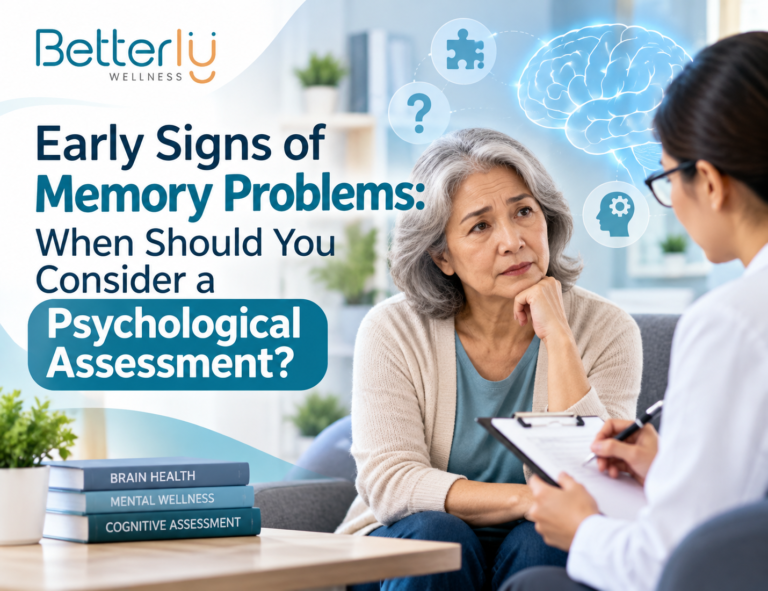
    Early Signs of Memory Problems: When Should You Consider a Psychological Assessment?

    When Should You Consider a Psychological Assessment Sharjah

    Early Signs of Memory Problems: When Should You Consider a Psychological Assessment?

    You walk into a room and forget why you went there. You struggle to remember a colleague’s name or misplace your phone for the third time this week. Most people experience moments like these. But what happens when forgetfulness becomes frequent, starts affecting your responsibilities, or is noticed by family members?

    Memory problems can be unsettling, especially when there is no obvious explanation. Some changes are associated with stress, sleep deprivation, or emotional distress. Others may require further investigation to identify an underlying medical or cognitive condition.

    A psychological assessment Sharjah can help examine memory, attention, and related thinking abilities when a qualified professional determines that such testing is appropriate.

    However, not every memory complaint requires psychological testing, and not every cognitive difficulty indicates dementia.

    Understanding the difference between occasional forgetfulness and concerning cognitive changes can help you decide when to seek professional guidance.

    This article explains early memory warning signs, possible causes, the role of cognitive assessment, and what individuals and families in the UAE should know before arranging an evaluation.

    What Are Early Signs of Memory Problems?

    Early memory problems involve changes in a person’s ability to remember information, learn something new, recall recent events, or complete familiar activities. Occasional forgetfulness is common, but persistent, worsening, or disruptive changes deserve medical attention.

    Some memory difficulties develop gradually, while others appear alongside changes in concentration, language, decision-making, or behaviour.

    1. Frequently Forgetting Recent Conversations

    Forgetting a minor detail occasionally is normal.

    However, repeatedly asking the same question, forgetting an entire recent conversation, or struggling to retain newly explained information may suggest a need for evaluation.

    Family members sometimes notice these changes before the individual does.

    2. Difficulty Remembering Appointments and Responsibilities

    Missing one appointment does not necessarily indicate a cognitive problem.

    Concern becomes more appropriate when someone repeatedly forgets important commitments, medication schedules, bills, or familiar responsibilities despite previously managing them independently.

    The impact on daily functioning matters more than an isolated mistake.

    3. Losing Track of Familiar Tasks

    Someone experiencing cognitive difficulties may struggle to follow a familiar recipe, manage routine paperwork, or complete a task involving several steps.

    These changes can reflect difficulties with attention, planning, working memory, or executive functioning rather than memory alone.

    4. Difficulty Finding Words

    Occasional word-finding difficulties happen to many healthy adults.

    More concerning patterns may include frequently losing the thread of conversations, substituting incorrect words, or having increasing difficulty explaining familiar ideas.

    5. Noticeable Changes in Concentration

    A person might read the same paragraph repeatedly, lose track of instructions, or struggle to concentrate during meetings.

    Poor concentration can also be associated with anxiety, depression, exhaustion, and other health conditions.

    A professional evaluation helps distinguish between possible explanations.

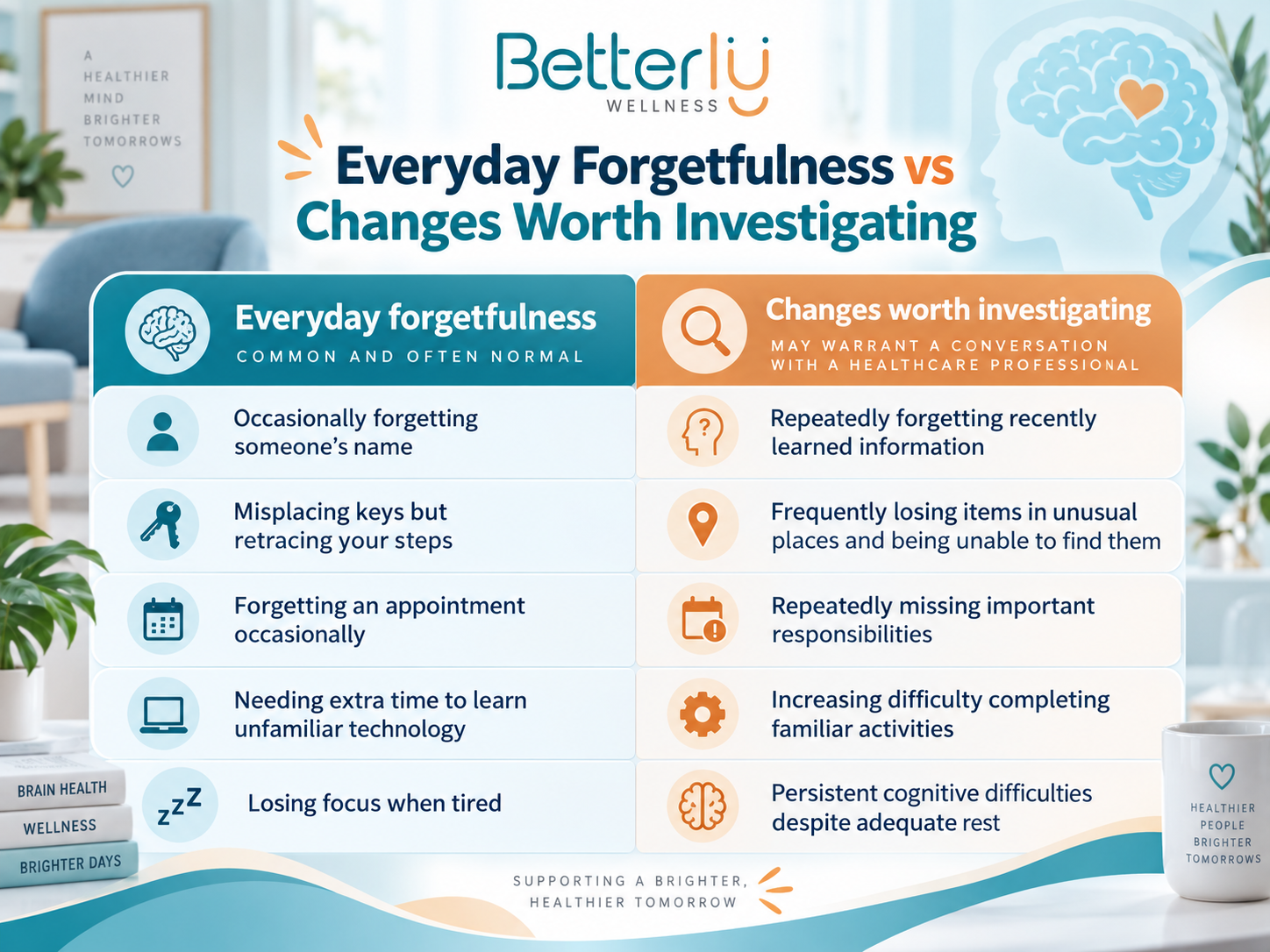
    Normal Forgetfulness vs Concerning Memory Changes

    Not all memory changes have the same clinical significance.

    These examples are general indicators, not diagnostic criteria.

    Mild cognitive impairment, dementia, depression, medication effects, and several medical conditions can produce overlapping symptoms. A healthcare professional must consider the wider clinical picture.

    What Causes Memory Problems Besides Dementia?

    Memory difficulties do not automatically indicate Alzheimer’s disease or another neurodegenerative condition.

    The National Institute on Aging identifies several possible causes of cognitive changes, including medical conditions, medication effects, depression, and dementia.

    What Causes Memory Problems Besides Dementia

    Stress and Anxiety

    Persistent stress can interfere with concentration and the brain’s ability to effectively encode new information.

    Someone managing demanding work responsibilities, financial uncertainty, or family pressures may feel unusually forgetful.

    Depression and Emotional Distress

    Depression can affect attention, processing speed, motivation, and memory performance.

    People experiencing persistent low mood may find it difficult to organise thoughts or remember information.

    A broader mental health assessment may be relevant when cognitive symptoms occur alongside emotional difficulties.

    Poor Sleep

    Sleep plays an important role in attention, learning, and memory consolidation.

    Insufficient sleep, insomnia, and sleep-related disorders can contribute to daytime cognitive difficulties.

    Medication and Medical Conditions

    Certain medications, vitamin deficiencies, thyroid disorders, infections, and other medical conditions may affect cognition.

    This is one reason medical evaluation should not be skipped when memory concerns arise.

    Hormonal and emotional health can also influence concentration. For example, our article on PCOS and mental health in the UAE explores the relationship between physical health concerns and psychological wellbeing.

    When Should You Consider a Psychological Assessment in Sharjah?

    A psychological assessment Sharjah may be appropriate when memory or attention problems persist, interfere with daily functioning, or remain unexplained after an initial medical review.

    Psychological evaluation is particularly useful when a clinician needs a clearer understanding of the person’s cognitive strengths and difficulties.

    Consider seeking professional advice if:

    • Memory difficulties are becoming more frequent.
    • Family members notice meaningful behavioural or cognitive changes.
    • Concentration problems affect work, education, or relationships.
    • You struggle with familiar tasks that previously felt manageable.
    • Emotional symptoms occur alongside persistent forgetfulness.
    • A healthcare professional recommends structured cognitive or neuropsychological testing.

    A useful starting point is a medical appointment to review symptoms, health history, sleep, and medications.

    Depending on the findings, the clinician may recommend a psychologist, neuropsychologist, neurologist, psychiatrist, or another appropriate specialist.

    For information about professional care pathways, explore our clinical mental health services guide for the UAE.

    When Is Urgent Medical Attention Necessary?

    Sudden confusion or abrupt memory loss should not be treated as a routine psychological assessment issue.

    Seek emergency medical care when cognitive changes begin suddenly, particularly if accompanied by weakness, facial drooping, speech difficulties, severe headache, seizures, fever, or altered consciousness.

    These symptoms may indicate an acute medical condition requiring immediate evaluation.

    In the UAE, call 998 for an ambulance when immediate medical assistance is needed.

    What Happens During a Cognitive Assessment?

    A cognitive assessment examines mental abilities such as memory, attention, language, reasoning, processing speed, and executive functioning.

    The specific process depends on the person’s symptoms, age, medical history, and reason for referral.

    Step 1: Clinical Interview

    The clinician asks when memory problems started, how frequently they occur, and whether they affect everyday activities.

    Questions may cover:

    • Medical and medication history
    • Sleep quality
    • Stress and emotional wellbeing
    • Educational and occupational background
    • Family observations
    • Previous psychological or neurological concerns

    Step 2: Cognitive Screening

    Brief screening tools may assess orientation, recall, attention, language, and problem-solving.

    Screening results identify whether further evaluation may be appropriate. They do not independently establish a diagnosis of dementia.

    Step 3: Detailed Psychological Testing

    When necessary, a psychologist or neuropsychologist may administer standardised tests to examine specific cognitive abilities.

    A memory assessment may investigate immediate recall, delayed recall, verbal learning, visual memory, and working memory.

    Step 4: Interpretation and Recommendations

    The clinician interprets findings in the context of the individual’s history and everyday functioning.

    Results may lead to further medical investigation, psychological support, additional testing, or practical strategies for managing difficulties.

    What Is a Psychometric Assessment in Sharjah?

    A psychometric assessment Sharjah involves structured, standardised measures used to evaluate psychological characteristics or cognitive abilities.

    Depending on the referral question, psychometric testing may examine memory, attention, intellectual functioning, emotional symptoms, or behavioural patterns.

    Unlike informal online memory quizzes, professionally administered tests follow established administration and interpretation procedures.

    Importantly, psychometric assessment and dementia diagnosis are not interchangeable.

    Testing can help identify patterns of cognitive functioning, but diagnosing a neurological disorder may require medical examination, laboratory investigations, brain imaging, or specialist assessment.

    At Betterly Wellness, our psychological assessment services include standardised testing and evaluation of cognitive, emotional, and behavioural concerns.

    Psychological Assessment vs Neurological Evaluation

    People experiencing memory changes sometimes wonder whether they should see a psychologist or neurologist.

    Psychological or neuropsychological assessment

    Neurological or medical evaluation

    Examines cognitive strengths and difficulties

    Investigates medical and neurological causes

    May use standardised memory and attention tests

    May include examination, blood tests, or imaging

    Can assess emotional influences on performance

    Can investigate neurological disease or acute illness

    Helps inform support and rehabilitation planning

    Helps determine medical diagnosis and treatment

    These approaches often complement each other.

    When symptoms appear alongside significant mood or psychiatric concerns, a psychiatric consultation may also be recommended. Our guide on when to see a psychiatrist in Sharjah explains when this type of evaluation may be relevant.

    Can Memory Problems Affect Children and Young Adults?

    Memory concerns are not limited to older adults.

    Children and young adults may experience difficulties remembering instructions, maintaining attention, processing information, or retaining newly learned material.

    These difficulties can be associated with sleep problems, emotional distress, attention disorders, learning differences, developmental conditions, or medical factors.

    For children, a comprehensive evaluation may consider school performance, developmental history, hearing, language development, and emotional wellbeing.

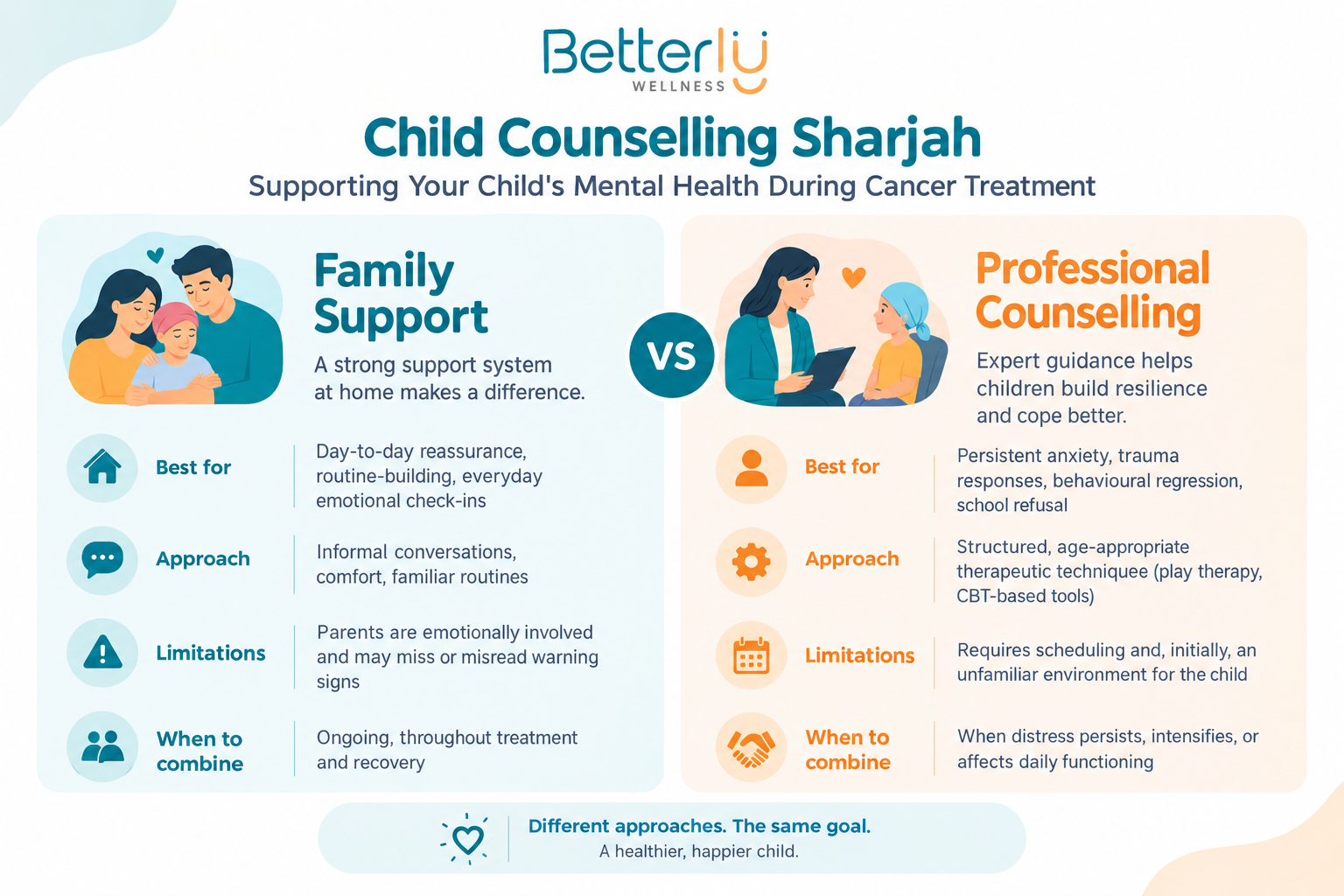
    Families navigating serious childhood illness may also find our guide to child counselling in Sharjah during cancer treatment useful for understanding emotional and educational support needs.

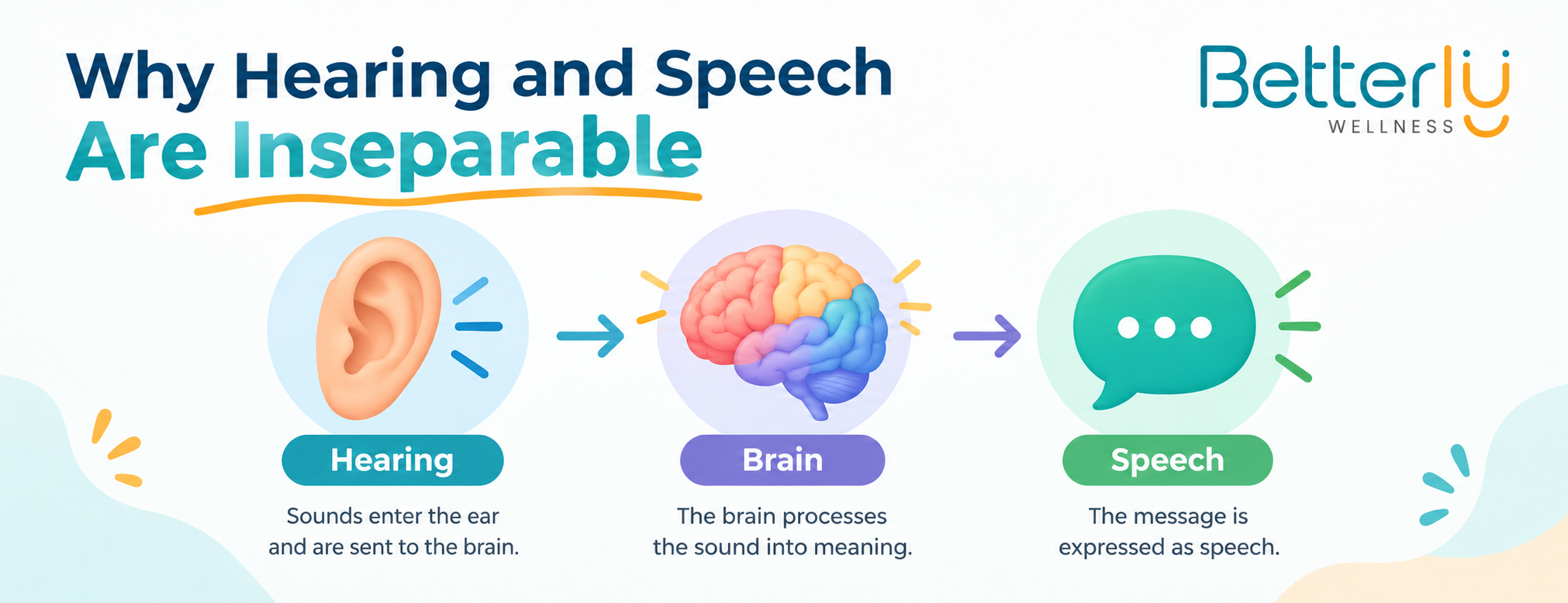
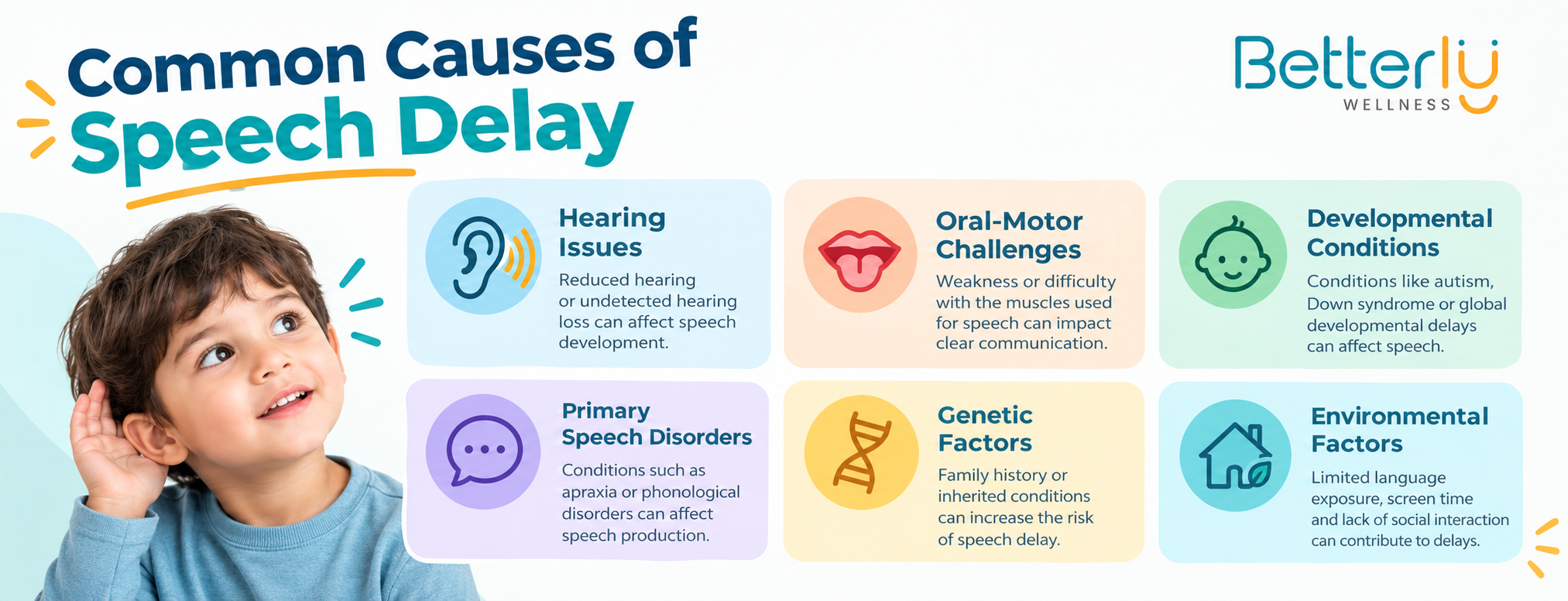
    Similarly, hearing and communication concerns sometimes affect how children respond to verbal instructions. Our article on speech delay treatment and hearing awareness discusses the importance of appropriate developmental evaluation.

    A child who struggles to remember spoken instructions does not necessarily have a memory disorder.

    Expert Insight: The Pattern Matters More Than One Forgotten Detail

    One of the most important principles of memory assessment is that isolated symptoms rarely tell the complete story.

    A person who forgets information because of poor sleep may need a different approach from someone showing progressive changes in memory, language, and daily functioning.

    The timing of symptoms, their progression, the individual’s medical history, and observations from trusted family members all contribute to clinical understanding.

    A useful question is:

    “Is this an occasional difficulty, or has there been a meaningful change in how the person functions?”

    Early evaluation can identify potentially treatable causes and establish a baseline for future comparison.

    However, no single psychological test should be interpreted without clinical context.

    What Happens After a Memory Assessment?

    The next step depends on what the assessment reveals.

    If cognitive functioning appears within expected limits, the clinician may recommend monitoring symptoms and addressing sleep, stress, or other relevant factors.

    If emotional distress contributes to cognitive difficulties, counselling or psychotherapy may be considered.

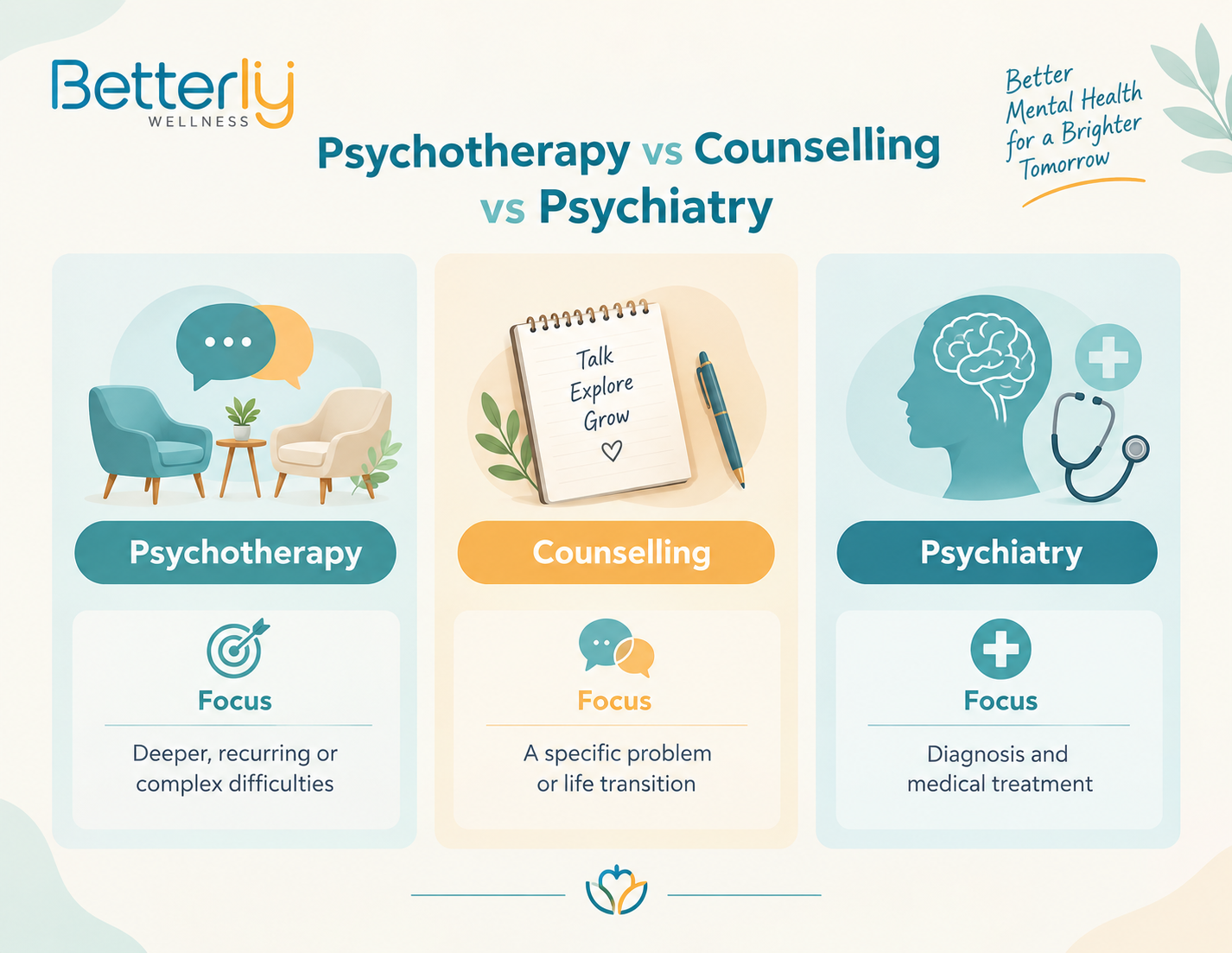
    Our guide to counselling versus psychotherapy explains how these approaches differ, while our article on psychotherapy in Sharjah explores therapeutic support.

    When specialised assessment or coordinated care is needed, individuals can learn more about specialised mental health services in the UAE.

    If the evaluation suggests possible neurological impairment, referral for additional medical investigation may be necessary.

    Mental health safety concerns should also be assessed independently. Persistent hopelessness or thoughts of self-harm require appropriate professional attention, regardless of memory symptoms. Our resources on suicide warning signs and support and suicide prevention in the UAE explain how to recognise urgent concerns and seek suitable help.

    How Can You Prepare for a Psychological Assessment?

    Preparation does not require studying or practising memory tests.

    Instead, bring information that may help the clinician understand the situation:

    1. Write down specific examples of memory difficulties.
    2. Record when symptoms started and whether they are changing.
    3. List medications and relevant medical conditions.
    4. Describe changes in sleep, mood, and concentration.
    5. Bring previous medical reports when available.
    6. Ask whether a trusted family member should provide observations.

    Avoid repeatedly testing a family member at home or comparing their performance with online quizzes.

    The purpose of professional evaluation is to understand the difficulty, not to judge someone’s intelligence or personal worth.

    Key Takeaways:

    • Occasional forgetfulness does not automatically indicate cognitive impairment.
    • Persistent or worsening memory problems deserve professional assessment.
    • Stress, depression, sleep difficulties, medication effects, and medical conditions may affect memory.
    • Cognitive and psychometric testing can clarify strengths and difficulties but do not replace medical diagnosis.
    • Sudden confusion requires urgent medical attention.
    • Early evaluation helps individuals and families understand appropriate next steps.

    Understanding Your Memory Concerns Is the First Step

    Memory problems can raise difficult questions, particularly when symptoms begin affecting work, relationships, or everyday independence.

    At Betterly Wellness, our psychological assessment services in Sharjah can help individuals explore concerns involving attention, memory, emotional health, and cognitive functioning.

    If you are considering an evaluation, our team can provide information about available assessment services and whether further specialist referral may be appropriate.

    Learn more about psychological assessment in Sharjah and the types of evaluations available.

    This article provides general educational information and does not replace personalised medical advice, diagnosis, or emergency care.

    Frequently Asked Questions

    Early signs may include repeated forgetfulness, difficulty retaining recent information, misplaced belongings, missed appointments, and trouble completing familiar tasks. Occasional lapses are common, but worsening symptoms or changes affecting everyday responsibilities should be assessed by a healthcare professional.

  • Suicide Prevention in the UAE: Warning Signs and How to Support Someone Safely

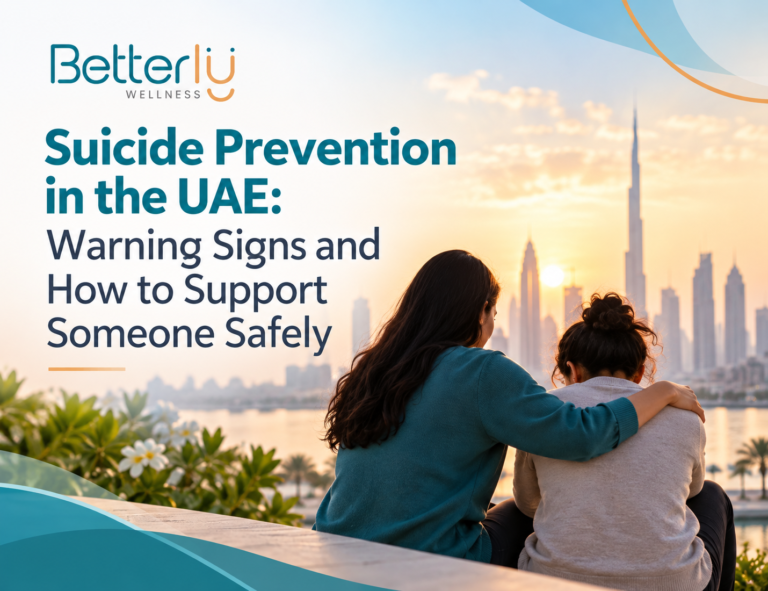
    Suicide Prevention in the UAE: Warning Signs and How to Support Someone Safely

    Warning Signs and How to Support Someone Safely

    Suicide Prevention in the UAE: Warning Signs and How to Support Someone Safely

    You notice that someone close to you has changed. They rarely answer your messages, seem unusually withdrawn, or keep saying that life feels pointless. You want to help, but you are afraid of saying something wrong. Should you ask directly whether they are thinking about suicide? What if they refuse to talk? And where can you find reliable help in the UAE?

    These questions matter because suicide prevention often begins with an ordinary conversation that someone is unsure how to start.

    Understanding suicide prevention UAE resources means knowing how to recognise concerning behaviour, respond without judgement, and connect someone with appropriate professional care. It also means knowing when emotional support isn’t enough and urgent medical intervention is needed.

    A person experiencing suicidal thoughts may not show every warning sign. Some communicate their distress openly, while others hide it from the people closest to them.

    This guide explains the signs worth taking seriously, practical ways to support someone, and the mental health services available to people living in Dubai, Sharjah, Abu Dhabi, Ajman, and other UAE communities.

    Immediate safety information: If someone has attempted suicide, may act on suicidal thoughts soon, or cannot remain safe, call 998 for an ambulance or 999 for police anywhere in the UAE. Stay with the person if it is safe to do so, and do not rely on a routine counselling appointment for an emergency.

    What Is Suicide Prevention, and Why Does It Matter in the UAE?

    Suicide prevention involves identifying suicidal thoughts and behaviours early, responding to immediate danger, improving access to appropriate mental health care, and providing continued support to people at risk. Effective prevention includes compassionate conversations, professional assessments, safety planning, evidence-based treatment, and ongoing follow-up.

    According to the World Health Organization, more than 720,000 people die by suicide worldwide each year. Its August 2026 guidance emphasises early identification, assessment, management, follow-up, and reducing access to potentially lethal means.

    For people living in the UAE, emotional distress can develop alongside relationship difficulties, financial worries, isolation, bereavement, workplace pressure, or problems adjusting to major life changes.

    These experiences do not automatically mean someone is suicidal. However, they can contribute to situations where additional mental health support becomes important.

    Suicidal thoughts can also occur in people who appear successful, maintain active social lives, or have no previously diagnosed mental health condition.

    This is why suicide prevention should never depend on assumptions about how a person looks or behaves.

    Who May Need Suicide Prevention Support?

    Suicide prevention resources can help:

    • People experiencing suicidal thoughts, severe hopelessness, or overwhelming emotional distress.
    • Families concerned about a loved one’s changes in behaviour.
    • Parents noticing worrying statements or behaviour in teenagers.
    • Friends and colleagues who suspect someone may be at risk.
    • Individuals living with depression, anxiety, trauma, or other mental health difficulties.
    • People supporting someone after a mental health crisis or hospital discharge.

    The goal is not to diagnose someone based on a checklist. It is to recognise when concern deserves a conversation, a professional assessment, or an emergency response.

    What Are the Most Important Suicide Warning Signs?

    Suicide warning signs may include talking about wanting to die, expressing hopelessness, withdrawing from relationships, giving away valued belongings, researching suicide methods, or experiencing major changes in behaviour. Signs are particularly concerning when they are new, escalating, or connected to a recent crisis.

    The National Institute of Mental Health identifies changes in speech, emotions, and behaviour as important indicators of potential risk.

    the Most Important Suicide Warning Signs

    1. Verbal Warning Signs

    Listen carefully when someone makes statements such as:

    • “I don’t see any reason to keep going.”
    • “Everyone would be better off without me.”
    • “Nothing is ever going to improve.”
    • “I feel like a burden to my family.”
    • “I don’t think I can handle this anymore.”

    Not every expression of sadness indicates suicidal intent. However, repeated references to death, unbearable distress, or hopelessness should prompt a caring, direct conversation.

    Do not dismiss concerning comments as attention-seeking or assume someone cannot be serious because they appear calm.

    2. Emotional and Psychological Warning Signs

    Emotional changes can be difficult to recognise, particularly when a person is trying to maintain their usual responsibilities.

    Watch for:

    • Persistent feelings of hopelessness or worthlessness.
    • Severe anxiety, agitation, or emotional pain.
    • Strong feelings of guilt or shame.
    • Sudden or extreme mood changes.
    • Loss of interest in relationships or previously enjoyable activities.
    • Feeling trapped or believing there is no way forward.

    A person may experience these symptoms without being suicidal. Nevertheless, they are valid reasons to discuss professional depression support or psychological care.

    3. Behavioural Warning Signs

    Behavioural changes sometimes provide important clues when someone is unwilling to describe their emotions.

    Concerning patterns include:

    • Withdrawing from family, friends, or social activities.
    • Giving away meaningful possessions.
    • Saying goodbye in an unusual or final-sounding way.
    • Increased alcohol or substance use.
    • Taking dangerous risks.
    • Significant changes in sleep or appetite.
    • Making preparations associated with ending their life.
    • Researching suicide methods or describing a specific plan.

    A sudden improvement in mood does not automatically indicate recovery, particularly if other serious warning signs remain present.

    These behaviours deserve attention rather than speculation.

    4. Warning Signs in Teenagers and Young Adults

    Young people may communicate distress differently from adults.

    Parents and caregivers might notice a combination of social withdrawal, falling school engagement, intense emotional reactions, disrupted sleep, or concerning online messages.

    A teenager who repeatedly talks about disappearing or not wanting to exist needs to be taken seriously.

    Rather than beginning with accusations about school performance or screen time, start with concern for their emotional wellbeing.

    Young people may find it easier to speak during a walk, quiet drive, or another low-pressure setting.

    If there are signs of immediate risk, adult supervision and emergency assessment take priority over a routine appointment.

    How Can You Tell When Someone Needs Immediate Crisis Support?

    Not every mental health concern requires emergency intervention, but every credible expression of suicidal intent deserves serious attention.

    The following comparison can help readers understand appropriate next steps. It is not a substitute for a professional risk assessment.

    Situation

    Appropriate response

    Persistent sadness, anxiety, or withdrawal without known immediate danger

    Offer support and arrange a timely mental health assessment

    Expressions of wanting to die or uncertainty about personal safety

    Ask directly about suicide, stay engaged, and seek urgent professional assessment

    A specific suicide plan, stated intention to act soon, recent attempt, or inability to remain safe

    Contact UAE emergency services immediately and stay with the person when safe

    Important: Someone may be at serious risk even without openly describing a plan. When you are unsure whether they can remain safe, seek urgent professional help rather than waiting for more warning signs.

    How to Support Someone Who May Be Thinking About Suicide

    Supporting someone in emotional distress does not require having the perfect words. What matters is recognising the concern, listening seriously, taking appropriate safety measures, and connecting the person with help.

    The NIMH recommends five actions: ask, be there, help keep the person safe, help them connect, and follow up.

    Support Someone Who May Be Thinking About Suicide

    Step 1: Start an Honest Conversation

    Choose a reasonably private setting where the person can speak without unnecessary interruptions.

    Begin with something you have genuinely noticed.

    For example:

    “I’ve noticed you’ve seemed overwhelmed lately, and I’m concerned about you. Would you like to talk about what’s happening?”

    Avoid assuming you already know the cause of their distress.

    If you believe they might be suicidal, ask clearly:

    “Are you thinking about suicide?”

    Direct questions do not put the idea into someone’s mind. Research cited by the NIMH indicates that asking about suicide does not increase suicidal thoughts or behaviour.

    Step 2: Listen Without Trying to Fix Everything

    Someone experiencing emotional pain may already feel misunderstood.

    Statements such as “Other people have it worse” or “Just think positively” can discourage further conversation.

    A more helpful response is:

    “That sounds incredibly difficult. I’m glad you told me. I want to understand what you’re going through.”

    Allow silence. Give them time to explain.

    You do not need to agree with every belief they express. You can acknowledge that their suffering feels real and overwhelming without reinforcing hopeless conclusions.

    Step 3: Take Their Safety Seriously

    If someone says they are thinking about suicide, calmly ask whether they have a plan, intend to act soon, or have already taken steps to harm themselves.

    If danger is immediate:

    • Call 998 or 999 in the UAE.
    • Stay nearby when it is safe to do so.
    • Do not leave the person alone while arranging emergency help.
    • Reduce access to potentially dangerous items if you can do so safely.
    • Follow instructions from emergency responders.

    Do not promise to keep suicidal intentions secret.

    Where necessary, involve emergency professionals or a trusted responsible person, even if the individual initially objects to sharing the information.

    Step 4: Help Them Access Professional Mental Health Care

    A supportive conversation can help someone feel less isolated, but it does not replace clinical assessment and treatment.

    Depending on the individual’s needs, professional care may include psychological assessment, psychotherapy, psychiatric consultation, medication management, or coordinated follow-up.

    If the person feels overwhelmed by arranging an appointment, offer practical assistance.

    You might help them identify a suitable clinic, make a phone call, or accompany them to a consultation.

    For a broader understanding of available treatment pathways, read our guide to mental health services and treatment options in the UAE.

    Step 5: Continue Checking In

    Support should not end after one conversation or appointment.

    A person may feel especially vulnerable following a crisis, during changes in treatment, or after returning home from hospital.

    Send a thoughtful message, arrange a check-in, and ask whether they were able to access professional care.

    Consistent connection can contribute to suicide prevention by reducing isolation and encouraging continued engagement with support.

    Suicide Prevention Resources in the UAE: Where Can You Find Help?

    Knowing where to seek assistance is essential, particularly when emotional distress becomes urgent.

    Verified UAE support information, October 2026

    Resource

    Contact or availability

    When to use

    UAE Ambulance

    998, nationwide

    Immediate medical or suicide-related emergency

    UAE Police

    999, nationwide

    Emergency safety response

    Abu Dhabi 800-SAKINA

    800 725462, 24/7

    Mental health support and psychological first aid

    Hospital emergency department

    Nearest appropriate emergency facility

    Urgent assessment when someone cannot remain safe

    Licensed mental health clinic

    Contact the provider directly

    Non-emergency assessment, treatment, and ongoing care

    The Abu Dhabi Department of Health announced the 24-hour 800-SAKINA mental health support line in March 2026, providing Arabic- and English-language assistance for psychological concerns, including support for children and families. Availability and eligibility for callers outside Abu Dhabi should be confirmed directly.

    The UAE Government confirms that emergency numbers 998 and 999 can be used anywhere in the country.

    Finding Mental Health Support in Dubai, Sharjah, Abu Dhabi, and Other Emirates

    Residents looking for mental health support UAE services should consider three important factors.

    Clinical suitability: Does the provider offer qualified psychiatric or psychological assessment for the person’s needs?

    Accessibility: Can the individual reach the clinic, communicate comfortably with the provider, and arrange follow-up care?

    Urgency: Is routine outpatient treatment suitable, or does the person’s current condition require emergency services?

    For people experiencing persistent symptoms without immediate danger, reviewing available clinical mental health services in the UAE can help clarify the difference between counselling, psychotherapy, and psychiatric care.

    Choose the level of support based on safety and clinical need, not simply the nearest appointment.

    Why Professional Mental Health Support Matters for Suicide Prevention

    Friends and family members can provide emotional reassurance, but they cannot always identify the full extent of a person’s mental health difficulties.

    A qualified mental health professional can explore the factors contributing to suicidal thoughts, assess safety, and recommend suitable treatment.

    Depending on the individual’s circumstances, care may involve:

    Psychological Assessment and Psychotherapy

    A clinical psychologist can help identify patterns of emotional distress and recommend therapeutic approaches suited to the person’s needs.

    Psychotherapy may address depression, trauma, anxiety, emotional regulation, and difficulties coping with stressful life events.

    Evidence-based approaches such as cognitive behavioural therapy (CBT) and dialectical behaviour therapy (DBT) may be considered where clinically appropriate.

    If you are unsure which approach is suitable, our guide to counselling versus psychotherapy explains the differences.

    Psychiatric Evaluation and Treatment

    A psychiatrist can assess mental health symptoms, identify conditions that may require medical treatment, and determine whether medication could form part of the treatment plan.

    Psychiatric care may be particularly important when severe depression, significant mood changes, or other psychiatric symptoms are present.

    Our article on when to see a psychiatrist in Sharjah provides further guidance for people considering professional assessment.

    Collaborative Safety Planning

    A safety plan is a personalised document developed with the individual, ideally alongside a qualified mental health professional.

    It commonly identifies early warning signs, coping strategies, supportive contacts, professional resources, and measures to reduce access to dangerous items.

    Unlike a simple promise not to self-harm, a practical safety plan outlines specific actions the person and their support network can take when distress increases.

    Research summarised by the NIMH supports structured safety planning as an important suicide prevention intervention.

    Expert Insight: Support Should Match the Person’s Immediate Needs

    One important principle of suicide prevention is that emotional reassurance and medical intervention are not interchangeable.

    A person experiencing persistent sadness may benefit from scheduled psychotherapy. Someone expressing suicidal intent, describing a plan, or struggling to remain safe requires urgent assessment.

    The most useful question is not simply whether someone is feeling better today. It is whether they are safe and receiving the level of support their situation requires.

    Families should also understand that the absence of visible sadness does not establish safety.

    This is particularly important when a person has recently experienced a major crisis or is returning to their normal routine after emergency treatment.

    Ongoing communication between the individual, their chosen support network, and healthcare professionals can help identify changing needs.

    Common Mistakes to Avoid When Supporting Someone at Risk

    Well-intentioned responses can sometimes make difficult conversations harder.

    Mistake 1: Assuming Someone Is Just Seeking Attention

    Comments about wanting to die should not be dismissed as exaggeration.

    Even when suicidal intent is uncertain, the person may be experiencing serious emotional distress.

    Better approach: Listen, ask directly about suicide, and help arrange appropriate assessment.

    Mistake 2: Promising Complete Secrecy

    Someone may ask you not to tell anyone about their suicidal thoughts.

    Respecting privacy matters, but immediate safety must come first.

    Better approach: Explain compassionately that you may need to involve someone qualified to help keep them safe.

    Mistake 3: Waiting for More Obvious Warning Signs

    Not everyone communicates suicidal intent openly.

    Waiting for a specific statement or dramatic behavioural change can delay important intervention.

    Better approach: Take credible concerns seriously and seek professional guidance promptly.

    Mistake 4: Assuming One Counselling Session Solves the Problem

    Mental health recovery rarely follows an identical timeline for everyone.

    Symptoms and support needs can change, particularly during stressful periods.

    Better approach: Encourage treatment continuity, regular follow-up, and an agreed safety plan.

    Mistake 5: Making Someone Feel Guilty About Their Thoughts

    Statements about how much the person would hurt their family can increase shame.

    Better approach: Communicate care without blame. Focus on the person’s safety, suffering, and access to effective support.

    How Can Families and Communities Strengthen Suicide Prevention in the UAE?

    Suicide prevention involves more than responding to an immediate crisis.

    Schools, workplaces, healthcare providers, friends, and family members can contribute by creating environments where people feel comfortable discussing mental health concerns.

    In UAE communities, this may involve improving awareness of available treatment, encouraging people to seek help before symptoms intensify, and providing culturally respectful support.

    Support at Home

    Families can encourage honest conversations about emotional wellbeing without forcing individuals to disclose everything immediately.

    Parents should treat concerning statements from children and teenagers seriously and seek suitable professional guidance when necessary.

    Support in Workplaces

    Managers and colleagues should recognise that persistent emotional distress can affect concentration, attendance, relationships, and daily performance.

    Employers can make professional mental health resources easier to access while respecting employee privacy.

    A colleague should not be expected to diagnose someone or manage a suicidal crisis independently.

    Support Within the Community

    Community organisations and educational institutions can help reduce stigma by promoting accurate mental health information and providing reliable referral pathways.

    People should know where to access crisis support, even if they have never previously used mental health services.

    Finding Ongoing Mental Health Care at Betterly Wellness

    Seeking help can feel difficult when someone is already emotionally exhausted. Having access to a supportive, qualified clinical team can make the process of exploring treatment options more manageable.

    At Betterly Wellness, we provide mental health services through our Sharjah-based medical centre, including clinical psychology, psychiatric consultation, individual counselling, and therapeutic support for adults, children, adolescents, couples, and families.

    Our approach centres on understanding the individual rather than treating every person’s emotional difficulties in the same way.

    We aim to help individuals and families explore suitable care based on their symptoms, personal circumstances, and clinical needs.

    People considering non-emergency treatment can learn more about our specialised mental health care services in the UAE.

    We understand that people seeking help may have concerns about confidentiality, treatment choices, and whether their symptoms are serious enough to require professional attention.

    Our team can discuss the available services and help prospective patients understand the next steps for arranging a consultation.

    How to Contact Our Clinic

    Betterly Wellness Medical Centre

    Office No. 101, Al Maha Building (Old DIB Building), Muwaileh Commercial, Sharjah, United Arab Emirates.

    Phone: +971 56 666 7398 Alternative: +971 6 530 2388 Email: hello@betterlywellness.com

    Contact our team to enquire about available appointments and mental health services.

    These clinic details and the listed service categories are published on the official Betterly Wellness website.

    Our routine clinical enquiry channels are not a replacement for emergency services. If someone may harm themselves imminently, contact 998 or 999.

    Key Takeaways: Suicide Prevention Starts With Awareness and Action

    Effective suicide prevention involves recognising concerning changes, taking expressions of suicidal intent seriously, and helping people reach an appropriate level of care.

    Keep these principles in mind:

    • Suicidal thoughts may occur with or without a previously diagnosed mental health condition.
    • Warning signs can involve speech, emotional changes, withdrawal, or unusual preparations.
    • Asking directly about suicide is appropriate when you are concerned.
    • Listening without judgement can help someone share what they are experiencing.
    • Immediate danger requires emergency intervention, not a routine appointment.
    • Professional assessment, treatment, safety planning, and follow-up are important parts of ongoing prevention.
    • UAE residents can access emergency services nationwide through 998 and 999.

    A person does not need to explain their distress perfectly before receiving help. A concerned

    Frequently Asked Questions

    Early suicide warning signs can include persistent hopelessness, withdrawing from loved ones, talking about being a burden, major mood changes, or losing interest in everyday activities. Giving away belongings or discussing suicide plans may indicate more urgent risk. Seek professional guidance whenever concerning signs appear or intensify.

  • Psychotherapy in Sharjah: How Therapy Supports Lasting Mental Health Recovery

    Psychotherapy in Sharjah: How Therapy Supports Lasting Mental Health Recovery

    Four-step path showing mental health recovery

    Psychotherapy in Sharjah: How Therapy Supports Lasting Mental Health Recovery

    You’ve decided something has to change. But a search for psychotherapy in Sharjah gives you clinic lists, service pages without prices and generic definitions. What most of them skip is what you actually want to know: how does therapy help you get better and stay better?

    The most common reason recovery stalls is stopping too early. People book a few sessions, feel some relief, and drift away. The old patterns return within months. Lasting mental health recovery is less about one breakthrough and more about building skills, understanding your triggers and having a plan for hard weeks.

    This guide explains how psychotherapy supports long-term wellbeing in the UAE, which approaches suit which problems, what to expect from your first sessions, what affects cost, and how to choose a clinician you can trust. It also explains how Betterly Wellness, a clinic in Muweilah, Sharjah, approaches care, so you can decide with real information.

    Key Takeaways

    • Recovery is a process, not a single event. Skills learned in therapy are what prevent relapse.
    • CBT, ACT and psychodynamic therapy each suit different problems.
    • Psychotherapy, counselling and psychiatry are different services that often work best together.
    • Cost depends on the clinician’s qualifications, session length and format.
    • Verify a therapist’s licence and ask about approach before you commit.

    What Is Psychotherapy in Sharjah?

    Psychotherapy in Sharjah is a structured, confidential treatment in which a qualified clinician helps you understand and change thoughts, emotions and behaviours that keep you stuck. Approaches such as CBT, ACT and psychodynamic therapy support mental health recovery by building skills, reducing symptoms and lowering the risk of relapse over time.

    Psychotherapy is often called “talk therapy.” That undersells it. A good therapist doesn’t just listen. They help you notice patterns, test new responses and practise them between sessions.

    Psychotherapy vs Counselling vs Psychiatry

    Psychotherapy, counselling and psychiatry compared
     

    Psychotherapy

    Counselling

    Psychiatry

    Focus

    Deeper, recurring or complex difficulties

    A specific problem or life transition

    Diagnosis and medical treatment

    Typical length

    Several weeks to months

    Shorter-term

    Varies; review-based

    Delivered by

    Clinical or counselling psychologist, psychotherapist

    Counsellor, psychologist

    Medical doctor (psychiatrist)

    Medication

    No

    No

    Yes, when appropriate

    Best when

    Patterns keep repeating

    You need focused support now

    Symptoms are severe or medication may help

    In practice these overlap. Many people benefit from combining therapy with medical review. This is why integrated clinics matter.

    Why Mental Health Recovery Needs More Than a Few Sessions

    Nearly 1 in 7 people worldwide, about 1.1 billion, were living with a mental disorder in 2021, with anxiety and depressive disorders the most common. The same WHO fact sheet notes that effective treatments exist, yet most people do not have access to effective care. 

    Access is one problem. Follow-through is another. Recovery tends to move through recognisable stages:

    1. Stabilisation: Symptoms ease and you understand what you’re dealing with.
    2. Skill-building: You learn tools such as thought records, grounding and behavioural activation.
    3. Pattern change: You work on deeper habits, beliefs or relationships driving distress.
    4. Maintenance: You practise independently and plan for setbacks.

    Most people who stop early stop after stage one. That is when they feel better but haven’t yet built anything durable.

    Expert Insight: Feeling better and being well are not the same. Early relief often comes from being heard for the first time. Lasting change comes from practising new responses when you are stressed, not just when you are calm. A good therapist plans for relapse from the start.

    How Therapy Supports Long-Term Wellbeing

    Person finding calm against a UAE city skyline

    Therapy supports long-term wellbeing by teaching skills you keep using after sessions end. These include recognising unhelpful thought patterns, regulating emotions, changing avoidance behaviours and communicating needs. The goal is not just symptom relief but independence: knowing what to do when difficulty returns.

    Here is what that looks like in practice:

    • Awareness. You learn to spot early warning signs, such as disrupted sleep, withdrawal or irritability, before a low period deepens.
    • Skills. You practise techniques until they become habits.
    • Perspective. You understand why certain situations hit you harder than others.
    • Support planning. You know who and what helps, and when to return for a booster session.

    Emotional Wellbeing in the UAE Context

    Life in the UAE brings its own pressures: long working hours, distance from extended family, expatriate isolation, visa and financial stress, and cross-cultural family expectations. Therapy that ignores this context can feel generic. Ask any clinician how they work with your situation, including language and cultural background.

    Types of Therapy Used for Recovery in Sharjah

    CBT in Sharjah

    CBT loop linking thoughts, feelings and behaviour

    Cognitive Behavioural Therapy (CBT) helps you identify unhelpful thought patterns and change the behaviours that keep them going. It is structured, goal-focused and usually skills-based. WHO lists CBT among its recommended psychological interventions for depression, alongside behavioural activation and interpersonal psychotherapy.

    CBT suits anxiety, low mood, panic and stress. Sessions often include short between-session exercises, which is where much of the benefit comes from.

    Acceptance and Commitment Therapy (ACT)

    Person walking toward their values with ACT

    ACT teaches you to notice difficult thoughts without being ruled by them, and to act on your values. It suits people who feel stuck in worry, perfectionism or avoidance. Betterly’s Clinical Lead Psychologist, Dr. Afsal Moosa, lists ACT among his areas of expertise.

    Psychodynamic Psychotherapy

    This approach explores how earlier experiences and relationship patterns shape present difficulties. It tends to be longer-term and suits recurring relationship problems or long-standing emotional patterns. Research reviews also support its effectiveness for depressive and anxiety disorders.

    Couple and Family Therapy

    Recovery rarely happens in isolation. When a relationship or family system is part of the problem, involving partners or family members can make changes stick. Betterly Wellness lists work with children, adolescents, adults and couples.

    Which Approach Is Right for You?

    Guide matching concerns to therapy approaches

    What to Expect in Your First Sessions

    Your first session is usually an assessment. Your therapist asks about your symptoms, history, daily life and goals, explains how they work and agrees a plan with you. You should leave knowing the approach, the likely number of sessions and how progress will be reviewed.

    A typical path:

    1. Intake: You describe what brings you in.
    2. Assessment: The clinician clarifies symptoms, risks and history.
    3. Goal-setting: You agree what “better” means for you.
    4. Active sessions: Regular sessions, usually weekly to start, with exercises between visits.
    5. Review: Progress is checked, and sessions are spaced out as you improve.

    How Long Does It Take?

    There is no fixed timeline. Many people notice early relief within the first several sessions. Deeper patterns, trauma or long-standing depression often take several months. Your therapist should review progress with you regularly rather than leave it open-ended.

    Who Is Psychotherapy For?

    Psychotherapy is for anyone whose distress is affecting sleep, work, relationships or enjoyment of life. That includes:

    You do not need a diagnosis to start. You need only a sense that things could be better.

    When to seek urgent help: If you are thinking about harming yourself, call 999 or go to your nearest emergency department. Crisis lines listed for the UAE include Itma’en on 800506 for Dubai and 800 SAKINA (800 725462) for Abu Dhabi. Verify current numbers before publishing.

    Cost of Psychotherapy in Sharjah: What Affects the Price

    Fees vary widely and few clinics publish them. Here are the factors that drive the price:

    • Clinician qualification. Psychiatrists, clinical psychologists and counsellors are priced differently.
    • Session length. 45 to 60 minutes is common.
    • Format. In-person and online may be priced differently.
    • Package or single session. Bundles can reduce the per-session cost.
    • Insurance. Coverage for outpatient mental health care varies by plan.
    Cost of Psychotherapy in Sharjah - What Affects the Price

    For reference, Doctify lists Dr. Zoheb Raj’s psychiatric consultation at AED 400 for a new appointment and AED 350 for follow-ups, noting fees may vary by location. These are psychiatric consultation fees, not psychotherapy session fees. 

    Ask three questions before you start: 

    • What is the per-session fee? 
    • What is your cancellation policy? 
    • Are package rates available?

    Common Mistakes People Make When Choosing Therapy

    Mistake

    Why it happens

    Better approach

    Stopping after the first improvement

    Relief feels like recovery

    Agree a maintenance plan up front

    Choosing only on price

    Fees are visible, quality is not

    Compare qualifications and approach as well

    Not checking licensing

    Assuming all clinics are equivalent

    Verify registration with the relevant UAE health authority

    Expecting therapy to work without practice

    Therapy feels passive

    Do the between-session exercises

    Staying with a poor fit

    Feeling awkward about switching

    Give it a few sessions, then say so or change

    Skipping medical review

    Assuming therapy alone always suffices

    Ask whether a psychiatric assessment could help

    How to Choose a Psychotherapist in Sharjah

    How to Choose a Psychotherapist in Sharjah

    About Betterly Wellness: Who You Would Be Working With

    Betterly Wellness is a mental health and wellness clinic in Muweilah, Sharjah. The clinic is at the Al Maha Building (old DIB Building), Office 101, Muweilah Commercial. It offers in-person and online sessions. Doctify shows a 5.0 rating from 19 reviews. 

    Clinical team (verifiable profiles):

    • Dr. Zoheb Raj, Chief Psychiatrist and Medical Director: MBBS from the University of Calicut and MD in Neuropsychiatry from KUHS University, with 17 years of experience. He has served as Associate Professor of Psychiatry and led a child mental health clinic at KMCT Medical College. He works with integrative treatment plans. 
    • Dr. Afsal Moosa, Clinical Lead Psychologist and Director: PhD in Psychology (2025), MPhil in Clinical Psychology, 12 years of experience, and registered with the Ministry of Health (No. T100964). His work spans psychotherapy, couple and family therapy and neuropsychological rehabilitation. 

    Why an integrated setup matters: Having a psychiatrist and psychologists under one roof means therapy and medical review can be coordinated when needed, without you repeating your history.

    Take the Next Step

    If you’re comparing options for psychotherapy in Sharjah, book an initial consultation and ask the questions in this guide: approach, expected duration, fees, and how progress will be reviewed. A good clinic will welcome those questions.

    Frequently Asked Questions

    Psychotherapy is a longer, deeper treatment for persistent or complex difficulties such as anxiety, depression, trauma or relationship patterns. Counselling is usually shorter and focused on a specific problem or life transition. In practice the two overlap, and a good clinician will recommend the depth of support that fits your situation.

  • PCOS and Mental Health in the UAE: How to Manage Anxiety, Stress and Low Mood

    PCOS and Mental Health in the UAE: How to Manage Anxiety, Stress and Low Mood

    Therapist supporting PCOS and mental health

    PCOS and Mental Health in the UAE: How to Manage Anxiety, Stress and Low Mood

    You have been told PCOS is about periods, acne and hormones. Nobody mentioned the 3 a.m. overthinking, the sudden low mood, or the feeling that your body is working against you.

    If that sounds familiar, you are not imagining it. PCOS and mental health are closely linked, and the emotional side is still the least discussed part of the condition. In the UAE, long work hours, family expectations and living far from home add more weight.

    This guide is written for PCOS Awareness Month and for the women searching for answers quietly. You will learn why PCOS affects anxiety, depression and stress, how to tell normal worry from something that needs care, and what support works. You will also see how to find help in Sharjah, Dubai, Abu Dhabi or online.

    What Is the Link Between PCOS and Mental Health?

    PCOS and mental health are connected because polycystic ovary syndrome affects hormones, insulin, sleep, body image and fertility, all of which influence mood. Women with PCOS have a higher risk of anxiety, depression and chronic stress than women without it. Treating both the physical and emotional sides gives the best results.

    The numbers back this up. Women with PCOS (also called PMOS) had roughly 2.8 times the odds of a clinical depression diagnosis in a large meta-analysis of 57 studies. A 2025 study found that about 47.7% of PCOS patients showed depression symptoms and 39.9% showed anxiety symptoms, compared with 37.7% and 31.1% in the control group.

    Read those figures carefully. Rates were also high in the comparison group, so low mood is common everywhere. PCOS raises the risk further. It does not make a mood disorder inevitable.

    For background on the condition itself, see the WHO fact sheet on polycystic ovary syndrome and the Wikipedia overview of PCOS.

    Key Takeaways

    • PCOS raises the risk of anxiety, depression and stress. It does not guarantee them.
    • Hormones, insulin resistance, body image and fertility worry all play a part.
    • Emotional symptoms are often missed because appointments focus on cycles and weight.
    • Therapy, lifestyle changes and medical care work best together.
    • Persistent low mood or anxiety lasting more than two weeks deserves a professional opinion.
    • Support is available in person and online across the UAE.

    Why Does PCOS Affect Your Mood?

    There is no single cause. Researchers point to several overlapping factors.

    Why Does PCOS Affect Your Mood

    Hormones and Brain Chemistry

    PCOS often involves raised androgens, and hormone swings can affect brain chemistry. A review in Neuroscience journals notes that women with PCOS may face higher depression risk partly because of disruption in endocrine and immune systems and the gut microbiome. The science is still developing, but the biology is real. This is not weakness.

    Insulin Resistance

    Insulin resistance is common in PCOS. According to a Clue overview of the research, insulin resistance is also linked to depression. Blood sugar swings can make anxiety feel sharper and energy feel unreliable.

    Body Image

    Studies report that anxiety and depression in PCOS often stem from body changes such as excess hair growth, irregular periods, weight gain, acne and hair thinning. Looking in the mirror and feeling like a stranger is exhausting.

    Fertility Pressure

    Many women in the UAE feel pressure, spoken or unspoken, to start a family. Fertility worries can turn every cycle into a source of dread.

    Poor Sleep

    PCOS is associated with poorer sleep. Bad sleep worsens anxiety, and anxiety worsens sleep. If this loop is part of your day, our sleep and insomnia support may help.

    PCOS Anxiety: Signs to Watch For

    PCOS anxiety is persistent worry, restlessness or physical tension that goes beyond normal stress and interferes with daily life. It often shows up alongside irregular cycles, poor sleep and body image concerns.

    PCOS Anxiety: Signs to Watch For

    Common signs include:

    • Constant “what if” thinking that is hard to switch off
    • A racing heart, tight chest or shaky hands without a clear trigger
    • Trouble falling asleep or waking at 3 or 4 a.m.
    • Avoiding social events because of how you look
    • Irritability that feels out of proportion

    One meta-analysis reported anxiety symptoms in about 48% of women with PCOS compared with a lower rate in controls. If several of these signs describe your week, a conversation with a clinical psychologist is a sensible next step.

    PCOS Depression: More Than a Bad Week

    PCOS Depression: More Than a Bad Week

    PCOS depression is a lasting low mood, loss of interest or hopelessness, often connected to hormonal changes, body image distress and chronic fatigue.

    It can look quiet. Many women keep functioning, going to work and smiling in meetings, while feeling flat inside.

    Watch for:

    • Low mood most days for two weeks or longer
    • Losing interest in things you used to enjoy
    • Heavy fatigue that sleep does not fix
    • Changes in appetite or weight that feel out of your control
    • Feeling like a burden, or having thoughts of self-harm

    Emotional numbness is easy to dismiss as “just PCOS tiredness.” Please don’t. Our team offers structured depression and anxiety care both in the clinic and online.

    If you have thoughts of harming yourself, contact emergency services on 998 (ambulance) or 999 (police) in the UAE, or call the national mental health support line 800-HOPE (800 4673), right away.

    PCOS Stress and EmotionalWellbeing

    Stress is different from anxiety and depression, but it feeds both. With PCOS, stress raises cortisol, which can disturb sleep, appetite and blood sugar.

    The table below helps you see the differences.

    Stress vs. Anxiety vs. Depression

    Emotional wellbeing is not the absence of hard feelings. It is having enough support and skills to get through them. If work pressure is part of your picture, our guide on stress and burnout in the UAE may help.

    Women’s Mental Health in the UAE: Why Location Matters

    Women’s mental health in the UAE is shaped by long work hours, distance from extended family, cultural expectations around marriage and children, and stigma about seeking help. These pressures can make PCOS symptoms feel heavier and delay support.

    Womens Mental Health in the UAE - Why Location Matters

    Consider what many women here deal with:

    • Living away from mothers, sisters and childhood friends
    • Demanding jobs in Dubai, Abu Dhabi and Sharjah
    • Family questions about marriage and pregnancy
    • Worry that seeing a psychologist will “become a story”

    Research from the wider region shows the scale. A Saudi Arabian study found nearly two-thirds of women with PCOS had depression, anxiety and stress, and younger age was linked with more depression and stress.

    A UAE cross-sectional study, currently a preprint that has not been peer reviewed, reported a PCOS prevalence of 30.3% among women seeking healthcare in the UAE and argued that mental health screening should be built into PCOS care rather than focusing only on metabolic control. Treat that figure as early evidence, not settled fact.

    The takeaway is simple. If you are in Dubai, Abu Dhabi, Sharjah, Ajman, Ras Al Khaimah, Fujairah, Umm Al Quwain or Al Ain, you are not alone, and the numbers say you are not unusual.

    Expert Insight: In clinical practice, the most common pattern is women who have been managing PCOS for years and only mention their mood when asked directly. Many assume anxiety or low mood is “part of the package” and that nothing can be done. Something can.

    The most useful first step is often simply naming what is happening. A short assessment separates temporary stress from anxiety or depression that needs treatment. From there, therapy, lifestyle support and coordination with a gynaecologist or endocrinologist usually work better than any single approach on its own.

    What Helps? PCOS and Mental Health Support That Works

    There is no single fix. The strongest plans combine several layers.

    What Helps? PCOS and Mental Health Support That Works

    1. Medical Care for PCOS Itself

    A gynaecologist or endocrinologist guides treatment for cycles, insulin resistance and androgens. Researchers note that these interventions may also carry mental health benefits. Betterly Wellness is a mental health clinic and works alongside your medical team rather than replacing it.

    2. Talk Therapy

    Cognitive behavioural therapy (CBT) helps with anxious thinking, body image distress and low mood. Sessions teach practical skills for overthinking, sleep and self-criticism.

    3. Psychiatric Care When Needed

    For moderate or severe symptoms, a psychiatrist can assess whether medication should be part of the plan. Dr. Zoheb Raj, Chief Psychiatrist and Medical Director at Betterly Wellness, is a Fellow of the European Board of Psychiatry with an MD in Neuropsychiatry, licensed by both the UAE Ministry of Health and the Dubai Health Authority. You can read more on his psychiatrist profile.

    4. Lifestyle Support

    Steady meals, regular movement, consistent sleep and less alcohol all help mood and insulin sensitivity. Small changes count more than dramatic ones. Our wellness and preventive programs are designed around this.

    5. Relationship Support

    PCOS affects partners and families too. Couple and family therapy can help loved ones understand what you are going through.

    DIY vs. professional support


    Self-help

    Professional care

    Best for

    Mild, short-lived stress

    Symptoms lasting 2+ weeks

    Examples

    Journaling, walking, sleep routine

    CBT, assessment, medication review

    Limits

    Can miss underlying anxiety or depression

    Needs time and a first appointment

    Outcome

    Helpful maintenance

    Structured, tailored treatment

    Common Mistakes People Make When Managing PCOS and Mental Health

    Mistake

    Why it happens

    Better approach

    Treating only the physical symptoms

    Appointments focus on cycles and weight

    Ask your doctor to include mood in your care plan

    Assuming “it’s just hormones”

    Emotional symptoms get normalised

    Get a proper assessment

    Crash dieting to “fix” PCOS

    Pressure around body image

    Aim for steady habits, ideally with medical guidance

    Waiting for a crisis

    Fear of stigma

    Book a first conversation early, before things escalate

    Isolating from family and friends

    Shame or exhaustion

    Share with one trusted person and add professional support

    Relying on internet forums alone

    Easy and anonymous

    Use them for company, not diagnosis

    When Should You See a Professional?

    Book an appointment if you notice any of these:

    You do not need to be “bad enough.” Getting support earlier is easier than getting it late.

    Why Choose Betterly Wellness for Emotional Support with PCOS?

    Why Choose Betterly Wellness for Emotional Support with PCOS

    Who we are and where we are?

    Betterly Wellness is a mental health and wellness clinic in Muweilah Commercial, Sharjah, at Office 101, Al Maha Building (Old DIB Building). We serve individuals, couples, families, adolescents and children, in person and online. Our approach is person-centred and evidence-based.

    Who you will see?

    Dr. Zoheb Raj leads psychiatric care with more than 15 years of clinical and academic experience. Our psychologists include Nimisha Sureshbabu, a Ministry of Health-licensed clinical psychologist with training across child, adolescent and adult care. You can read her profile and approach.

    What we offer?

    Structured therapy for anxiety, depression, stress, sleep problems and relationship strain. Our team also supports child and adolescent mental health, which matters because PCOS often begins in the teenage years. Adolescents may also benefit from a formal psychological assessment.

    How it works?

    You book a first consultation, share your history and concerns, and your clinician suggests a plan. That may include therapy, psychiatric review or coordination with your gynaecologist or endocrinologist. Our guide to what a mental health clinic in the UAE offers explains what to expect.

    Why women choose us?

    We do not rush sessions, we protect confidentiality, and we treat emotional symptoms as real medical concerns. Our team speaks English, Arabic, Hindi, Urdu, Malayalam and Tamil across clinicians.

    How Much Does It Cost?

    We have not published fixed prices here because cost depends on the type of service and the clinician you see. Typical factors include:

    • Psychiatric consultation vs. psychology session
    • Length and frequency of sessions
    • Whether you need an assessment
    • In-person vs. online format
    • Your insurance coverage

    Please ask our team about current fees and insurance when you book.

    What to Look for Before You Choose a Provider

    • Verified licences (UAE Ministry of Health, DHA or your emirate’s authority)
    • Experience with hormone-related conditions or women’s mental health
    • Clear confidentiality practices
    • Willingness to coordinate with your medical doctor
    • Language and cultural fit
    • Online options if travel is difficult

    Take the Month First Step This PCOS Awareness

    You do not have to work out the emotional side of PCOS by yourself.

    Ready to talk to someone? Contact Betterly Wellness to book a confidential consultation in Sharjah or online. 

    Reach our team on +97156 6667398 or hello@betterlywellness.com.

    Not ready yet? Explore our mental health clinic in Sharjah, read our online therapy guides, or visit the Betterly Wellness to see how we work.

    Frequently Asked Questions

    Yes. PCOS can contribute to anxiety through hormone changes, insulin resistance, poor sleep and body image stress. Studies show women with PCOS report anxiety symptoms more often than women without it. Anxiety in PCOS is treatable with therapy, lifestyle support and, when needed, psychiatric care.

    Note: This guide reflects the clinical focus of Betterly Wellness, a Sharjah-based mental health clinic. It is educational and does not replace a personal medical assessment.

  • Speech Delay Treatment in Children: A Sharjah Parent’s Complete Guide to Deaf Awareness and Early Speech Therapy

    Speech Delay Treatment in Children: A Sharjah Parent’s Complete Guide to Deaf Awareness and Early Speech Therapy

    Speech delay treatment session with child in Sharjah

    Speech Delay Treatment in Children: A Sharjah Parent’s Complete Guide to Deaf Awareness and Early Speech Therapy

    You’ve compared your toddler to the neighbour’s child one too many times. Maybe your three-year-old still isn’t stringing words together, or your paediatrician mentioned “monitoring” his hearing after the last check-up. Either way, that quiet worry in the back of your mind deserves a real answer, not another “he’ll catch up eventually.”

    Speech delay is one of the most common developmental concerns parents raise in the UAE, and in a meaningful share of cases, it traces back to something as fixable as undiagnosed hearing loss. That link between hearing and talking is exactly why Deaf Awareness conversations and speech delay treatment belong in the same discussion – you cannot fully address one without understanding the other.

    This guide walks through what causes speech delay, how hearing affects language development, what a proper speech therapist Sharjah families can trust actually does in a session, and how to choose the right child speech therapy programme without wasting months on the wrong approach. By the end, you’ll know exactly what steps to take next – and why acting early, rather than waiting, is what actually changes outcomes.

    What Is Speech Delay? A Clear Definition

    Speech delay is a condition in which a child’s spoken language skills – sound production, vocabulary, sentence structure, or intelligibility – develop noticeably slower than what is typical for their age group. It differs from a language delay, which affects understanding and using words more broadly, though the two frequently overlap and are assessed together by a speech-language pathologist (SLP).

    Speech delay is not a diagnosis in itself – it’s a description of a pattern. The real work of speech delay treatment starts with finding why the delay is happening, because the cause determines the therapy.

    Why Hearing and Speech Are Inseparable

    Children learn to talk primarily by listening – to parents, siblings, cartoons, background chatter at the mall. A child who cannot hear speech clearly cannot easily imitate it, which is why hearing loss is consistently flagged as one of the leading, and most preventable, causes of delayed talking.

    Why Hearing and Speech Are Inseparable

    According to the World Health Organization, around 360 million people, roughly 5% of the world’s population, live with hearing loss considered disabling, and nearly 32 million of them are children, the vast majority in low- and middle-income countries. More recent WHO figures put the number of affected children and adolescents even higher: on World Hearing Day, the WHO reported that globally, over 95 million children and adolescents aged 5 to 19 live with unaddressed hearing loss and without access to the services they need.

    The encouraging part: the WHO estimates that around 60% of childhood hearing loss could be avoided through prevention measures, and when it isn’t avoidable, timely intervention helps children reach their full potential through rehabilitation, education, and support. Roughly a third of hearing loss in children is linked to infections such as measles, mumps, rubella, and meningitis, which is part of why immunisation schedules matter so much for hearing health, not just general immunity.

    This is precisely why Deaf Awareness campaigns exist alongside speech therapy services – raising awareness about hearing screening, reducing the stigma around hearing devices, and encouraging early testing directly reduces the number of children who develop avoidable speech delays. Betterly Wellness treats this connection as a starting point, not an afterthought, when assessing a child who isn’t talking on schedule.

    Expert Insight: In clinical practice, one of the most under-recognised causes of “stubborn” speech delay is mild or fluctuating hearing loss from recurrent ear infections (otitis media). A child can pass a casual hearing check at home and still be missing high-frequency sounds like “s,” “f,” or “th” that are critical for clear speech. If progress in therapy plateaus without an obvious reason, a full audiological work-up – not more of the same drills – is usually the right next move.

    Common Causes of Speech Delay in Children

    Speech delay rarely has a single cause. A qualified evaluation typically looks across several categories:

    Common Causes of Speech Delay

    1. Hearing-Related Causes

    One of the most common causes of delayed speech in children is a loss of hearing – if a child cannot hear well, learning to imitate and produce sounds becomes very difficult, and hearing loss is often linked to delays in both speech and broader language development. This is why testing a child’s hearing is a core part of any communication-delay evaluation, whether at a hospital ENT department, an audiology clinic, or through a paediatric speech therapy Sharjah assessment.

    2. Oral-Motor Difficulties

    Some children have trouble coordinating the lips, tongue, and jaw needed to produce speech sounds, often linked to the brain areas responsible for speech, and these oral-motor issues can also show up as feeding difficulties.

    3. Developmental Conditions

    Developmental disorders such as autism spectrum disorder frequently involve speech and language delays alongside broader communication challenges, including difficulty with eye contact and sustaining conversation. Down syndrome, cerebral palsy, and global developmental delay are also recognised risk factors.

    4. Primary Speech and Language Disorders

    Primary speech delay is typically not a sign of another underlying condition – a child may have entirely typical hearing, comprehension, intelligence, and emotional development, with speech simply lagging behind, and speech-language therapy is helpful in most of these cases. Research on this group suggests interventions lasting longer than eight weeks tend to be more effective than short courses.

    5. Genetic and Family History

    Speech delay can run in families, and studies show it is more common in children whose parents or siblings also experienced speech delay.

    6. Environmental and Other Factors

    Additional contributors that researchers have studied include bilingual language exposure with phonological differences, childhood apraxia of speech, auditory processing disorder, prematurity, and cognitive impairment, alongside ongoing debate about excess screen time as a possible risk factor. Complications at birth – such as prematurity, low birth weight, and neonatal jaundice – are also implicated in a share of hearing-related speech delay cases.

    Key Takeaways

    • Speech delay is a symptom, not a single diagnosis – the underlying cause dictates the treatment plan.
    • Hearing loss is one of the most common and most preventable contributors, which is why hearing screening should always precede or accompany speech therapy.
    • A family history of speech delay is a legitimate risk factor worth mentioning at your first assessment.
    • Primary speech delay, with no other developmental concerns, generally has a favourable outlook with consistent, structured therapy.
    • No two children need the exact same treatment plan – even the same diagnosis can call for very different exercises.

    Recognising the Signs: Age-by-Age Red Flags

    Recognising the Signs

    Age Range

    Signs Worth Discussing With a Specialist

    0–12 months

    Limited babbling; lack of varied sounds; no gestures such as waving or pointing by 12 months

    12–24 months

    Not saying single words by 16 months; little interest in interacting through speech; trouble understanding simple directions

    2–3 years

    Inability to combine words; speech that is unclear or hard to understand; failure to use two-word phrases by 24 months

    3–4 years

    Struggles to express ideas; limited conversation skills

    4+ years

    Not understood roughly half of the time by strangers, or persistent trouble with specific sounds such as “s” or “r”

    If any of these apply, the next right step isn’t to “wait and see” – it’s a proper evaluation with a speech-language pathologist, paired with a hearing check if one hasn’t been done recently.

    How Speech Therapy Works: What Actually Happens in a Session

    A qualified child speech therapy programme is built around assessment first, then a tailored plan – never a generic worksheet handed to every child who walks through the door.

    How Speech Therapy Works

    Step 1 – Comprehensive Assessment 

    The therapist evaluates articulation, receptive and expressive language, oral-motor function, and, where relevant, coordinates with an audiologist or ENT to rule out or confirm hearing loss.

    Step 2 – Individualised Goal-Setting 

    Goals are set around the child’s specific gaps – sound production, vocabulary, sentence-building, social communication, or a combination.

    Step 3 – Structured, Play-Based Sessions 

    For young children, therapy looks like play: naming objects, turn-taking games, and modelled sentences, layered with deliberate repetition.

    Step 4 – Home Carryover 

    Family involvement is one of the strongest positive factors in therapy outcomes, and therapists typically give parents specific exercises to practise at home between sessions.

    Step 5 – Progress Review and Adjustment 

    Plans are revisited regularly; if a child plateaus, the therapist reassesses rather than repeating the same drills indefinitely.

    Expert Insight: Parents often ask how soon they’ll “see results.” In our experience, sound and vocabulary gains usually become noticeable within the first two to three months of consistent weekly sessions combined with home practice – but timelines vary considerably depending on the underlying cause, the child’s age at the start of therapy, and how consistently home exercises are followed. Skipping the home-practice piece is the single biggest reason progress stalls.

    Speech Delay Treatment Options Compared

    Approach

    Best For

    What It Involves

    Typical Setting

    Speech-language therapy

    Articulation, vocabulary, primary speech delay, expressive/receptive language disorders

    1:1 sessions, play-based exercises, home carryover plans

    Clinic, school, or teletherapy

    Hearing-loss intervention (hearing aids, cochlear implants)

    Speech delay linked to diagnosed hearing loss

    Audiology-led device fitting, combined with speech therapy

    Hospital/audiology clinic + speech clinic

    Occupational therapy (adjunct)

    Children with coexisting sensory or motor difficulties

    Sensory integration, fine-motor and feeding support alongside speech goals

    Multidisciplinary clinic

    Early intervention / ABA-style programmes

    Speech delay linked to autism spectrum conditions

    Structured behavioural and communication-building strategies

    Specialised centre

    “Wait and see” (not recommended without evaluation)

    Rarely appropriate as a first response

    No structured input

    N/A

    Traditional home remedies – more reading time, slower speech, patience – genuinely help alongside professional therapy, but they are not a substitute for it once red-flag signs are present. A trained speech therapist Sharjah families work with can tell the difference between a phase and a pattern that needs intervention.

    Common Mistakes Parents Make When Choosing a Speech Therapy Provider

    Mistakes Parents Make When Choosing a Speech Therapy Provider

    Mistake 1: Skipping the hearing check

    Parents often go straight to a speech therapist without ruling out hearing loss first, because the child “responds to loud noises.” Even mild or unilateral hearing deficits can delay speech and language development, and subtle hearing loss is easy to miss without formal testing. Better approach: ask whether a hearing screening has been done recently, and request one if not.

    Mistake 2: Waiting for the child to “grow out of it” 

    This is understandable, but delaying evaluation past the toddler years narrows the window when intervention tends to be most effective. Better approach: book an assessment as soon as a red flag appears – an evaluation costs little and rules out nothing but uncertainty.

    Mistake 3: Choosing a provider based on price alone

    Cheaper sessions sometimes mean shorter, less individualised time with the child. Better approach: ask what the assessment includes and how progress is measured, not just the price per session.

    Mistake 4: Inconsistent attendance

    Interventions lasting longer than eight weeks tend to be more effective than short, sporadic bursts of therapy. Better approach: commit to a realistic, sustainable weekly schedule rather than an intensive block you can’t maintain.

    Mistake 5: No home practice

    Therapy that stays inside the clinic walls progresses more slowly. Better approach: ask for specific take-home exercises at every session, not just a generic handout.

    What to Look for Before Choosing Speech Therapy in Sharjah

    Choosing between providers offering speech therapy Sharjah families can rely on comes down to a few concrete checks:

    • Registration and credentials

    The therapist is registered with the UAE Ministry of Health and Prevention (MOHAP) and holds a recognised qualification in audiology and speech-language pathology.

    • Assessment-first approach

    A provider should evaluate before prescribing a programme, not the reverse.

    • Multidisciplinary access

    Look for a centre that can coordinate with audiologists, ENTs, or occupational therapists when a case needs it, rather than working in isolation.

    • Age-range experience

    Paediatric speech-language pathology is a distinct skill set from adult rehabilitation – ask specifically about experience with your child’s age group and condition (for example, Down syndrome, autism, or motor speech disorders).

    • Clear pricing and session structure

    Understand the cost per session, expected frequency, and how progress will be reviewed and reported to you.

    • Accessibility

    Practical factors – location, parking, wheelchair access, online session options – genuinely affect whether a family can sustain a consistent schedule.

    Why Early Intervention MattersMore Than People Realise

    The WHO’s 2026 World Hearing Day campaign, themed “From communities to classrooms: hearing care for all children,” emphasises the importance of identifying and addressing ear and hearing problems early to prevent long-term developmental and educational challenges. As one paediatric hearing expert put it, good hearing is essential for enabling children to learn to speak and to develop at an appropriate rate for their age.

    The UAE has taken this seriously at a national level. According to the Ministry of Health and Prevention (MOHAP), its National Newborn Screening Guidelines standardise medical examination procedures for newborns across the country, including screening for hearing abnormalities alongside genetic, metabolic, and cardiac conditions. This built on earlier maternal and child health initiatives, which introduced early hearing-disorder screening for newborns specifically to help avoid the speech and social-communication problems that untreated hearing impairment can cause.

    That national commitment to early hearing screening is the exact same logic that should guide individual families: the earlier a hearing or speech issue is identified, the more options are available, and the shorter the path back to typical development tends to be.

    Deaf Awareness: What Every Parent Should Understand

    Deaf Awareness isn’t only about sign language or accessibility symbols – for parents of young children, it’s a practical mindset:

    Deaf Awareness: What Every Parent Should Understand
    • Hearing loss is often invisible

    A baby can startle at loud sounds and still miss the finer frequencies needed for clear speech.

    • Screening is the safety net, not the diagnosis

    A “pass” on a newborn screening doesn’t rule out hearing loss that develops later from ear infections, illness, or other causes – ongoing monitoring matters.

    • Devices and therapy work together

    People with hearing loss benefit from early identification, hearing aids, cochlear implants, and other assistive devices, alongside captioning, sign language, and educational and social support where appropriate.

    • Stigma slows down help-seeking

    Normalising conversations about hearing devices and speech therapy – the way we’d normalise glasses for vision – helps children get support sooner rather than later.

    What Does Speech Therapy Cost, and What Affects the Price?

    Costs for speech delay treatment vary based on:

    • Whether the first visit is a full diagnostic assessment or a shorter consultation
    • Session length and frequency (once versus multiple times per week)
    • Whether the case needs coordination with an audiologist, ENT, or occupational therapist
    • In-clinic versus online (teletherapy) sessions
    • The therapist’s specific specialisation (general paediatric speech delay versus complex cases like motor speech disorders or dysphagia)

    Ask any provider for a clear breakdown of assessment fees versus ongoing session fees before committing, and confirm whether your health insurance in the UAE covers speech-language pathology – many plans do, at least partially, for children with a documented diagnosis.

    Speech Therapy vs. “Waiting It Out”: A Direct Comparison

    Factor

    Professional Speech Therapy

    Waiting Without Evaluation

    Underlying cause identified

    Yes – assessment rules in/out hearing loss, oral-motor issues, developmental conditions

    No – the cause remains unknown

    Time to progress

    Often measurable within weeks to a few months of consistent therapy

    Unpredictable; some children catch up, others fall further behind

    Risk if the cause is hearing loss

    Low – caught and treated early

    Higher – untreated hearing loss compounds delay over time

    Parental guidance

    Structured home exercises provided

    None

    Peace of mind

    Clear next steps and progress tracking

    Ongoing uncertainty

    Frequently Asked Questions

    If your child isn’t saying single words by 16 months, isn’t combining two words by 24 months, or isn’t understood by strangers about half the time by age 4, it’s time for a professional evaluation rather than waiting.

    Choose Speech Therapy in Sharjah With a Team That Checks the Whole Picture

    Speech delay deserves more than a generic worksheet – it deserves an assessment that actually looks for the cause, whether that’s hearing-related, developmental, or a primary speech delay that responds well to structured therapy. Betterly Wellness Medical Center in Muwaileh, Sharjah, works with children across the full range of speech and language needs, coordinating hearing and developmental evaluations where needed rather than treating speech in isolation.

    Ready to get clarity on your child’s speech development? 

    Book a consultation with Betterly Wellness to start with a proper assessment, not more guesswork.

    Prefer to learn more first? Explore our paediatric speech and language services or read our related guide on early childhood communication milestones before booking.

    Editorial note: This article is written for general educational purposes and does not replace an individualised clinical assessment. Every child's speech and hearing profile is different - a qualified speech-language pathologist and, where relevant, an audiologist or ENT should confirm any diagnosis and treatment plan.
  • Child Counselling Sharjah: Supporting Your Child’s Mental Health During Cancer Treatment

    Child Counselling Sharjah: Supporting Your Child’s Mental Health During Cancer Treatment

    Parent and child at child counselling Sharjah

    Child Counselling Sharjah: Supporting Your Child’s Mental Health During Cancer Treatment

    Hearing the word “cancer” attached to your child’s name changes everything in an instant. Along with medical appointments, treatment schedules, and difficult decisions, parents in Sharjah and across the UAE are often left wondering how to protect their child’s emotional world while their physical health is under siege.

    September marks Childhood Cancer Awareness Month, and this year’s global theme centres on protecting a child’s potential – not just their survival, but their ability to keep playing, learning, and feeling secure. Globally, more than 400,000 children and adolescents are diagnosed with cancer each year, and survival rates now exceed 85% in many high-income settings. That means more children than ever are living through – and after – cancer, carrying emotional experiences that deserve as much attention as their physical recovery.

    This guide walks UAE parents through the emotional impact of a childhood cancer diagnosis, practical ways to support a child’s mental health day to day, and when it’s time to bring in professional child counselling in Sharjah. It’s written for the parent who is exhausted, worried, and simply wants to know they’re doing right by their child.

    What Childhood Cancer Does to a Child’s Emotional World

    A cancer diagnosis is a medical event, but it is also a psychological one. Children process it very differently depending on their age, and their reactions often show up as behaviour rather than words.

    According to the American Cancer Society, children undergoing cancer treatment commonly experience sadness, fear, anxiety, and anger, and having those feelings heard and validated matters as much as managing physical symptoms. Younger children may regress – bedwetting, thumb-sucking, or clinginess can reappear – while older children and teens may withdraw, struggle at school, or seem unusually irritable.

    Child mental health support in the context of illness is the structured emotional care – through validation, routine, honest communication, and, where needed, professional therapy – that helps a child process fear, disruption, and uncertainty without long-term psychological harm. This is the working definition our team at child and adolescent mental health services uses when building a support plan around a young patient.

    Why This Matters Beyond the Hospital

    Treatment side effects, hospital stays, school interruptions, and changes in family routine all chip away at a child’s sense of control. Left unaddressed, this can surface later as childhood anxiety, sleep disturbance, or difficulty reintegrating socially – even after the physical illness is resolved. Early, consistent emotional support during treatment is one of the strongest protective factors for a child’s long-term wellbeing.

    Age-by-Age: How Children Understand and React to Cancer

    Children don’t process a diagnosis the way adults do, and their needs shift significantly by developmental stage.

    Child psychologist Sharjah comforts a young client
    • Toddlers and preschoolers mostly react to disruptions in routine and separation from caregivers rather than the diagnosis itself. Reassurance, physical closeness, and predictable rituals matter most here.
    • School-age children can understand more concrete information about their illness and treatment. They often ask direct questions and benefit from clear, honest, age-appropriate answers rather than vague reassurance.
    • Teenagers grasp the long-term implications of a diagnosis and may worry silently about their future, appearance, or friendships. They may pull away from parents while leaning on peers, which can look like withdrawal but is a normal coping response.

    A trained child psychologist in Sharjah can help parents translate these developmental differences into a support plan that actually matches how their child thinks and feels – rather than a generic script.

    Expert Insight: In our sessions with families at Betterly Wellness, one pattern comes up again and again – parents assume silence means a child is coping well, when it often means the opposite. Children frequently protect their parents by hiding distress. A child who seems “fine” during the day but develops stomachaches, nightmares, or sudden clinginess is usually communicating through their body what they can’t yet say in words. Watching for these physical and behavioural signals, not just verbal ones, is often the first real step toward helping a child heal emotionally.

    Signs Your Child May Need More Than Family Support

    Most children show some distress during and after cancer treatment, and that’s normal. The American Cancer Society notes that professional support becomes important when a child shows severe anxiety, refuses to go to school, expresses blame or guilt, seems persistently low, or shows a drop in self-esteem.

    Pediatric psychology UAE support for anxious child

    Watch for:

    • Ongoing sleep problems, nightmares, or bedwetting beyond the early treatment weeks
    • Withdrawal from friends, favourite activities, or family conversations
    • Physical complaints (headaches, stomachaches) with no medical cause
    • Sudden drops in school performance or refusal to attend
    • Excessive fear around medical visits, needles, or hospital environments
    • Anger outbursts or regression that doesn’t ease over time

    If these patterns persist for more than a few weeks, a psychological assessment in Sharjah can help clarify what a child is experiencing and rule out anything requiring closer clinical attention. Persistent sleep disruption in particular is worth flagging early with a sleep and OCD clinic, since sleep and anxiety often reinforce each other in children.

    Early screening and early identification also helps parents catch developmental or behavioural regressions before they become entrenched patterns.

    Practical Ways Parents Can Support Their Child‘s Mental Health

    Child mental health Sharjah therapy session

    1. Talk Honestly, at Their Level

    Children generally cope better when they understand what is happening than when information is withheld. Oncology social workers commonly advise sharing the diagnosis before treatment begins, using simple, factual language, and leaving room for questions rather than a single big conversation. Keeping a diagnosis secret tends to increase a child’s anxiety, not reduce it, because children usually sense that something is wrong regardless.

    If these conversations feel overwhelming, individual counselling and psychotherapy sessions can help parents rehearse and refine how they explain diagnosis, treatment, and physical changes in age-appropriate ways.

    2. Protect Routine Wherever Possible

    Structure gives children a sense of safety when everything else feels unpredictable. Keeping regular mealtimes, school attendance (even part-time), and bedtime rituals – even a simplified version – signals that life continues alongside treatment. Our parent guidance and training sessions often focus specifically on rebuilding manageable routines around a demanding treatment schedule.

    3. Make Space for Play and Normal Fun

    Play is not a distraction from coping – it is coping. Encouraging a child to engage in games, art, music, or simple movies helps process difficult emotions indirectly and gives their nervous system a break from medical stress.

    4. Validate Feelings Without Overpromising

    Avoid blanket reassurances like “everything will be fine,” which children often sense are not fully true. Instead, acknowledge the fear directly – “it’s okay to feel scared, and I’m here with you” – while reinforcing that they are surrounded by people taking care of them.

    5. Support Siblings Too

    Siblings of a child with cancer frequently experience guilt, jealousy, or anxiety of their own, and these feelings often go unnoticed while attention is focused on the patient. Brief daily check-ins with siblings, and involving the whole family in family and couple therapy where needed, helps prevent long-term resentment or emotional isolation within the family unit.

    6. Manage Your Own Stress First

    Children take emotional cues from their parents. A parent who is visibly overwhelmed, without support of their own, makes it harder for a child to feel calm. Seeking support for yourself – whether through friends, family, or behavior therapy approaches adapted for the whole family – is not a luxury during this period; it’s part of protecting your child’s emotional stability.

    Key Takeaways

    • Emotional distress is a normal, expected part of a childhood cancer diagnosis – it doesn’t mean something is “going wrong.”
    • Children often express distress through behaviour and physical symptoms rather than words.
    • Support needs differ significantly by age; a one-size-fits-all approach rarely works.
    • Honest, age-appropriate communication reduces anxiety more than protective silence.
    • Routine, play, and validated emotions are protective factors that parents can offer daily.
    • Persistent signs of distress beyond a few weeks warrant a professional assessment.
    • Siblings and parents need support too – family wellbeing affects the child’s recovery.

    Family Support Alone vs. Professional Child Counselling

    Many parents wonder whether love, patience, and time at home are enough, or whether professional counselling is genuinely necessary. In most cases, the two work best together.

    Childhood anxiety support at Sharjah clinic

    Neither approach replaces the other. Our wellness and preventive programs are often used as a middle ground – lighter-touch, ongoing support that complements what’s already happening at home.

    Why Professional Support Matters – And What It Actually Involves

    A common misconception is that child counselling is only for “serious” cases. In reality, many families access it proactively, simply to give their child structured tools for processing an unusually difficult year.

    Professional child counselling typically involves:

    • A confidential intake conversation to understand the child’s history, personality, and current concerns
    • Age-appropriate techniques – play-based methods for younger children, talk-based approaches for teens
    • Practical coping strategies for anxiety, sleep issues, or medical fear
    • Regular parent check-ins so home life and therapy reinforce each other
    • Coordination with the child’s medical team where relevant

    Where medication or a broader clinical evaluation is being considered alongside emotional support, a psychiatry consultation in Sharjah can run alongside counselling rather than instead of it – the two disciplines usually work as a team around the child.

    What to Look for When Choosing a Child Counsellor in Sharjah

    Not every therapist is trained to work with children navigating a medical illness. Before booking, it’s worth checking for:

    1. Paediatric or child-specific training – general adult therapy techniques don’t always translate well to children.
    2. Experience with medically ill or hospitalised children, ideally including some familiarity with oncology settings.
    3. Confidentiality and a child-friendly environment that doesn’t feel clinical or intimidating.
    4. A collaborative approach, including regular communication with parents and, where useful, the child’s medical team.
    5. Access to diagnostic and psychometric assessments if a more detailed understanding of the child’s cognitive or emotional profile is needed.
    6. Clear, transparent pricing and session structure, so families can plan around an already demanding treatment schedule.

    Common Mistakes Parents Make When Supporting a Child With Cancer

    Mistake 1: Hiding the diagnosis to “protect” the child. Why it happens: A natural instinct to shield children from fear or pain. Better approach: Share age-appropriate, honest information early – children usually sense distress regardless, and secrecy tends to increase anxiety rather than prevent it.

    Mistake 2: Waiting too long to seek professional help. Why it happens: Parents assume distress will pass on its own, or feel it reflects poorly on their parenting. Better approach: Treat emotional check-ins as routine as medical ones. Early support through child development services is preventive, not a last resort.

    Mistake 3: Overlooking siblings’ emotional needs. Why it happens: Attention naturally centres on the child undergoing treatment. Better approach: Build in brief, regular one-on-one time with siblings, and consider family-based sessions if tension or withdrawal appears.

    Mistake 4: Making promises that can’t be guaranteed. Why it happens: A desire to comfort a frightened child in the moment. Better approach: Offer honest reassurance about support and care, without guaranteeing outcomes you can’t control.

    Mistake 5: Neglecting the parent’s own mental health. Why it happens: Parents feel their needs come second during a child’s illness. Better approach: Recognise that a regulated, supported parent is one of the strongest resources a child has during treatment.

    Supporting Your Child Doesn’t Mean Doing It Alone

    Every family navigating a childhood cancer diagnosis deserves a team around them – medically and emotionally. At Betterly Wellness, our clinical team in Muwaileh, Sharjah works with children and families through some of the hardest chapters of their lives, combining clinical training with genuine warmth so both children and parents feel supported rather than judged.

    If your child is showing signs of anxiety, withdrawal, or emotional strain during or after treatment, don’t wait for things to get harder. Book a confidential consultation with our child mental health team and take the first step toward helping your child feel safe again.

    Not ready to book yet? You can explore more wellness guides on our blog to learn more about supporting your child’s mental health at every stage.

    Frequently Asked Questions

    Use simple, honest, age-appropriate language and give them space to ask questions. Research consistently shows children experience less anxiety when told honestly and early, compared to when a diagnosis is hidden from them.

    External Sources Referenced

    Content reviewed for medical accuracy against publicly available guidance from the American Cancer Society, AACAP, and WHO/IARC. This article is for general informational purposes and does not replace advice from your child’s medical or mental health care team.

  • World Suicide Prevention Day: Creating Awareness, Offering Support, Saving Lives

    World Suicide Prevention Day: Creating Awareness, Offering Support, Saving Lives

    Person receiving emotional wellness support

    World Suicide Prevention Day: Creating Awareness, Offering Support, Saving Lives

    Suicide Prevention Day

    Suicide is a serious global mental health concern that affects individuals, families, and communities. World Suicide Prevention Day is an important reminder that awareness, compassion, and timely support can help save lives.

    Many people experiencing suicidal thoughts may not openly express what they are going through. Recognizing the early warning signs and reaching out with empathy can make a meaningful difference.

    Suicide prevention awareness and support message

    At Betterly Wellness, we believe that mental health support begins with understanding, listening, and creating safe spaces where people feel heard and valued.

    Recognizing Suicide Warning Signs

    Suicidal thoughts can affect anyone, and they are often accompanied by noticeable changes in emotions, behavior, or daily functioning. Being aware of these signs can help you offer support at the right time.

    1. Verbal Warning Signs

    Sometimes, people express their emotional pain through words or indirect statements, such as:

    • “I don’t want to do this anymore.”
    • “Everyone would be better without me.”
    • “I feel like there is no way out.”
    • Frequent jokes or comments about death or suicide
    • Expressing feelings of being a burden to others
    • Talking about feeling hopeless or trapped

    Even statements that seem casual should be taken seriously, especially when they represent a change from a person’s usual behavior.

    2. Emotional and Mental Health Changes

    Significant changes in mood or emotional well-being may indicate that someone is struggling internally.

    Possible signs include:

    • Persistent sadness, emptiness, or hopelessness
    • Feelings of extreme guilt, shame, or worthlessness
    • Increased anxiety, frustration, anger, or emotional distress
    • Difficulty concentrating or making decisions
    • Changes in sleeping patterns, including insomnia or excessive sleeping
    • Losing interest in activities, relationships, or things they previously enjoyed
    • Decline in personal care, work, studies, or daily responsibilities

    3. Behavioural Changes

    Changes in a person’s actions or routines can also be important indicators.

    Watch for:

    • Searching for ways to harm themselves or making a suicide plan
    • Social withdrawal from friends, family, or activities
    • Increased use of alcohol or substances
    • Engaging in risky or reckless behavior
    • Giving away personal belongings or saying unusual goodbyes
    • Sudden changes in eating or sleeping habits
    • A sudden sense of calm after a long period of emotional struggle

    How You Can Support Someone Who May Be Struggling

    Mental health support resources for individuals

    You do not need to be a mental health professional to make a difference. A caring conversation and genuine support can be the first step toward help.

    Notice

    Pay attention to changes in someone’s emotions, communication, or behavior. Small signs can sometimes indicate deeper struggles.

    Ask

    Approach the person with kindness and concern.

    You can say:

    • “I’ve noticed you haven’t seemed like yourself lately. How are you feeling?”
    • “I’m here if you want to talk.”

    Listen

    Give them space to express their feelings without judgment, criticism, or trying to immediately fix everything.

    Support

    Encourage them to connect with professional mental health support, counselors, trusted people, or wellness services.

    Take Action

    If someone is at immediate risk of harming themselves:

    • Stay with them or ensure they are not left alone
    • Encourage immediate professional support
    • Contact emergency services or a crisis helpline when necessary

    Mental Health Support Is Always Available

    If you or someone you know is experiencing emotional distress, remember that help is available. Reaching out is a sign of strength, and no one should have to face difficult moments alone.

    Betterly Wellness provides compassionate mental health support to help individuals navigate challenges, build resilience, and improve overall well-being.

    Need support? Connect with Betterly Wellness today and take the first step toward better mental health.

    Frequently Asked Questions

    Warning signs may include talking about feeling hopeless, feeling like a burden, withdrawing from friends and activities, sudden mood changes, changes in sleep or eating habits, risky behavior, giving away belongings, or talking about death or wanting to disappear. Recognizing these signs early and offering support can help someone get the help they need.